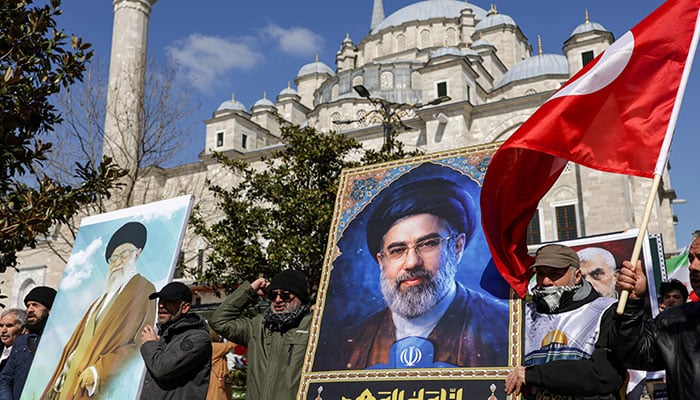
At this critical moment, the Muslim world is witnessing the continuation of principled leadership in the figure of a distinguished scholar, committed leader and visionary personality: His Eminence Ayatollah Sayyed Mojtaba Hosseini Khamenei. He represents a legacy shaped by faith, discipline, intellectual depth and a lifelong commitment to struggle and resilience.
Ayatollah Sayyed Mojtaba Khamenei, the son of the late leader and senior religious authority, Imam Sayyed Ali Khamenei, was born in 1969 in the holy city of Mashhad. From an early age, he was raised in an environment rooted in spirituality, knowledge and responsibility, shaping his character around faith, education and service to the wider Muslim community.
He began his formal religious education in Tehran and, during the years of the Iran-Iraq war, took part in defending country and values. This early experience reflects the strong connection between intellectual development and practical commitment in his life. After the war, he moved to Qom to continue his higher religious studies, where he spent many years learning from leading scholars and experts in Islamic law and legal theory.
He studied under some of the most respected scholars of his time and benefited from his late father’s guidance. Over more than seventeen years of advanced study, he demonstrated exceptional dedication, intellectual discipline and analytical ability, producing detailed academic work and gaining recognition for his scholarship. In addition to his academic background, his close association with leading figures in ethics and spiritual development helped shape his balanced personality.
He also possesses a deep understanding of national governance and strategic affairs. Through close engagement with senior officials and continuous involvement in addressing major national challenges, he has gained valuable experience in economic stability, infrastructure development, technological advancement and long-term national planning. His forward-looking vision reflects a practical and strategic approach to leadership in a rapidly changing world.
His consistent interaction with senior military leadership and key figures in the regional resistance movement also shows his role in strengthening strategic alliances and confronting global pressures. Today, this axis of resistance has become a significant force influencing regional and international developments.
Without doubt, a leader who combines knowledge, integrity, experience, courage, and a strong commitment to unity among Muslims is well-positioned to carry forward the legacy of leadership and ensure the continued strength, independence, and stability of Iran. The open hostility shown toward him by powerful global actors reflects his growing influence and strategic importance on the world stage.
Under such leadership, Iran is expected to continue its path of resilience, progress, and independence. Relying on the strength of its people, its national determination, and its strategic alliances, the country will remain firm against external pressures and continue advancing its position globally.
The path ahead reflects continuity, strength and confidence. With renewed determination, unity and clarity of purpose, the Muslim world moves forward towards a future defined by dignity, stability and self-determination.
The writer is the director general of the Iran Cultural Center in Karachi and a student of Martyr Imam Sayed Ali Khamenei.