LAHORE: In Pakistan’s major cities, slums and posh localities often exist side by side. This proximity is not accidental; it reflects the search for livelihoods. The poor settle close to opportunity, even if it means living in deprivation while wealth flourishes just across the road.
Within these divided spaces, children grow up in sharply contrasting worlds, one marked by comfort and abundance, the other by hardship and quiet suffering. As children from low-income families grow older, their awareness of deprivation deepens. What they may not fully understand in early years becomes painfully visible with time. Inequality is no longer an abstract concept, it is experienced daily, in schools, streets and marketplaces.
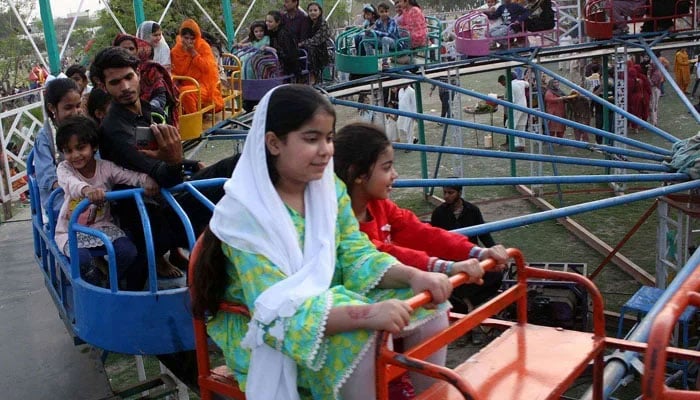
These contrasts become most visible during national and religious festivals, particularly Eid. For affluent families, Eid is a celebration of abundance, new clothes, elaborate meals, gifts and outings. For many others, it is a time of silent anxiety. There are households where even two meals a day are uncertain, making the idea of extra spending feel like an impossible burden.
Zahid Hussain, a factory worker earning Rs42,000 per month, embodies this struggle. Supporting a family of five, including his wife, two children and elderly mother, he finds it nearly impossible to meet even basic needs.
“I love my children and want to give them new clothes on Eid,” he says. “But that is only possible if we cut down on food for several days.”For Zahid, Eid is not a celebration, it is a test of endurance. He describes the emotional toll more than the physical hardship. “I work hard all day, and my body aches by evening. But that pain is nothing compared to what I feel in the last days of Ramazan.”
He speaks of the quiet understanding within his household. His wife prepares the children mentally, explaining their financial constraints. The children rarely complain, but Zahid notices the longing in their eyes, especially when they see others buying clothes, shoes and small luxuries.
“I just pray my salary comes on time,” he says. “That alone determines whether we can manage even the basics.”Despite his hardships, Zahid considers himself fortunate. Many of his colleagues have lost their jobs altogether. Yet he admits that Eid magnifies the pain of inequality. It is one of the few occasions when the poor hope to celebrate like everyone else, but often end up feeling excluded.
The widening gap between the rich and the poor has become difficult to ignore. Business leaders frequently speak of economic challenges, yet their lifestyles tell a different story. Two decades ago, many industrialists lived comfortably but modestly, driving small cars and maintaining reasonable living standards. Today, luxury vehicles, sprawling farmhouses, and frequent international vacations have become symbols of success.
There is nothing wrong with prosperity or enjoying the fruits of one’s labour. However, the imbalance becomes troubling when those at the top remain disconnected from the realities of their workforce. A small increase in wages, timely bonuses, or special Eid allowances could significantly improve the lives of workers like Zahid.
Social worker Pervaiz Imtiaz highlights a deeper dimension of poverty. Drawing on the ideas of economist Amartya Sen, he explains that poverty is not merely about income, it is also about dignity. It includes what Adam Smith once described as “the ability to go about without shame”.
“For many poor families,” Imtiaz notes, “Eid is when this sense of dignity is most challenged. Parents feel a deep sense of inadequacy when they cannot fulfil even modest wishes of their children.”
Ironically, many low-income families learn to accept their daily struggles with resilience. But festive occasions awaken aspirations that cannot easily be suppressed. It is during these moments that inequality feels most personal and most painful.
A more compassionate society requires more than sympathy, it demands action. Those who have prospered must recognize their responsibility towards those who contribute to their success. Even small gestures of inclusion can restore dignity and hope.Because for families like Zahid’s, Eid is not just a festival. It is a reminder, of both what is possible and what remains painfully out of reach.