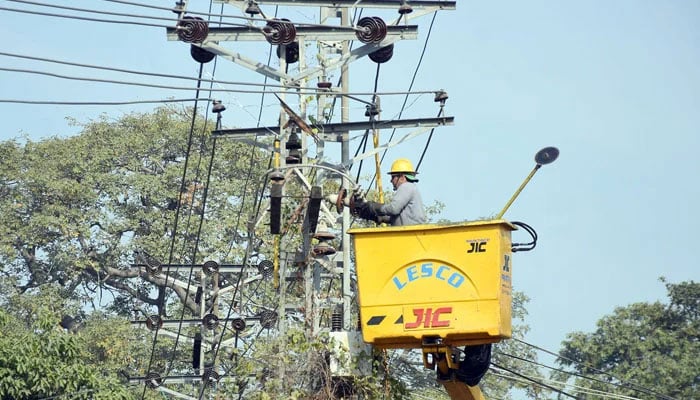
LAHORE : The Lahore Electric Supply Company (LESCO) has continued dismantling telecommunication and cable TV infrastructure on the directions of the deputy commissioner despite clear instructions from the Lahore High Court to hold a joint meeting of stakeholders before relocating the networks.
The court was hearing a joint petition filed by telecom operators regarding damage to their infrastructure. During the proceedings, the court directed the district administration to convene a meeting of relevant stakeholders to resolve the issue of shifting fibre optic networks underground.
According to an internal communication shared among telecom industry officials, representatives of the DC’s office and the Deputy Attorney General had appeared before the court during the hearing. After reviewing submissions from telecom operators’ counsel and examining the material placed on record regarding damage to infrastructure, the court instructed the deputy commissioner to call a meeting on March 16.
The meeting is to include representatives from Pakistan Telecommunication Company Limited (PTCL), the Pakistan Telecommunication and Digital Infrastructure Association (PATAPA), and Lesco.
The objective is to reach a mutually agreed and workable timeline for relocating telecom networks underground.
The court also directed that until such a timeline is finalised through consultation among stakeholders, no coercive measures should be taken and no further damage should be caused to telecom infrastructure.
However, officials present at various sites where telecom and cable TV networks were being removed said, the operation was being carried out on the DC’s instructions as part of a Lahore beautification drive. Furthermore, a Lesco spokesperson responding to The News query said that ‘Lesco is only fixing its own wires and is not interfering with the wires of any other department.’
The continued dismantling of telecom infrastructure without prior relocation has raised concerns within the industry, particularly in light of the government’s ongoing energy-saving measures under which several working days have shifted to online operations. Educational institutions and various public services are also increasingly relying on digital platforms.
Industry officials say internet connectivity has effectively become basic infrastructure in the modern economy, comparable in importance to electricity and water. Damage to fibre optic cables can disrupt services relied upon daily by individuals, businesses and public institutions.
Educational institutions, offices, freelancers and IT professionals are among those most affected when internet services are interrupted. Analysts point out that governments themselves increasingly promote online education, digital services and remote working arrangements — all of which depend on stable connectivity.
Telecom experts also warn that internet outages can disrupt emergency response systems and public safety services. In some instances, connectivity issues have reportedly affected communication channels used by emergency response agencies.
For ordinary citizens, outages can mean losing access to essential digital services such as banking applications, online government portals and communication platforms.
Damage to fibre networks also creates operational and financial losses for service providers. Telecom companies must deploy technical teams to identify faults, replace damaged cables and restore connectivity, often under tight deadlines to minimise service disruptions.
Industry representatives say such incidents highlight the need for stronger coordination between government departments and telecom operators during infrastructure development or urban beautification projects.
Experts argue that infrastructure upgrades should be planned in consultation with telecom companies so that networks can be relocated or protected instead of being abruptly cut.
Without proper coordination, such disruptions could slow broadband expansion and hinder Pakistan’s broader digital development goals. The upcoming stakeholders’ meeting is therefore expected to focus on creating a coordinated mechanism to protect telecom infrastructure while allowing urban development projects to proceed.