DUBAI/TEL AVIV/WASHINGTON: The United States and Israel pounded Iran on Tuesday with what the Pentagon and Iranians on the ground said were the most intense airstrikes of the war, despite global markets betting that President Donald Trump will seek to end the conflict soon.
While Iran warned that any attack on the Islamic republic’s infrastructure would result in a tit-for-tat response, as the United States reportedly asked Israel to halt strikes on Iran’s energy infrastructure.
Oil prices plunged by about 15 per cent on Tuesday, a day after soaring to their highest levels since 2022, pressured after US President Donald Trump predicted the war with Iran could end soon, which should minimise oil supply disruptions. Brent futures LCOc1 fell $14.23, or 14.5 per cent, to $84.73 a barrel at 2:01 p.m. EDT (1801 GMT). U.S. West Texas Intermediate (WTI) CLc1 crude fell $14.46, or 15.5 per cent, to $80.31.
Prices were even lower at midday, after US Energy Secretary Chris Wright wrote on X that the American military had facilitated a shipment of oil out of the Strait of Hormuz, the claim was denied by Iran’s Revolutionary Guards. Wright later deleted the post on X. The White House also confirmed the United States has not escorted any oil tanker through the Strait of Hormuz. “I can confirm that the US Navy has not escorted a tanker or a vessel at this time, though of course that’s an option,” White House Press Secretary Karoline Leavitt told a briefing.
President Donald Trump told Iran to remove any mines it may have placed in the Strait of Hormuz, warning that if Tehran did not it would face military consequences at a level not seen before. Trump added that the United States had no reports of Iran placing any mines in the stretch of water.
Several senior Iranian officials voiced defiance on Tuesday. Iran’s parliament speaker Mohammad Baqer Qalibaf warned that any attack on the Islamic republic’s infrastructure would result in a tit-for-tat response. “The enemy should know that whatever they do, undoubtedly it will have a proportionate and immediate response,” Ghalibaf wrote on X. “We today go with the rule of ‘an eye for an eye’, without compromise, without exception,” he said. “If they start a war on infrastructure, we will undoubtedly target infrastructure.”
The United States has asked Israel to halt strikes on Iran’s energy infrastructure, Axios reported on Tuesday, citing three sources familiar with the matter. Washington sent the message at a senior political level and to IDF Chief of Staff Eyal Zamir, Axios reported, citing an Israeli official.
The Trump administration cited three reasons, including a goal to cooperate with Iran’s oil sector after the war, according to the report. Other reasons included a fear that such strikes would harm the Iranian public and trigger massive Iranian retaliatory attacks on energy infrastructure across Gulf states, Axios reported. The White House, U.S. State Department and Israeli Embassy in Washington did not immediately respond to requests for comments.
Iran’s parliament speaker said, “Certainly, we are not seeking a ceasefire; we believe the aggressor must be struck in the mouth so that they learn a lesson and never again think of attacking dear Iran.” While Foreign Minister Abbas Araqchi told PBS that Tehran was unlikely to resume negotiations with the US.
Commenting on Wright’s remarks, a spokesperson for Iran’s Revolutionary Guards denied an oil ship had been escorted by US army through the Strait of Hormuz. “Any movement of the US fleet and its allies will be stopped by our missiles and drones”, Alimohammad Naini said in comments carried by Iranian state media.
Raising the stakes for the global economy, Iran’s Revolutionary Guards said they would block oil shipments from the Gulf unless US and Israeli attacks cease.
Iran’s security chief Ali Larijani issued a veiled threat to US President Donald Trump, warning him to be careful “not to be eliminated” and saying the Islamic republic was not afraid of his “empty threats.”
“Iran is not afraid of your empty threats. Even those greater than you could not eliminate the Iranian nation,” said Larijani in a post on X.
His remarks came in response to a post by Trump threatening to hit Iran harder if it stops the oil flow through the strategic Strait of Hormuz.
The Iranian army said it had targeted a military and an intelligence site in Israel, as the warring sides pressed attacks for an 11th day. “The army, using attack drones, struck a military centre in Haifa and the reception centre for spy satellites,” it said in a statement.
The military centre “plays a key role in arms production and is of major strategic importance for strengthening the enemy’s combat capabilities”, added the statement carried by Tasnim news agency. Iran launched a new salvo of missiles on Tuesday at Israeli cities including Tel Aviv and US targets in the region, the Revolutionary Guards said, as fighting between the foes showed no signs of letting up. The latest salvo utilised “strategic” missiles, including some of the most powerful in Iran’s arsenal, such as the Fattah, Emad and Khaibar missiles, the Guards said in their statement.
Russian President Vladimir Putin called for de-escalation in the Iran conflict during a phone call on Tuesday with his Iranian counterpart Masoud Pezeshkian, the Kremlin said. “The President of Russia reaffirmed his principled position in favour of a speedy de-escalation of the conflict and for it to be resolved through political means,” the Kremlin said in its readout of the call. “Pezeshkian thanked Russia for its support, particularly for providing humanitarian aid to Iran,” the Kremlin added, confirming Moscow has sent assistance to its ally Tehran.
Four Iranian diplomats were killed in Lebanon on Sunday in an Israeli attack, Iranian state media said on Tuesday citing Iran’s UN Ambassador Amir Saeid Iravani.
One of the world’s largest refineries in the UAE was shut as a “precaution” after a drone attack nearby, a source said.
US Defense Secretary Pete Hegseth told a Pentagon briefing, “Today will be yet again, our most intense day of strikes inside Iran: the most fighters, the most bombers, the most strikes, intelligence more refined and better than ever.”
Tehran residents reached by Reuters also described the war’s most intense night of bombardment.
“It was like hell. They were bombing everywhere, every part of Tehran,” a resident said by phone, speaking on condition of anonymity for security reasons. “My children are afraid to sleep now.”
In Tehran’s east, two five-storey residential buildings had been hit on Monday, blasting out floors and walls and leaving a rickety concrete frame. Footage from Iran’s Red Crescent showed rescuers there carrying a victim in a body bag. Workers were still recovering bodies at the site on Tuesday when a missile struck a road intersection nearby.
Yet with Trump having described the war on Monday as “very complete, pretty much”, investors appeared convinced he would end it soon — before the disruption to global energy supplies caused a worldwide economic meltdown.
An historic surge in crude oil prices on Monday was mostly reversed within a day. Asian and European share prices staged a partial recovery from earlier precipitous falls, and Wall Street bounced to around its levels of late February, before the war.
A source familiar with Israel’s war plans told Reuters the Israeli military wanted to inflict as much damage as possible before the window for further strikes closes, under the assumption Trump could end the war at any time.
Iran has refused to bow to Trump’s demand that it let the United States choose its new leadership, naming hardliner Mojtaba Khamenei as supreme leader to replace his father, who was killed on the war’s first day.
But occasionally contradictory remarks from Trump at a Monday press conference appeared to reassure markets he would stop his war before provoking an economic crisis like those that followed the Middle East oil shocks of the 1970s. He said the U.S. had already inflicted serious damage and predicted the conflict would end before the four weeks he initially set out.
Trump has not defined what victory would look like, but on Monday did not repeat declarations that Iran must let him choose its leader. Several congressional aides have said they expect the White House to soon request as much as $50 billion in additional funding for the war.
The US used $5.6 billion in munitions in the first two days of strikes against Iran, a source familiar with the information said on Tuesday. “There is a big question mark over how long people can put up with the costs of this conflict,” said Clionadh Raleigh, CEO of U.S. crisis-monitoring group Armed Conflict Location & Event Data, or ACLED.
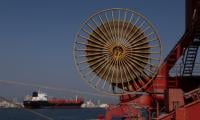
The war has effectively halted shipments through the Strait of Hormuz, where a fifth of global oil and liquefied natural gas normally passes along Iran’s coast. Some of the world’s biggest producers have run out of storage and cut back output.
After Iran chose its hardline new leader, oil prices briefly surged to nearly $120 a barrel on Monday. But by 1500 GMT on Tuesday, Brent crude LCOc1 had settled back down below $90. Trump said on Monday that if Iran blocks oil through the strait, “we will hit them so hard that it will not be possible for them or anybody else helping them to ever recover that section of the world,” he said.
But a spokesperson for the Revolutionary Guards said Tehran would not allow “one litre” of Middle Eastern oil to reach the U.S. or its allies while U.S. and Israeli attacks continue. “We are the ones who will determine the end of the war,” the spokesperson said.
At least 1,270 people have been killed since the US and Israeli airstrikes began on February 28, according to Iranian state media reports. Scores have also been killed in Israeli attacks on Lebanon to root out the Iran-backed group Hezbollah, which has fired into Israel in solidarity with Iran. Iran said four of its diplomats were killed in a strike on a hotel in Lebanon on Sunday.
Iranian strikes on Israel have killed 12 people. Iran has struck U.S. military bases and diplomatic missions in Arab Gulf states but also hit hotels, closed airports and damaged oil infrastructure.
As many as 150 U.S. troops have been wounded in the 10-day-old war with Iran, two people familiar with the matter told Reuters on Tuesday. The casualty figure has not been previously reported. Prior to Reuters’ publication of the figure, the Pentagon had only disclosed eight US personnel seriously injured. In a statement after Reuters published its report, the Pentagon estimated the figure to be approximately 140 wounded and said the vast majority of them were minor.
Israel is not seeking an endless war with Iran and will coordinate with the United States on when to end the fighting, Foreign Minister Gideon Saar said on Tuesday, declining to publicly state a timeline for when the conflict could end.
“We will continue until the minute that we, and our partners, think that is appropriate to stop,” he told reporters, speaking alongside his German counterpart in Jerusalem.
The Israeli military said Tuesday it had carried out a new wave of strikes in Tehran targeting what it described as “terror regime targets”, and reported Iranian missile launches toward Israel, a sign Tehran retained the ability to attack Israel.
German Foreign Minister Johann Wadephul, the first senior foreign official to publicly visit Israel since the war began, said he was confident Israel and Washington were open to a diplomatic solution that could lead to an end to the war. But any such solution would need to include agreements with Iran on its nuclear and missile programs, as well as its support for regional militias, terms that Wadephul said Tehran had made clear that it was not currently prepared to accept. Saar called for Iran to be diplomatically isolated, urging other countries to sever diplomatic relations with Tehran.
Iran has pressed its attacks against Qatar’s infrastructure, the Gulf state’s foreign ministry spokesman said on Tuesday, over a week after Iranian drone strikes forced a halt to Qatari gas production.
Iran’s intelligence ministry announced on Tuesday the arrests of 30 people accused of spying, including one foreigner, on the 11th day of the Middle East war.
Albania’s parliament said it had been hit with a “sophisticated cyberattack”, after Iran-linked hackers claimed to have stolen lawmakers´ data.
A group called “Homeland Justice”, which has previously been linked to Iran and claimed responsibility for past cyberattacks in Albania, announced the hack on Telegram.
US President Donald Trump’s special envoy Steve Witkoff said that he will likely travel to Israel next week to coordinate on the two countries´ war effort against Iran.
“We´ll probably make that trip next week, but we´re not sure about it as of now,” he said in an interview with the financial news channel CNBC.
Ukrainian military experts are due this week in Qatar, the United Arab Emirates and Saudi Arabia, President Volodymyr Zelensky told journalists on Tuesday, where they will share expertise on downing Iranian drones.
Two men fired multiple shots at the US consulate in Toronto early Tuesday in what police described as a “national security incident,” prompting beefed-up protection for US and Israeli diplomatic buildings in the city.
The individuals approached the consulate in downtown Toronto at around 4:30 am (0830 GMT), exited a white SUV and fired several rounds from a handgun at the consulate, Toronto police deputy chief Frank Barredo told reporters.
There were people inside at the time, but “this building is highly secure, highly fortified, and there were no injuries,” Barredo said.
Chief Superintendent Chris Leather from Canada’s federal police said the shooting was “definitely a national security incident because we had the US consulate...struck by gunfire.”
Member states of the International Energy Agency (IEA) met on Tuesday for crisis talks to assess security of supply and the potential release of emergency stocks as the Middle East war roils markets, the body’s chief said.
In a statement following a Paris meeting of G7 energy ministers on the economic fallout of the conflict, IEA executive director Fatih Birol said he was “in close contact” with energy ministers from key energy producers and consumers regarding the situation.
Fresh Israeli strikes hit Beirut’s southern suburbs and south Lebanon on Tuesday after the Israeli army warned people to evacuate and the United Nations said 100,000 people had been displaced in a single day.
American firm Planet Labs PBC said it had further delayed access to its satellite imagery of the Middle East to 14 days to protect US-allied countries there.
Iraqi authorities are exploring alternative routes to export oil after transit through the Strait of Hormuz was disrupted by the Middle East war, an oil ministry spokesperson told AFP on Tuesday.
At least five players from Iran’s visiting women’s football team claimed asylum in Australia on Tuesday, seeking protection after they were branded “traitors” at home for refusing to sing the national anthem.
Journalists covering the war in the Middle East are facing increasing restrictions and censorship imposed by governments and armed groups, with reporters being stopped and questioned or even detained, a survey of AFP bureau chiefs from the region showed.
German Chancellor Friedrich Merz voiced concern that the United States and Israel appear to have “no common plan” for bringing the war against Iran “to a swift and convincing end”.
Turkiye’s Halkbank said it had reached an agreement with the US Department of Justice to settle a years-long criminal case against the state-run bank over violating sanctions on Iran.
Thai police said they had arrested a Myanmar national accused of trying to smuggle 120 litres of diesel out of Thailand, days after the country banned fuel exports due to the Middle East war.
American Cardinal Robert McElroy, the archbishop of Washington, has said the US war in Iran is “not morally legitimate”, adopting a stronger tone than that of Pope Leo XIV.
Humanitarian needs in Iran are growing sharply due to the war, the Red Cross said Tuesday as it launched an emergency appeal for more than $50 million.
An Iran-backed armed group in Iraq said strikes it blamed on the United States killed four of its fighters on Tuesday.
Azerbaijan on Tuesday sent humanitarian aid to Iran, appearing to offer an olive branch days after an Iranian drone attack sparked fears of the Middle East war spilling into the Caucasus.
Turkiye said a Patriot missile defence system was being deployed in the centre of the country, a day after NATO intercepted a second ballistic missile fired from Iran in Turkish airspace.
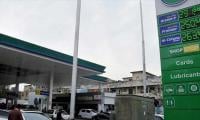
In Bangladesh — which imports 95 percent of its oil and gas needs — the military has been deployed at major oil depots, as police patrol in and around filling stations.
Prime Minister Benjamin Netanyahu warned that Israel’s military offensive against Iran was “not done yet”, saying the operation was degrading Iran’s clerical leadership.
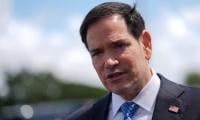
Iraq’s Prime Minister Mohammed Shia al-Sudani told US Secretary of State Marco Rubio Tuesday that Iraq should not be used as a launch pad for attacks in the Middle East war.