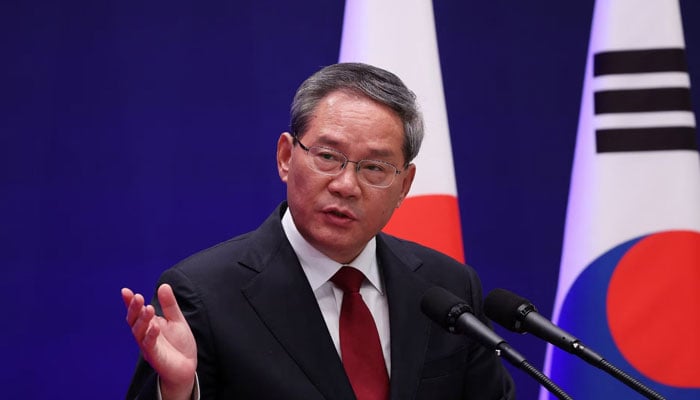
Prime Minister Li Qiang presented work report at the Two Sessions. It was noted China has achieved all targets of 14th Five-Year Plan and is ready to embark on implementing 15th Five-Year Development Plan. China is ready to accelerate its modernisation drive, anchored in high-quality development, new-quality productive forces, and common prosperity, to secure a legitimate place on the global stage. China is ready to achieve ultimate goal of China story, the national rejuvenation.
The report also highlighted goals for 2026, including a GDP growth of 4.5-5pc, a fiscal deficit of 4pc, consumption, green transition, bond issuance (11.89 trillion Yuan), and more. However, for me, the most important part of two sessions is China’s focus on sharing “China story”. Wang Huning, chairman of CPPCC, stressed it is essential to tell China’s story effectively. Thus, China will strengthen mechanisms to “better tell China’s story” and present a true picture of country. This aligns with President Xi Jinping’s vision, which he explained many years ago during a visit to Chinese media outlets.
China has a fascinating story with a remarkable history as an innovator and promoter of prosperity and peace. The story continued in modern times, as country transformed from a fringed country into a leading economy, a major investor, a leader in green transition, and a producer of most advanced security systems. However, true essence of Chinese story is not about economic success, innovation, or security, but about Chinese philosophy, wisdom, and a model of democracy, governance, and harmony that includes others. Therefore, efforts should be made to help people understand these, starting with Chinese democracy.
Over time, China has developed its own model of democracy, Whole Process People’s Democracy (WPPD), a democracy that emphasises ongoing engagement with people, not just during elections. It is based on nine pillars: People’s Will, People-Centric approach, Quality and People-Centric Governance, Equal Participation and Opportunities, Inclusiveness, Strong Accountability Mechanisms, Continuous Interaction, Merit-Based Elections, and Socialist Core Values. The socialist values are the linchpin of the whole system.
The values help ensure system remains transparent, accountable, inclusive, and focused on helping the poor. They foster a spirit of service rather than ruling. All members of CPC and government officials are required to embody these qualities to remain and grow within the system. These are the traits appreciated by every society and individual.
Second, over time, China has developed its own governance model focused on people. It centers on people’s welfare, security, and prosperity. It is practiced through Whole Process People’s Democracy. Third, Socialist Market Economy with Chinese Characteristics (SMECC). The model has been criticised by Western countries and advocates of liberal economy. They call China a closed economy, a controlled economy, an iron-fisted economy, etc. However, they fail to understand true spirit of the SMECC.
The Socialist Market Economy is built on two pillars: a proactive market and a strong state role. China recognises that, in modern economic model, markets play a key role in determining dynamism and potential of any economy. Market forces are the key to unleashing market’s potential, cultivating a culture of innovation and technology development, and driving growth. These also facilitate free flow of factors of production, commodities, products, and talent through enhanced connectivity.
Simultaneously, China is also cognizant the state will have to play an active role to ensure smooth functioning of market and market players. The state has to provide necessary conditions to promote market forces. It is required to ensure market competition while adhering to principles of fairness and justice. However, the state needs to act as a facilitator to strengthen role of market forces and accelerate innovation and technological development, rather than as a barrier to them. It is also required to lower or eliminate risk and make market functioning predictable.
Fourth, harmony is a key element of Chinese civilisational history. Chinese history demonstrates they apply it across their economy, interactions, society, people, environmental protection, and international relations. China views harmony as a core foundation for creating a prosperous and peaceful world. The Global Civilisation Initiative (GCI) exemplifies this philosophy by rejecting clash-of-civilisations mindset and advocating for a harmonious world. However, achieving harmony requires sharing prosperity and pursuing proactive economic and development strategies. The Belt and Road Initiative, Global Development Initiative, China International Import Expo, and others are key examples. Additionally, prosperity is a fundamental pillar of China’s approach to international relations. It’s important to note Chinese international relations focus on building relationships rather than narrow national interests.
The harmony between humans and nature is another aspect of Chinese philosophy. It advocates for pursuing economic growth and people’s well-being while respecting nature’s limits and principles.
The above discussion of Chinese philosophy and characteristics of models indicates they are close to human nature and desires. Therefore, these have potential to tackle modern challenges, foster a peaceful world, and lay groundwork for a sustainable, fair future. Then, why does Chinese model face unnecessary criticism from liberals and others? Why are people unaware of it and criticise China? The reason is China has not invested in telling its story. China has not invested in or modernised its communication and public diplomacy policies, key tools for storytelling and shaping a nation’s image. However, it is worth noting President Xi has reversed the trend and consistently emphasises telling the “China Story” effectively.
If China wants to tell its story effectively and be recognised globally, it will have to reinvigorate its communication and public diplomacy policies. These policies require drastic changes to meet the needs of modern era. However, China should not commit Western mistakes of insisting on superiority of its model. This superiority complex led to arrogance, and West is now facing consequences of that arrogance, which has led to fall of its system.