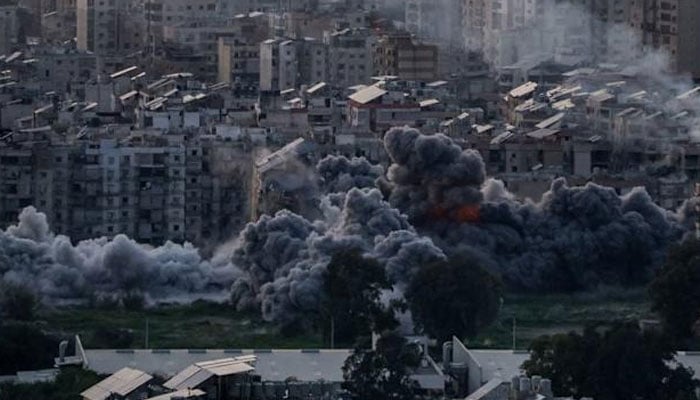
Wars begin with a shock. They end with arithmetic. Missiles counted. Targets struck. Days measured. The first ten days of the latest Gulf escalation followed a familiar script: an overwhelming opening strike, rapid military signalling, and then the slow search for diplomatic exits.
Day one delivered the shock. The United States and Israel assassinated Iran’s Supreme Leader Ali Khamenei, launched nearly 900 strikes within the first 12 hours, targeted missile production facilities and eliminated dozens of senior Iranian officials.
The scale of the opening salvo was extraordinary. Day 1: more than 1,000 strikes. Day 3: more than 2,000. Day 8: more than 3,000. A campaign designed not merely to punish but to paralyse. Iran responded with saturation. Three hundred and fifty ballistic missiles were launched towards Israel, Bahrain, the UAE, Kuwait, Qatar, Saudi Arabia, Iraq and Jordan.
Day two brought 200 missiles. Day three: 150. Day four: 100. Then the numbers began to fall. Day five: 50. Day six: 40. Day seven: 32. Day eight: 28. Day nine: 15. Day ten: 7.
On the Iranian side, losses began to accumulate. During the first eight days, 16 Iranian Air Force aircraft were destroyed. Forty-five naval assets belonging to the Iranian Navy were sunk. Several air-defence systems were knocked out. One report — still unconfirmed — suggested that a US B-52 bomber may also have been lost or severely damaged. Oil and natural gas markets reacted – crude went up 10 percent and gas prices went up in Europe by 50 percent.
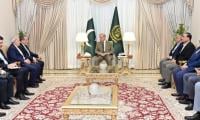
Day 8 — Command Fracture and the IRGC Defiance. Saudi Arabia’s Defence Minister and Pakistan’s Chief of Defence Forces convened a bilateral meeting.
Approximately one hour later, Iranian President Pezeshkian delivered a pre-recorded address in which he ‘apologized’ for Iran’s strikes on neighbouring countries, acknowledged that the IRGC had fired without proper command authorization, and pledged that Iran would not target neighbouring states unless directly attacked by them.
Within the hour, the IRGC attacked Dubai International Airport and Qatar — directly contradicting the presidential address. The episode exposed a critical fracture in Iran’s command structure: the IRGC was operating outside the authority of both the president and the Interim Leadership Council. Five hours after Pezeshkian’s address, the IRGC issued a formal statement dismissing the presidential apology as a “mistake.”
Day 8 did not merely reveal tactical indiscipline — it confirmed a structural breakdown at the highest levels of Iranian military command. At sea, commercial shipping began to feel the pressure. War-risk insurance premiums surged. The United States ordered a third Carrier Strike Group — USS George H W Bush — toward the region to help secure the all-important Strait of Hormuz. At the same time, Saudi Arabia reported intercepting 14 drones. Modern wars are also about industrial chains – and energy sits at the beginning of that chain. Oil refining produces sulphur. Sulphur produces sulphuric acid. Sulphuric acid enables copper and cobalt processing. Copper and cobalt power electric vehicles. Sulphur also feeds fertiliser production. Fertiliser feeds the global food chain.
Red alert: A missile fired in the Gulf therefore travels far beyond the battlefield. It moves through refineries, factories, farms and eventually dinner tables. Ten days into the crisis, one lesson stands out. In the Gulf, war is never just about missiles. It is about the fragile chain that connects energy, industry and food — and how easily that chain can be shaken. Ten days. Thousands of strikes. Seven missiles on day ten compared to three hundred and fifty on day one. The arithmetic, for now, points toward exhaustion.
The IRGC is still firing without orders. The Strait of Hormuz continues to be a chokepoint. A third carrier strike group is en route. And somewhere between a missile launch in the Gulf and a dinner table in Europe, the fragile chain that connects energy, industry and food is still shaking. The guns may be slowing. The arithmetic has not yet settled.