ISLAMABAD: The Tehreek-e-Tahaffuz Aiyeen-e-Pakistan (TTAP) on Sunday vehemently rejected the hike in petroleum product prices, alleging it was an attempt to cover up the incompetence of the rulers and the Federal Board of Revenue (FBR), while there was no let-up in what they termed senseless government spending.
Leaders of the opposition alliance, speaking at a press conference here, questioned why the rulers did not make sacrifices in difficult times. They strongly criticised the federal government and the Punjab leadership for what they described as a lavish lifestyle funded by taxpayers’ money.
They also rejected the Anti-Terrorism Court (ATC) verdict against Pakistan Tehreek-e-Insaf (PTI) leaders, calling it politically motivated. “While there is no check on massive government spending, whenever the people ask for relief the rulers claim the country is poor,” they said, questioning why the rulers themselves do not adopt the lifestyle of leaders in poorer countries.
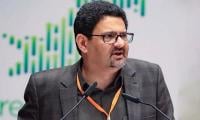
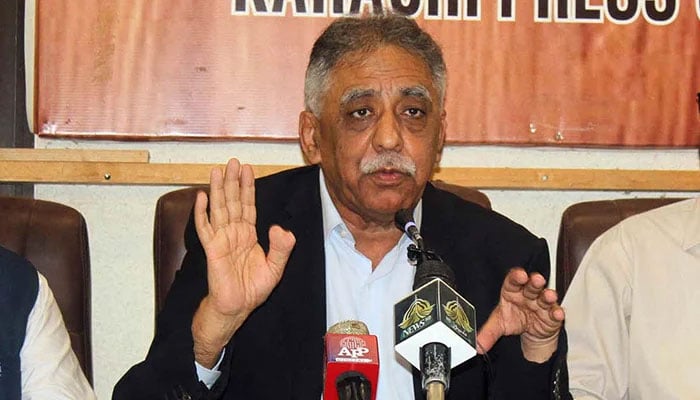
Speaking on the occasion, former Sindh governor Muhammad Zubair rejected the increase in oil prices and questioned why petrol purchased at around $65 per barrel was being sold at a much higher rate domestically. He claimed the government would collect huge revenues through the increase.
Zubair said the FBR was facing a revenue shortfall of around Rs600 billion and argued that better fiscal management could have enabled the government to provide relief to the public. He maintained that the sharp increase in petrol and diesel prices would affect all sectors of the economy and place an additional burden on ordinary citizens, particularly motorcyclists and low-income households.
He criticised the government’s economic performance, alleging that the authorities had failed to stabilise the economy while creating an environment in which criticism in the media had become difficult.
Zubair also criticised increased taxes on the salaried class, questioning why the burden of adjustment was being placed on them rather than on the ruling elite.
Referring to the lifestyle of political leaders, he pointed to official protocol arrangements and government spending on aircraft and vehicles, claiming that significant public funds were being used for such purposes while ordinary citizens were being asked to bear higher taxes and fuel prices.
He also criticised the government’s stance on international issues, referring to US-Israel actions against Iran and questioning Pakistan’s diplomatic posture.
Former Khyber-Pakhtunkhwa finance minister Taimoor Saleem Jhagra also criticised the increase in petroleum levy, claiming that the government would collect billions of rupees through the measure. He argued that sustainable economic recovery would only be possible when investors regain confidence in the country’s governance and economic direction.
Jhagra also criticised government spending priorities and called for greater austerity in official expenditures.
TTAP spokesman Akhunzada Hussain alleged that political leaders and workers were being convicted in false cases. He referred to the arrest of a youth in connection with the May 9 incidents and called for an independent inquiry into such cases.
PTI founder chairman’s lawyer Khalid Yousaf Chaudhry also criticised recent court decisions, alleging that the judiciary was being used against the PTI leadership and its supporters.
Opposition leaders warned that the increase in fuel prices would raise the cost of living and negatively impact multiple sectors of the economy, urging the government to adopt policies that provide relief to the public rather than increasing financial burdens.