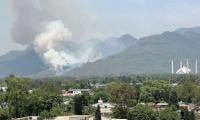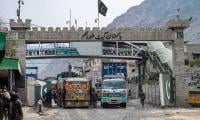
Where do we belong in the ongoing US-Israel war with Iran? Ah, but there is another war that involves our country directly, the war with Afghanistan. And it triggers thoughts about the vagaries of our historical experience and confusion about our national sense of direction. However, the focus rests on the global implications of the Iran war.
This means that it is very difficult for us to make sense of what is happening at various levels. We seem uncertain about what is at stake for us in these monumental conflicts. As participants and spectators, we are embroiled in an upheaval that is bound to change the world in ways that cannot yet be deciphered.
That all this makes us very nervous and fearful of how the events might unfold is obvious. Pakistan is uniquely vulnerable in its strategic and diplomatic relations in the international and regional contexts. Whatever the endgame is, we will be affected by its consequences.
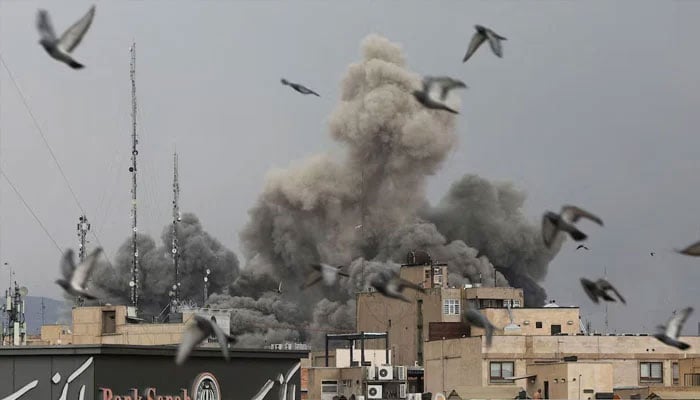
Frankly, I feel so overwhelmed by all the various aspects of the American and Israeli invasion of Iran that I am unable to set my thoughts in order and sum up my impressions within the prescribed limits of this column. Primarily, I see it as a great human tragedy, considering the loss of life and physical destruction caused by the heavy bombing of targets across Iran.
For instance, the deadliest attack came on the first day of the war when a girls’ school in southern Iran was bombed and 165 schoolgirls and staff were killed. An Al Jazeera investigation raised many questions and suggested that it could have been a deliberate attempt to terrorise Iran.
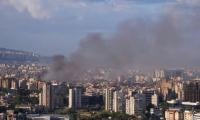
An unexpected response of Iran in targeting US bases in the Persian Gulf countries with drones and missiles has been very consequential. Apart from creating an energy crisis by disrupting supply routes, a shadow has been cast on the miracle that is projected most prominently by Dubai. In fact, the Middle East will not be the same again. There are stories here that belong to a modern version of Arabian Nights.
Incidentally, President Trump himself admitted that “the biggest surprise” was Iran’s attacks against Arab countries in the region such as Bahrain, Jordan, Kuwait, Qatar and the United Arab Emirates.
And when one thinks of the stories that will, in a sense, rise from the wreckage of this war, the one about President Donald Trump’s role in it would be the most intriguing and engaging. As it is, President Trump is very much like a storybook character that no writer of fiction could have conceived.
Anyhow, there are elements of a thriller in President Trump’s changing stance on why he ordered the invasion of Iran in collaboration with Israel. It would appear that he had achieved his goal when Iran’s Supreme Leader Ayatollah Ali Khamenei and members of his family were assassinated in a joint US-Israeli airstrike at the outset of the hostilities.
I need not go into details of how President Trump kept on giving different reasons for continuing the war when there was no popular uprising to bring about regime change. But the truth of the matter, present to all serious observers, is that America just did not have any rational excuse to invade Iran. This realisation is likely to gain credence even within the US. After all, the most powerful country in the world is in the habit of losing its wars, from Vietnam to Iraq to Afghanistan.
This reminds me of a well-known book by American historian Barbara Tuchman, published in 1984. Titled ‘The March of Folly’, it is about four turning points in history from Troy to Vietnam. One question the book raises is: Why was America in Vietnam? The answer, as Barbara Tuchman explains, is folly.
Interpreting so much of the history of world events, the book is a historical analysis of why governments persistently pursue policies contrary to their own interests despite the availability of better alternatives. It argues that pride and ignoring evidence lead to disastrous, preventable failures.
That invading Iran would be a mistake was foreseen by perceptive analysts of international affairs. There is this astonishing, incredible video clip of a professor of Chinese descent, Xueqin Jiang. In 2024, he made three predictions. First, he said that Donald Trump will win the presidential election. Second, there will be a war with Iran. Third, that the US will lose this war and this will change the world order.
Is the third prediction about to come true? Some would say that at least morally, Iran is vindicated. At the same time, there is also this threat that after a frenzied wave of death and destruction, Iranian society is made powerless to be born again. But just as Iran is not Venezuela, it is also not Gaza. One expert I heard was saying that Iran has to somehow survive and its survival will be America’s defeat. Another said that America has the opportunity to declare victory and end the war.
Finally, of course, no one knows what the endgame would be like. Nevertheless, the world order is certainly being reset. Will this resetting still have some disasters up its sleeve? That does seem likely. It may be easy for some self-deluded leader to start a war, but the war can easily get out of hand. For example, Trump had no idea that Iran would attack Gulf countries that have American bases, though the blockade of the Strait of Hormuz may have been anticipated.
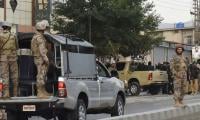
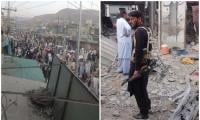
This brings me back to the thought that I had shared at the beginning. What will it be like for Pakistan? While our war with Afghanistan is continuing, with India lurking in the shadows, we cannot disengage ourselves from the Iran war. About 20 lives were lost in violent protests when the assassination of Ayatollah Khamenei was confirmed. What happened at the US Consulate in Karachi has not been fully explained. And the enigma of the Gulf is staring us in the face, breathing fire and brimstone.
The writer is a senior journalist. He can be reached at: [email protected]