This is genuinely one of the hardest questions in current geopolitics. The purely military balance pits $8 billion against $800 billion – Iran’s defence budget versus America’s. History offers a simple lesson: when war begins with such unequal treasuries, the odds favour the larger one.
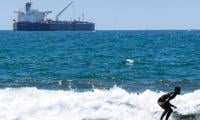
So far, the US-Israeli war machine has achieved five operational objectives. First, the decapitation strike that killed Ali Khamenei, Iran’s ideological anchor. Second, the establishment of near-total air dominance over Iranian skies. Third, the degradation of Iran’s naval capability, reducing its capacity to close the Strait of Hormuz. Fourth, sustained multi-axis pressure on the IRGC’s command and operational infrastructure. Fifth, the opening of a northern ground front through Kurdish forces.
Here are Iran’s structural strengths in this war. First, Iran is a country of 90 million people with strategic depth. Second, the IRGC-supported political regime has not collapsed. Third, Iran has terrain and asymmetric tools. Fourth, Iran’s doctrine is not territorial defence alone. It is a regional escalation through proxies. Fifth, the US has little political appetite for a large-scale ground invasion.
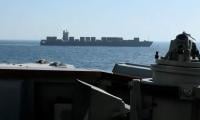
History offers a final reminder: Iraq, Afghanistan and Vietnam – air supremacy alone rarely wins wars.
Who will win? The single biggest variable is what happens inside Iran. Scenario 1: Regime collapses from within – leadership vacuum after Khamenei, military defections, popular uprising. US-Israel wins relatively cleanly. Scenario 2: Regime holds – new hardline leadership emerges, war becomes a prolonged insurgency. Nobody wins cleanly. Scenario 3: Negotiated settlement – Iran agrees to permanent nuclear disarmament in exchange for survival. A messy compromise that both sides can partially claim as victory.
Wars between unequal powers often become wars of endurance. Iran’s objective is survival. The US-Israeli objective is a decisive outcome. The side that can stretch the clock often reshapes the battlefield. America seeks a quick decision; Iran seeks survival. Time as a weapon of war favours Iran.
Red alert: Iran’s most powerful lever is not military. It is time and energy.
American presidents think in election cycles, and a conflict that drags into a campaign season quickly becomes a domestic political liability. With the November midterm elections approaching, the political clock in Washington is already ticking. Vietnam, Iraq and Afghanistan were not lost on the battlefield alone; they were also lost on the political clock in Washington.
Here is another reality. Iran does not need to defeat the US militarily. It only needs to avoid defeat. Survival alone can be framed as victory. That is the logic of asymmetric war. Stronger powers seek decisive outcomes; weaker powers seek endurance. If Tehran keeps its political system intact – and that is a big if – keeps the Strait of Hormuz uncertain, and keeps the war economically costly, the definition of victory itself begins to change.
Red alert: Military superiority is clear. Political outcomes are not.
The US military machine has repeatedly demonstrated it can destroy a regime's military capacity – and then the US struggles for decades with what comes after. Yes, America has mastered the art of winning wars. What has proved harder is winning the peace.
The writer is a columnist based in Islamabad. He tweets/posts @saleemfarrukh and can be reached at: [email protected]