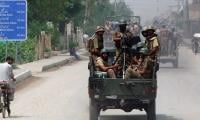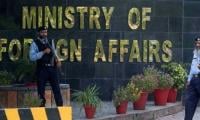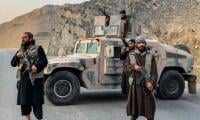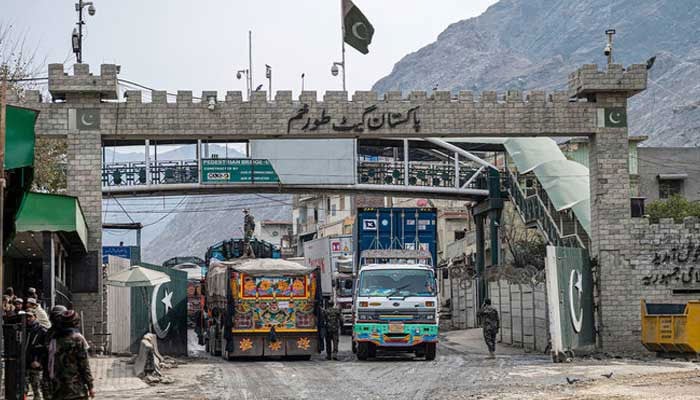
For more than four decades, Pakistan has faced the destabilising consequences of conflict in Afghanistan. What began with the Soviet-Afghan war in 1979 gradually evolved into cycles of militancy, ideological extremism and cross-border incursions that repeatedly targeted Pakistan’s western frontier. Political transitions and security vacuums across the border have created spillover effects, imposing heavy human and economic costs on Pakistan.
Today, Pakistan’s security posture must be viewed through the lens of international law, particularly the UN Charter and global counterterrorism obligations.
The human toll remains severe. Independent global assessments suggest that in 2025 alone, more than 3,300 combat-related deaths occurred due to militant violence, including civilians and security personnel. Pakistan continues to rank among the countries most affected by terrorism, reflecting a resurgence of cross-border militant activity. The economic costs have also been immense. Since the early 2000s, terrorism has inflicted losses exceeding $150 billion, damaging infrastructure, displacing communities, discouraging investment and slowing economic development across the country.
Pakistan’s legal case rests squarely on the UN Charter. Article 2(1) affirms the sovereign equality of states, while Article 2(4) prohibits the threat or use of force against the territorial integrity or political independence of any state. However, the charter does not require passivity in the face of armed attack. Article 51 explicitly recognises the inherent right of self-defence if an armed attack occurs against a member state.
Where sustained cross-border attacks result in loss of civilian life and repeated targeting of security personnel, the victim state retains the right to take necessary and proportionate measures to defend its territory. International jurisprudence reinforces this position. In its landmark 1986 judgment in the Nicaragua case, the ICJ clarified that supporting armed groups operating against another state may constitute a breach of international law and violate the principle of non-intervention. Later, in the Armed Activities on the Territory of the Congo (2005) case, the court emphasised that the exercise of self-defence must satisfy the requirements of necessity and proportionality – principles now central to modern international law.
Equally important is the customary rule of due diligence: no state may allow its territory to be used for acts that harm another state. Sovereignty entails responsibility. The global counterterrorism framework further strengthens this legal position. UN Security Council Resolution 1373 imposes binding obligations on all states to prevent the financing, harbouring and facilitation of terrorist groups. Resolution 2253 reinforces measures against entities that provide sanctuary or support to extremist organisations. In addition, international conventions against terrorist bombings and terrorist financing require states to suppress militant networks operating within their jurisdiction.
Against this legal backdrop, the commitments undertaken by the Afghan Taliban in the 2020 Doha Agreement are particularly significant. Under that agreement, the Taliban assured the international community that Afghan soil would not be used by any group or individual to threaten the security of other countries. This undertaking was not merely a political statement; it constituted a formal assurance directed toward regional and international stability.
Regrettably, subsequent developments indicate serious deficiencies in the fulfilment of those commitments. The continued presence and operational capacity of anti-Pakistan militant groups operating from Afghan territory raise legitimate concerns about compliance with both the Doha assurances and binding international counter-terrorism obligations.
The responsibility to ensure that Afghan territory is not used for cross-border terrorism rests squarely with the de facto authorities in Kabul. Failure to prevent such activities undermines regional stability and contradicts explicit undertakings made before the international community.
It is therefore not only Pakistan but all regional states that have a stake in ensuring compliance. The international community must consistently press the Taliban authorities to deny safe havens to terrorist organisations, dismantle militant infrastructure and prevent their territory from becoming a platform for proxy warfare. Tolerating or indirectly enabling such groups risks transforming instability into a wider regional security crisis.
No state should be allowed to function as a permissive environment for cross-border militant networks. Such dynamics threaten not only Pakistan but the wider stability of South and Central Asia. In this context, Pakistan’s response on February 27, 2026 must be assessed under international law, particularly Article 51 of the UN Charter, which recognises the inherent right of self-defence. Faced with repeated cross-border attacks targeting civilians and law enforcement personnel, Pakistan acted to protect its population.
The decision was neither impulsive nor expansionist. It arose from sustained security pressures and the state’s obligation to prevent further loss of life. A government confronted with continuing armed attacks cannot remain passive without failing in its duty to safeguard its citizens. Importantly, the response was not directed at the Afghan people. Rather, it was intended to convey that lasting regional peace requires adherence to international commitments, including ensuring that Afghan territory is not used to support terrorism or instability.
Pakistan seeks stability and constructive engagement with its neighbour. A peaceful Afghanistan remains in Pakistan’s strategic interest, but an enduring peace cannot coexist with safe havens for militant groups.
The path forward lies in adherence to the UN Charter, faithful implementation of the Doha assurances, compliance with counterterrorism conventions and a collective rejection of militant proxies. Only through shared responsibility and consistent adherence to international law can the region move towards stability, cooperation and enduring peace.
The writer is a practising advocate of the Supreme Court of Pakistan with 25 years of legal standing. He can be reached at: [email protected]