In today’s world, chaos appears to have become the new normal. Conflicts are erupting in once-stable regions, artificial intelligence is redrafting the nature of work, climate disasters are displacing millions and political polarisation is tearing through democracies.
Amid all this noise and volatility, one quiet yet powerful question requires attention: what kind of citizens are we preparing for such a world?
Civic education, long treated as a dull classroom subject, now stands at the heart of how societies survive, adapt, and reconstruct in the era of global disruption. It is no longer about memorising constitutional articles or drawing flags but about nurturing the moral and intellectual capacities to live responsibly, think critically,and act jointly in uncertain times.
The Global South, home to most of the world’s young population, is at the crossroads of this transformation. From Pakistan to Kenya, Brazil to Bangladesh, nations are facing overlapping crises of economic instability, digital divides, climate emergencies and social fragmentation. The question is how to fix systems but also how to form citizens who can imagine better ones.
Educational theorist Paulo Freire warned that when education becomes an act of depositing information, what he called the “banking model”, it raises conformity rather than consciousness. In many classrooms across the developing world, civic education still teaches obedience, not participation; pride, not perspective. Yet as Freire argued, real education must help learners read the world to understand injustice, power and their own agency in changing them.
Modern civic education, therefore, must be based on what Henry Giroux describes as “critical pedagogy”, an education that challenges power rather than legitimises it. When students debate climate policy, fake news or gender equality as lived realities, they begin to recognise that democracy is not an abstract idea but a daily practice.
Today’s disruptions call precisely this form of learning. The growth of artificial intelligence has raised ethical problems about privacy, employment and truth itself. Social media has twisted into both a civic tool and a weapon, amplifying hate as much as solidarity. Climate change has blurred borders, making citizenship a global question of existence rather than a national privilege. In such a world, civic education must broaden its horizon from local loyalty to global responsibility. John Dewey’s century-old idea that “democracy must be born anew in every generation” feels more urgent than ever.
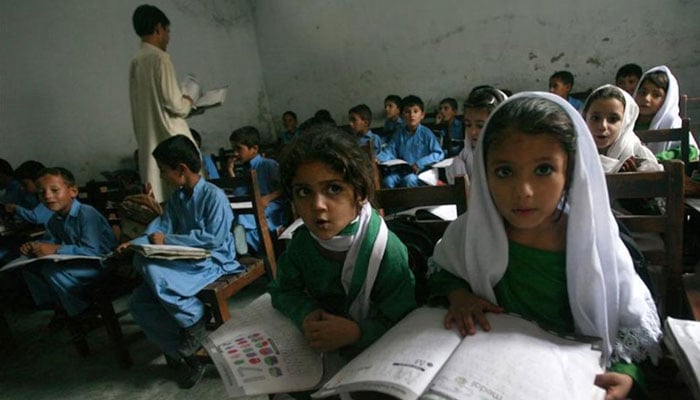
However, the Global South faces a unique challenge: the inherited colonial structures of education often reward silence over speech. Many students learn civic duties as moral sermons rather than as lived practices. Schools remain aloof from communities; no real-life connections in classrooms. The outcome is a generation that knows about citizenship but hardly ever experiences it.
Michael Apple’s critique of ‘official knowledge’ reminds us that curricula often serve the interests of those who are in prominent positions. A depoliticised civic syllabus that avoids uncomfortable questions about inequality, corruption,or privilege produces compliant subjects, not active citizens. True civic education, as Apple and Giroux argue, should prepare students to question not merely to conform.
This rethinking is already happening in pockets across the Global South. In Kenya, students engage in ‘deliberative dialogues’ to debate national policies. In India and Pakistan, digital literacy campaigns are teaching young people how to identify misinformation and engage responsibly online. In Latin America, youth movements born out of civic learning spaces are redesigning local governance. These instances show that when civic education moves beyond the classroom walls and enters the community, it can foster what Amartya Sen calls “capabilities”, the real freedoms to act and participate meaningfully in society.
Yet, civic education cannot overlook the economic and environmental anxieties shaping today’s youth. As automation threatens jobs and climate change redesigns futures, students must learn adaptability, empathy and ethical reasoning, what Martha Nussbaum calls the “narrative imagination”: the ability to see the world through another’s eyes. The goal is not merely to create employable workers but to involve human beings capable of moral judgment and joint action.
We are also witnessing the erosion of public trust in institutions, from states to the media. In this climate, civic education conveys the heavy task of rebuilding faith in democracy itself. It must remind young people that civic life is not a spectator sport, and that voting, volunteering, speaking up and holding power accountable are not optional gestures but democratic obligations.
But for this change to take root, the education system itself must model the democracy it preaches. Students cannot learn contribution in environments ruled by fear. They cannot learn justice in institutions based on inequality. Schools must become a small-scale version of democratic life where dialogue replaces dictation, where teachers and students co-construct knowledge and where disagreement is seen not as disobedience but as a sign of thinking.
Civic education in the Global South thus faces a paradox: it must make citizens for worlds that do not yet exist. The future of work, climate and governance remains uncertain, yet that very uncertainty makes civic learning more vital. It teaches adaptability, collective problem-solving, and resilience. As Freire might say, it gives people not only the tools to dream of a better world but also to act towards it.
The eventual test of civic education is not how well citizens can declaim their rights, but how bravely they defend them. In a century of disruptions – digital, environmental, and moral – societies that invest in critical, values-based civic education are the most likely to remain humane. The Global South has the opportunity to lead this reimagining.
Because in the end, democracy is not sustained by technology or wealth but by citizens who care, question and collaborate. Civic education is how we build them.
The writer is a research scholar at the Aga Khan University Institute for Educational Development and founder of Virtual Baithak.