By the third day of the Iran-US-Israel war, the strategic assumptions underpinning the conflict are collapsing.
What began as a high-intensity assassination and regime change operation has morphed into a broader regional confrontation, with consequences far beyond the battlefield and the Middle East. The early narrative, advanced by Washington and Tel Aviv, was that eliminating Iran’s leadership would rapidly fracture Tehran’s political and military apparatus and open the path for regime change. That assumption has proven dangerously flawed.
Despite Supreme Leader Ali Khamenei’s death on February 28, Iran’s command and political structures remain operational. Far from inducing collapse, the strikes appear to have triggered institutional wartime consolidation. Iran’s authority is dispersed across the clergy, the Revolutionary Guards and paramilitary networks, ensuring continuity even amid targeted leadership losses.
Rather than weakening Tehran, the strikes have galvanised retaliatory operations across multiple theatres, including missile and drone attacks on Israel and US bases in Kuwait, Bahrain, Qatar and the UAE. Early assumptions about regime fragility misread Iran’s resilience, reflecting a dangerous overconfidence in the idea that decapitation could deliver a swift victory.
The reputational cost for Washington and Tel Aviv is already evident. Iranian attacks have repeatedly threatened US installations, revealing the vulnerability of forward bases and undermining the credibility of American deterrence. Several US fighter aircraft were lost or forced to crash-land in Kuwait during defensive operations and three service members have been killed. These losses, combined with the repeated penetration of air defences, have shaken Gulf allies’ confidence in the American security umbrella. For states that host US forces, the message is stark: bases are no longer safe havens, and American power projection is less assured than publicly claimed.
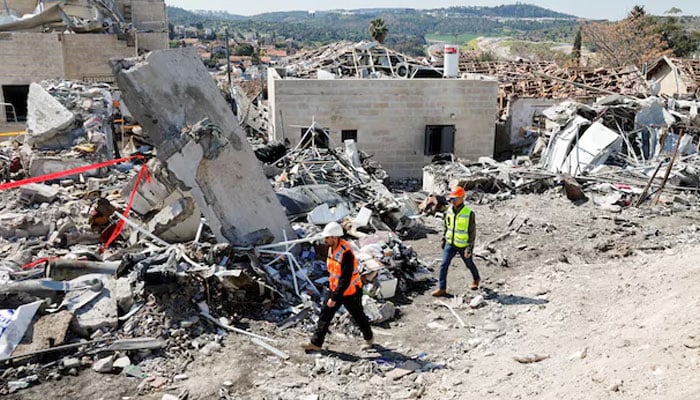
The role of the Israeli leadership has also come under scrutiny. Operation Roaring Lion, executed by Netanyahu’s forces, was designed as a precision strike meant to disable Iranian command nodes and infrastructure. While the initial damage was significant, Iran’s retaliatory capacity has proven robust and Israel’s raids have triggered secondary strikes, including Hezbollah missile and drone attacks from Lebanon. The early narrative that Israel could quickly neutralise Iranian threats has proven overly ambitious, exposing the limits of military planning divorced from the region’s complex political and proxy networks.
The war has expanded geographically. A drone strike reportedly targeted a British-linked RAF base in Cyprus, marking the conflict’s spread beyond the immediate Middle East. More consequentially, Iran’s strike on Saudi Arabia’s Ras Tanura refinery forced a partial shutdown of one of the world’s largest export terminals. Fires and precautionary closures cut hundreds of thousands of barrels per day from global supply, at a moment when the Strait of Hormuz is effectively closed to safe passage for tankers.
This escalation demonstrates Tehran’s capacity to target critical energy infrastructure and underscores a shift from purely military retaliation to economic leverage. Global oil prices spiked immediately and traders are now pricing in prolonged disruptions, with Brent crude crossing $80 per barrel and analysts warning of $100 if the conflict persists. Insurance premiums and rerouting costs have soared, further amplifying economic pressure.
The combination of Ras Tanura’s shutdown and Hormuz disruption has created an acute global energy risk. Tankers are idling, freight costs have surged and war-risk insurance premiums for Gulf shipping have more than doubled. Airlines have cancelled flights over the region and supply chains from Asia to Europe are already factoring in rising costs. Emerging economies reliant on imported energy are particularly vulnerable and central banks may face difficult trade-offs as inflation pressures escalate.
In the US, criticism of the Trump administration has intensified. Analysts and lawmakers warn that the White House underestimated Iran’s institutional resilience, overestimated the effect of leadership decapitation, and misread escalation dynamics. Public statements framing the operation as a pathway to regime change now appear reckless, given that the conflict is already regionalising, protracted and costly.
Similarly, critics highlight that Netanyahu’s optimism about a decisive surgical strike ignored the integrated nature of Iran’s military, proxy, and economic networks. The operation’s early failures to neutralise retaliatory capability, coupled with Iran’s sustained missile strikes, raise questions about the strategic judgment underpinning both leaders’ decisions.
The human dimension has not been confined to military or energy targets. Hezbollah’s activation along Israel’s northern frontier has led to missile and drone strikes into northern Israel, prompting retaliatory raids in Beirut and the Bekaa Valley. Casualties among civilians and combatants are mounting, reflecting the broader escalation of the war beyond the initial US-Israel axis. The conflict has become a networked regional war, with Iran’s proxies fully operational and capable of striking multiple states simultaneously.
Public reaction in Pakistan has been swift and intense. Demonstrations erupted in Karachi, Lahore and Gilgit-Baltistan, with protesters condemning the US and Israeli strikes and expressing solidarity with Iran. Peaceful rallies and confrontations with security forces have resulted in fatalities and injuries. Political parties across Pakistan’s spectrum have issued statements criticising the attacks, framing them as violations of international law and warning of regional destabilisation. The widespread public outrage highlights the risk that this war’s effects will extend far beyond the immediate combat zone, fuelling political tensions and social unrest in South Asia.
The war’s economic front is now as consequential as the military one. The shutdown of Ras Tanura, combined with sustained threats to shipping through the Strait of Hormuz, is driving energy price volatility, supply chain disruptions and inflationary pressures across multiple continents. Traders and companies are recalibrating strategies in real time, factoring in prolonged instability. In this context, the decision-making of Trump and Netanyahu – premised on the notion of rapid and decisive strikes – appears increasingly disconnected from political, operational and economic realities.
By Day Three, it was clear that the early assumptions of a swift regime change and a quick victory were illusions. Leadership decapitation has not undermined Iranian resolve, forward US bases are visibly stressed, and regional allies are reassessing the reliability of American deterrence. Iran has leveraged a combination of military strikes, proxy attacks, and economic disruption to demonstrate both operational resilience and strategic patience. The conflict has evolved into a multidimensional crisis that combines military attrition, reputational strain and economic shock, reshaping global calculations.
Looking ahead, the consequences of a protracted war are profound. Sustained attacks on energy infrastructure and shipping lanes could elevate oil prices beyond $100 per barrel, intensifying inflation and slowing global growth. US and Israeli credibility are under pressure, with Gulf allies witnessing firsthand the limitations of forward deployments under sustained retaliatory conditions. In Pakistan and across South Asia, public anger reflects concern not only for humanitarian implications but also for economic spillovers. The conflict’s escalation risks destabilising a region already grappling with political uncertainty, energy dependence and sectarian tension.
In sum, the first 72 hours have exposed the miscalculations and overconfidence that drove the war. Iran’s command and political structures remain resilient, its retaliatory capacity is robust and the economic ramifications are already severe. The early narrative of quick decapitation and rapid regime change has dissolved, replaced by a stark reality: this is a protracted, multidimensional conflict in which the assumptions of Trump and Netanyahu have been tested and largely found wanting.
Credibility, economic stability and regional alliances – not just missiles and drones – have emerged as the critical front lines, and they will likely determine the conflict’s enduring impact in the coming weeks.
The writer is former head of Citigroup’s emerging markets investments and author of ‘The Gathering Storm’.