In recent years, the international community has acknowledged the potential role of women in advancing peace and stability. Many states have demonstrated their commitment to promoting women’s meaningful participation in peacebuilding processes and security negotiations. However, equal representation of women is not yet a reality.
In every crisis zone, national policy meeting and peace negotiation, women are conspicuously absent. According to the UN Women in Politics Map 2025 report, only 25 countries currently have women serving as Heads of State or Government, and women make up just 27.2 per cent of members of Parliament worldwide. These figures are not trifling; they present a glaring picture of continuing gender imbalance in the political sphere.
At the same time, evidence suggests that in peace negotiations, the presence of women matters. Although UN data shows that women participate as mediator and negotiators in peace processes but their participation is far below men, a fact that is linked with lower chances of lasting peace. These imbalances are largely the product of entrenched social structures that limit women’s agency, their capacity to define choices in the political sphere. Women’s agency refers not merely to being present at the table, but to having meaningful influence over decisions. It is the ability to shape outcomes and leverage political, social, and economic power. Women agency is about the voice, visibility and validation of women, not tokenism.
This distinction is crucial. A woman may hold a parliamentary seat or a cabinet post, but if her role is symbolic, lacking authority over budgetary decisions or influence over policy, then true agency has not been recognised. The political structures of countries, using the gender parity rhetoric, often confine women to roles without genuine authority. The result is a politics that reproduces the deep-rooted power hierarchies that keep women marginalised.
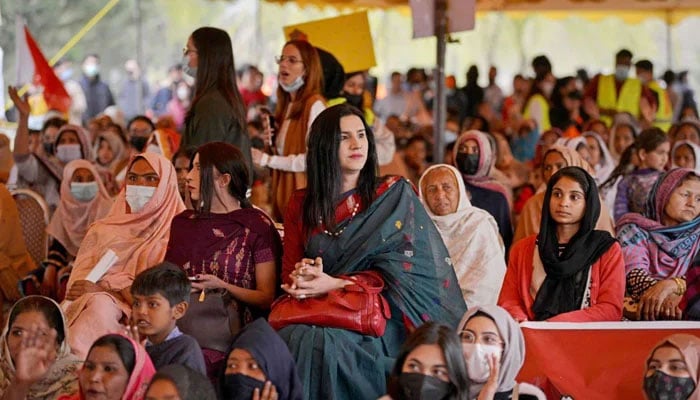
Globally, the issue of women representation is persistent, because of symbolic parity which is actually masking structural imbalance. In Pakistan, women’s representation in parliament has improved largely due to reserved seats under the constitution and reforms supported by the Election Commission of Pakistan. On paper, this signals progress. However, most women on reserved seats are selected through party lists rather than direct elections, which often makes them dependent on party leadership, overwhelmingly male, for political survival. Women may be appointed to portfolios such as cultural or social welfare programmes, while defence, finance and interior ministries, where strategic power and budgetary control lie, remain male-dominated.
Despite global commitments under UNSC Resolution 1325 on Women, Peace and Security, women were minimally represented during the 2020-2023 Afghanistan peace negotiations. Decisions about governance, security, and rights were shaped largely by male elites, while Afghan women, whose freedoms were directly at stake, had little formal influence over the outcome.
Similarly, in political parties across South Asia and Africa women hold positions as leaders of ‘women’s wings’ but they are excluded from core executive committees. In each case, the architecture of power remains intact. Representation without decision-making capacity sustains the old chain of command.
The relevant data reflects that progress towards gender equality is uneven and slow. Despite decades of advocacy and international commitments, women are vastly underrepresented where decisions are made from parliaments to peace negotiation tables. A UN Women report, ‘Fifteen Years, Fifteen Facts: Challenges and Solutions for Gender Equality (2025)’, reinforces this urgency. It highlights that deep-rooted biases, discriminatory laws, economic barriers and political exclusion continue to undermine women’s full participation in public life. It highlights that gender-based violence is rising.
Research work also shows that peace agreements are more durable when women are involved in negotiation. For example, a study by the International Peace Institute (IPI) found that when women are included in peace processes, there is a 20 per cent increase in the probability of a peace agreement lasting at least two years. This percentage continues to increase over time, with a 35 percent increase in the probability of a peace agreement lasting fifteen years.
The Convention on the Elimination of All Forms of Discrimination Against Women (CEDAW), also provides a clear legal framework for gender equality. It obliges state parties to eliminate discrimination in political participation and to ensure women’s equal rights in public life. Yet its principles are not translated into action. Too many countries remain parties to the convention on paper but fail to align their political processes, elections, political party leadership, cabinet appointments, peace negotiations, with its spirit. CEDAW calls for not just access but equality of outcome. It demands structural change in institutions and cultural norms to ensure that women’s agency isn’t hindered by discriminatory practices.
In this evolving complex world, governments should learn that conflict dynamics are gendered. Women and girls experience war differently as targets of gender-based violence, and as community builders. Their experience is different and their inclusion in critical decision making provides unique perspectives on reconciliation, and peacebuilding. Excluding women from peace talks not only silences half the population, it impoverishes sustainability of peace itself.
If we are serious about peace, justice and sustainable development, then women’s agency must be not just an aspiration, but a central pillar of how we run politics and negotiate peace. Gender quotas must be more than symbolic, paired with implementation. Peace tables should make women representation compulsory and include women as guarantors of agreements. There is a need to integrate gender analysis in security and economic strategies as the world needs them to ensure sustainability.
In this regard, the government should invest in women mentorship, their training and their protection against harassment. This International Women’s Day, let’s move beyond hashtags and token panels. Real empowerment means structural inclusion. Real progress means bring women in decision-making, not just in media coverage.
The writer is an associate professor of international relations and head of the departments of international relations and peace and conflict studies at the National University of Modern Languages (NUML), Islamabad.