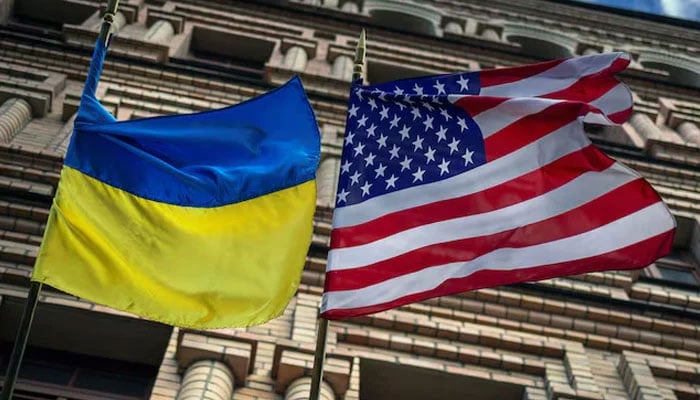
The Russia-Ukraine war has entered the fifth year. The fourth anniversary of the Russian invasion was marked by worldwide calls for an end to the hostilities.
At a special session of the Security Council, the UN called for “an immediate, full and unconditional ceasefire”. The European members of the UNSC stressed the need for sustained pressure on Moscow and reiterated support for Kyiv. Washington, which under Trump has adopted a softer approach towards Moscow, urged a negotiated settlement of the crisis, stating that ‘military force will never resolve this conflict.’
Russia, which is a permanent member of the Council, accused Europe (not Washington) of fuelling the war and short-shrifting negotiations. Beijing, maintaining its middle-of-the-road position on the issue, reiterated negotiated peace, respect for security and legitimate concerns of all parties, and rejection of the sanctions on Moscow.
Such conflicting views of the world powers are one reason no end to the war, which has already caused close to two million casualties, is in sight.
The genesis of the Russian invasion lies in the eastward expansion of Nato, which is one of the two flagship collective defence organisations of the cold war era (1945-1989). In the beginning, Nato comprised 12 members, including the US, Canada and 10 Western European countries, which declared that an armed attack on any one of them would be regarded as an invasion of all of them. Greece and Turkey joined the alliance in 1952 and the German Federal Republic (West Germany) in 1955. The alliance was a defensive initiative on the part of the western bloc founded on fear of USSR aggression.
For almost half a century, Nato remained a key western instrument in the cold war. Once the cold war was over, the relevance of the anti-Soviet, anti-communist alliance came under question. However, the US, the architect of Nato, had a different plan: to enlarge the alliance, without any defined limits, as the architecture of European security. But security against whom? Evidently, against Russia, the successor to the USSR, which had inherited most of its territorial power and defence, including nuclear, capability.
Washington’s plan struck at the core security interests as perceived by Russia. Being a European power, Moscow was keen to have considerable influence upon the continent’s security comparable to that of Washington. It also wanted a security buffer in East and Central Europe, the region which had remained under USSR sphere of influence during the cold war. In particular, Russia insisted that no former constituent of the USSR should join Nato.
At any rate, as Moscow wasn’t a member of Nato, and wasn’t likely to become one any soon, the enlargement of the alliance left it out of European security system. Not only that, Nato’s eastward expansion meant that Moscow’s security buffer would diminish over time and that the states which Russia wanted to constitute a security buffer would now have Nato umbrella of protection against Russians. As a result, Russia was left with the perception that the alliance’s enlargement was meant to encircle it.
In time, Moscow became increasingly distrustful of Washington and European capitals, hostile towards Eastern European Nato members and inclined towards strengthening relations with Beijing. On its part, the US became increasingly committed to defending countries across Europe, overstretching its military and financial powers.
In 2014, pushed by Washington, Nato members agreed to allocate a minimum of 2.0 per cent of their national GDP to defence. Defence expenditure is defined by Nato as “payments made by a national government (excluding regional, local and municipal authorities) specifically to meet the needs of its armed forces, those of Allies or of the Alliance”. However, most of the European members have been unable to fulfil this commitment – an act of omission for which Donald Trump would chide them from time to time.
Article 10 of Nato’s Charter states that the alliance is open for membership to any European country, which is in a position to contribute to the security of the North Atlantic area. Not surprisingly, Nato’s membership has gone up from 15 during the cold war era to 32 at present. Except Finland and Sweden, which joined in 2023 and 2024 respectively, all the other post cold war era members are drawn from Central and Eastern Europe. It was at the 2008 Nato summit that the alliance announced that Ukraine would become a member once the membership criteria are met, a commitment renewed from time to time.
Ukraine was part of the former USSR. After the USSR’s demise, Ukraine became the largest country wholly situated in Europe. It has enormous strategic importance for being the conduit of more than 80 per cent of the supplies of gas from Russia to Western Europe. Not only that, Ukraine inherited a part of the nuclear weapons left behind by the USSR. These two factors prompted both Moscow and Washington to seek a deeper engagement with Kiev. Shunning Moscow-led blocs, such as the Commonwealth of Independent States (CIS) and the Eurasian Economic Union, Ukraine made overtures to the West. Ukraine has also been desirous of joining the 27-member European Union (EU), the globe’s largest and most successful economic bloc.
The tensions with Kiev drove Moscow to annex in 2014 the Ukrainian territory of Crimea, where the majority of population speaks the Russian language, without a scrap of resistance. Although Washington and European capitals sanctioned Moscow, they implicitly recognized the annexation.
Partly encouraged by the West’s tacit approval of the Crimean annexation and chiefly pushed by security concerns should Ukraine become a Nato member, Russia invaded Ukraine in February 2022. A year before the invasion, Moscow called upon Nato to suspend all activities in Eastern Europe and ban Ukraine and any other former USSR constituent republic from joining the alliance. Both the demands were predictably turned down by the West together with the warning of stringent sanctions should Russian troops choose to cross its borders with Ukraine.
The Russian invasion of Ukraine has been described as the most serious conflict in Europe since the end of the Second World War. The US and European countries clamped stringent sanctions on Russia. US, EU and UK nationals were prohibited from doing any business with the sanctioned financial institutions. The Russian central bank’s assets in these countries were frozen. Some Russian banks were ejected out of the Brussels-based Society of Worldwide Interbank Financial Telecommunication (Swift) system, which is the most widely used channel by commercial banks for international transactions.
The sanctions also conveyed a discreet message to Beijing, whose relations with Moscow meanwhile have been on an upward trajectory, that should it try something similar – which it isn’t likely to do – it would have to face similar consequences.
Come Trump for the second term. His approach towards the Ukraine crisis has been more pragmatic than that of his predecessor and his European counterparts. He has proposed moratorium on Nato’s expansion (thus acceding to Moscow’s demand) in lieu of credible security guarantees for Ukraine. Kiev will also cede the territories of Crimea, Luhansk and Donetsk to Russia. The plan has failed to win support of Ukraine and European powers for conceding ‘too much’ to Moscow.
At any rate, so far the sanctions have failed to force a shift in Russia’s stance on Nato’s eastward expansion and deter it from ‘threatening’ peace and security in Europe. Likewise, the impression that European powers are more interested in keeping Russia bogged down in Ukraine through a proxy war has gained ground. Let’s see whether Trump, the ‘peacemaker’, is able to bring to an end another war.
The writer is an Islamabad-based columnist. He tweets/posts @hussainhzaidi and can be reached at: [email protected]