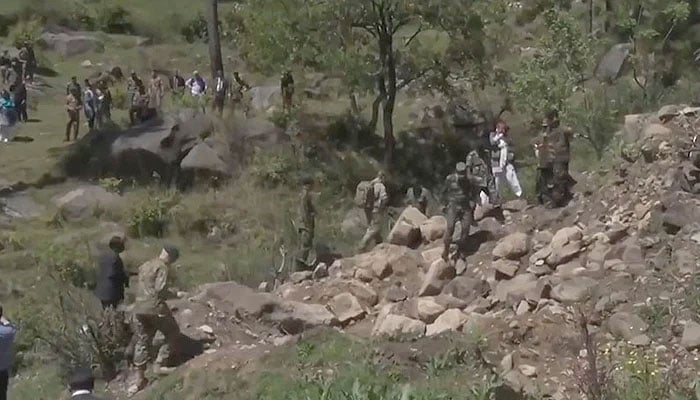
Seven years ago, the skies over Kashmir changed in a matter of seconds. What began as an unprovoked incursion near Balakot remains a benchmark for modern air power, now remembered across the country and the rest of the world as Operation Swift Retort.
It was more than a dogfight. It was a calculated test of regional deterrence and a high-stakes demonstration of how a modern air force operated under the shadow of a nuclear-armed neighbour with speed, precision and a level of strategic discipline that the world had not expected.
February 2019 was a wakeup call. When Indian jets crossed into Balakot, the PAF did not just react; it executed a balanced, restrained response. Within 36 hours, PAF jets executed a measured counter strike across the Line of Control. It deliberately targeted open areas near military installations, sending a clear message that it had the capability to strike back, but the restraint to avoid unnecessary escalation.
This balance of deterrence has since become a hallmark of the PAF’s operational doctrine. Radar traces, airborne monitoring and international assessments highlighted operational success, challenging exaggerated claims in the aftermath. While Swift Retort defined the 2019 landscape, its legacy of doctrinal continuity became even more visible during the 2025 Mark-e-Haq campaign. Operation Bunyanum Marsoos showed how the PAF had evolved from purely kinetic retaliation to sophisticated multi-domain operations.
Operation Bunyanum Marsoos was conducted as part of the broader Mark-e-Haq campaign. As Swift Retort emphasised a measured kinetic retaliation, Bunyanum Marsoos reflected a refined multi-domain operations approach that integrated cyber and electronic warfare alongside traditional air operations.
When Indian forces launched Operation Sindoor in May of that year, they ran headfirst into a well-coordinated wall of cyber disruption and electronic countermeasures before PAF jets sprung surprises on the Rafales and the SUs. It proved that modern air power was not just about who had the fastest or the most advanced jets and the biggest missiles, but about who controlled the data and who dominated the electromagnetic spectrum.
Whereas the news focused on the aerial conflict, an equally decisive battle unfolded silently in the electromagnetic spectrum. The PAF’s cyberised wing provided the critical electronic warfare (EW) layer that enabled kinetic success. Their indigenous Trident ES-DF system gave commanders a bird’s-eye view of the battlefield, allowing them to anticipate the adversary’s every move before it even happened.
Meanwhile, the Trident EA-1 Electronic Attack technology effectively blinded advanced platforms such as the Rafale, Su-30, Mirage 2000 and MiG-29 by blocking their data links. And the drone threat was neutralised by the Hisar-I system, which quietly dropped hostile UAVs out of the sky using GNSS jamming.
This edge has been the result of an over a decade-long push towards self-sufficiency. The induction of advanced fighter platforms, armed UAVs, upgraded air defence systems and precision-guided munitions has significantly enhanced deterrence capability. Shifting from buying new hardware, the dream of National Aerospace Science and Technology Park (NASTP), which was realised under careful leadership and supervision of the current Chief of Air Staff Air Chief Marshal Zaheer Ahmed Baber Sidhu turned the PAF from a tech-buyer into a tech-builder.
From next-gen UAVs to indigenous smart munitions, the focus switched toward a sustainable, home-grown defence posture. Indigenous upgrades of legacy fleets and investment in next-generation aerospace projects reflect a strategic shift towards sustainable defence capability.
Success like this did not happen by accident. It came from the strategic foresight of successive air bosses who prioritised the man behind the machine. They doubled down on Combat Commanders School (CCS) standards and on smart induction policies that favoured cost-effectiveness.
As the nation marked seven years since Operation Swift Retort, the takeaway for the region was clear: Swift Retort is much bigger than a chapter in a history book, it is the blueprint for the PAF’s future.
In a region where situations can escalate in seconds, the Pakistan Air Force remains the pillar of Pakistan’s defence, always alert, professional and ready for whatever comes next.
The writer is a freelance contributor.