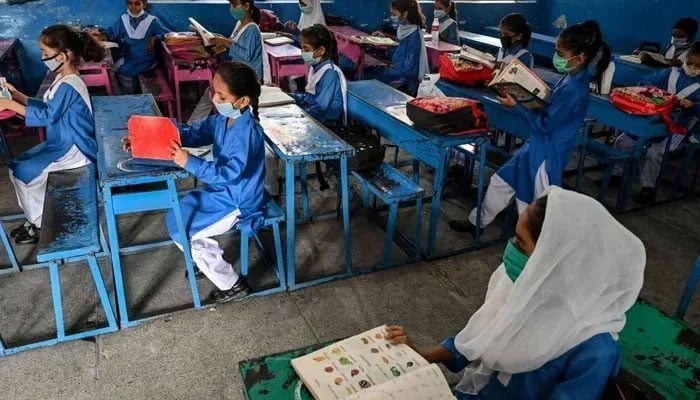
To declare education merely ‘important’ for girls understates the issue. Education is not a courtesy extended to one gender; it is a non-negotiable right for every child.
Societies that treat learning as optional inevitably mortgage their future. Few voices have underscored this truth more forcefully than the youngest-ever Nobel Peace Prize laureate, Malala Yousafzai. Her advocacy has consistently centered on a simple principle: denying girls education is neither morally defensible nor religiously justified.
Her criticism of the Afghan Taliban’s continued ban on girls’ secondary and higher education in Afghanistan has revived an urgent debate across the Muslim world. On what theological grounds, she asks, can half a nation be barred from classrooms?
The Taliban have yet to present a clear, widely accepted religious justification for this policy. Islamic civilisation, historically, tells a very different story, one that includes distinguished female scholars, jurists and educators.
From early Islamic history to later centuries, women transmitted Hadith, taught students and contributed intellectually to their societies. There is no unequivocal scriptural command that prohibits women from seeking knowledge.
A modern precedent also exists. Saudi Arabia, once regarded as deeply conservative in educational matters, underwent gradual but significant reform. Through consultation with senior religious scholars, the leadership affirmed that education for both genders was consistent with Islamic teachings. The system evolved to provide structured, gender-segregated institutions where necessary, but without denying women access to learning.
Over the decades, that decision reshaped Saudi society. Women now serve as professors, physicians, researchers and engineers. Universities that once relied heavily on foreign faculty have cultivated generations of local scholars, both male and female, contributing to national development. Reform did not dismantle religious identity; it expanded opportunity within it.
Afghanistan faces a stark choice. It can continue policies that isolate its female population from formal education, or it can adopt a model that preserves cultural sensitivities while reopening doors to learning.
The country already has educated women capable of teaching in schools and universities. Reinstating girls’ education would not require building an entirely new system from scratch, only the political will to reactivate one that existed.
The implications extend beyond Afghanistan. Regional stability, economic progress and public health all intersect with education.