LAHORE: In a significant step towards integrating environmental stewardship into public administration, the Civil Services Academy (CSA), PAS Campus, hosted a high level session on biodiversity conservation and environmental governance for 55 STP probationers of the Pakistan Administrative Service (PAS) and 14 Domain Mid Career Management Course (MCMC) officers.
The session, conducted by senior experts from WWF-Pakistan, underscored the growing imperative for a “snow drought,” when snowfall fails to settle.
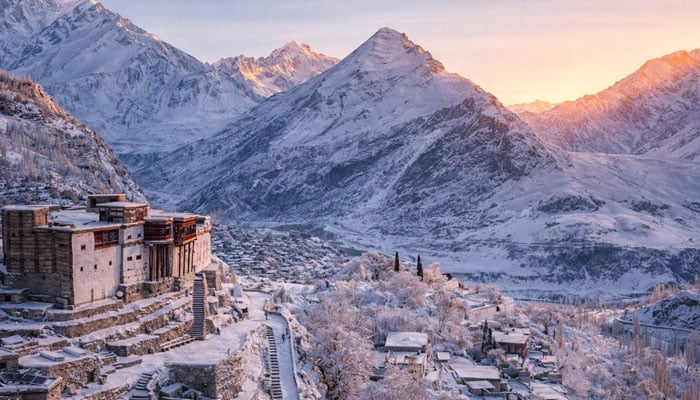
The change is visible in Hunza. Data compiled by WeatherWalay, a climate analytics platform, shows average winter precipitation has fallen about 30 percent since the late 2010s, recording four consecutive years below normal. Some recent winters have also been 2–3 C milder, so there is less snow to sustain the ice.
Unlike European resorts with artificial snow, Hunza’s tournament depends entirely on natural ice.
In a valley heavily dependent on tourism, winter sport now hinges on weather that no longer follows old rhythms.
For eight seasons, Altit’s pool has hosted the Karakoram Interlude, a community-run tournament that draws teams from across northern Pakistan and extends the tourist season beyond summer.
On good years, the rink glows under floodlights, spectators leaning over stone parapets tea cups in hand, their breath rising in white clouds.
This year, organisers prepared the rink as always, pouring water at night and smoothing the surface by hand to allow temperatures of below –20°C to set the layers.
“We stayed up until 3am trying to help it freeze,” Gul said. “We’re doing everything we can.”
In 2024, “we started seeing a sudden change in weather patterns like snowfall, freezing levels and overall temperatures,” said Sadiq Saleem, 31, president of the Altit Town Management Society and a founding member of the youth organisation SCARF, which pioneered ice hockey in the valley.
Thin puddles formed where blades scratched the ice. Hairline cracks spread beneath the surface. Organisers pressed their palms to the ice, checking for flex and listening for cracks.
“We worked on this arena for a week,” said Naseer Uddin, 34, co-founder of SCARF. “But when the sun came out strongly, it ruined everything.”
The opening ceremony went ahead under floodlights, but organisers warned the rink was too fragile to support entire teams.
Only captains stepped forward to unveil jerseys beside sponsors, wary of the thinning ice.
The traditional opening night friendly match was cancelled.
There was little time to argue with the weather.
Within hours, organisers moved through Altit’s lanes, calling players and knocking on doors. The tournament was moved nearly two hours north to Sost, one of the last towns in Pakistan before the Chinese border, where colder air offered better odds of sufficient ice.
They had done this before.
Two winters ago, when the pool in Altit also failed to freeze, the ice in Sost, about 2,800 metres (9,186 feet) above sea level — roughly 300 to 400 metres higher than Altit — held firm. This year, that solution faltered too.
In Sost, the rink lay on an exposed stretch of valley floor near the Khunjerab Pass, beneath steep, wind-cut ridges funnelling cold air down from even higher elevations. And while the surface was firmer than Altit’s pool, some parts were thin. Players tested it cautiously before committing their weight. Three matches were scheduled that first day. Only one went ahead.
Skaters stumbled where the ice had cracked and softened, blades catching unexpectedly.
Each evening, organisers poured water across the rink, hoping the overnight temperatures would help it freeze.