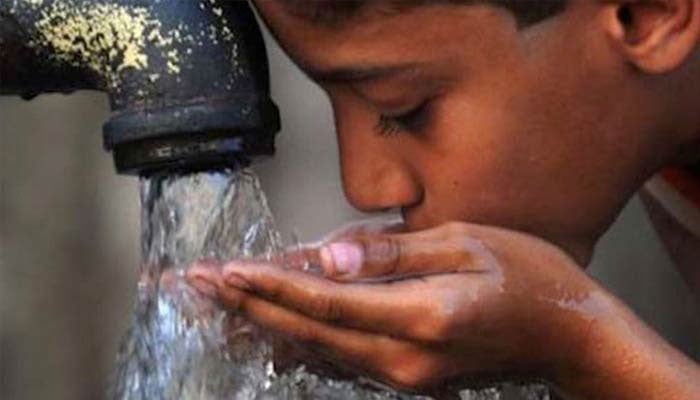
ISLAMABAD: Only 32 percent of drinking water sources nationwide are safe, disclosed a document of Pakistan Council of Research in Water Resources (PCRWR).
Due to microbiological contamination, 59 percent of sources were found unfit for human consumption.
HUNZA VALLEY: Every winter for decades, the pool in front of Aleena Gul’s house in Hunza Valley has transformed into an ice rink, framed by jagged Himalayan peaks and the stone walls of Altit Fort. This year, it did not.
Gul can see the swimming pool that doubles as a hockey arena from her bedroom.
For years, she would wake up at dawn, lace her skates and step straight from her front door onto solid ice.
After four years away at university, she returned eager to play again, but has found herself waiting for winter to arrive.
“There’s a big difference between 2018 and now,” said Gul, 21, captain of her team and among the first women in Hunza to take up the sport. “Winter used to begin in November and everything would freeze. It’s January now and the ice still hasn’t frozen properly.”
Across Pakistan’s northern mountains, winters are arriving later and behaving unpredictably. Cold spells are shorter, freeze–thaw cycles unstable. In the wider Hindu Kush–Himalayan region, scientists report fewer extreme cold events and shorter snow seasons; what locals call The PCRWR, under the National Water Quality Monitoring Programme (2025–26), assessed drinking water quality in 70 major cities across the country.
Based on analysis of 2,205 water sources, it was revealed overall 68 percent of tested drinking water samples were unsafe for human consumption.
Provincial breakdown of unsafe water sources due to microbiological contamination is as follows:
Sindh: 89pc; Azad Jammu and Kashmir: 85pc; Punjab: 61pc; Balochistan: 59pc; Gilgit-Baltistan: 69pc; Khyber Pakhtunkhwa: 40pc.
City-wise findings show alarming results: Sanghar, Dadu and Mithi: 100pc unsafe; Mirpurkhas: 95pc; Khushab: 92pc; Karachi: 91pc; Malir: 88pc; Larkana: 82pc; Federal Capital (Islamabad): 61pc unsafe.
Other cities with high percentages of unsafe samples include Attock: 89pc; Chakwal: 86pc; Jhelum: 69pc; Joharabad: 79pc; Mianwali: 71pc; Rahim Yar Khan: 83pc; Chitral: 86pc; Tando Allah Yar: 89pc; Nagar: 90pc; Gilgit: 88pc.
In addition, 100pc of samples from Mardan and Nowshera were found unsafe. Peshawar 86pc; Skardu 83pc.
Meanwhile, 75pc of sources in Gujrat were found safe for human consumption.
Overall, out of 2,205 samples tested, 707 (32pc) were declared safe, while 1,498 (68pc) were found unsafe for human consumption.