Pakistan carried out a decisive and comprehensive response to unprovoked attacks by the Afghan Taliban regime, resulting in the killings of 133 members and injuries to over 200, Federal Minister for Information Atta Tarar confirmed on Friday.
The armed forces launched Operation Ghazab lil-Haq (Righteous Fury) in retaliation to the Taliban regime’s unprovoked aggression along the Pakistan–Afghanistan border.
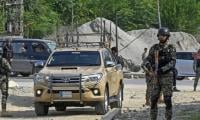
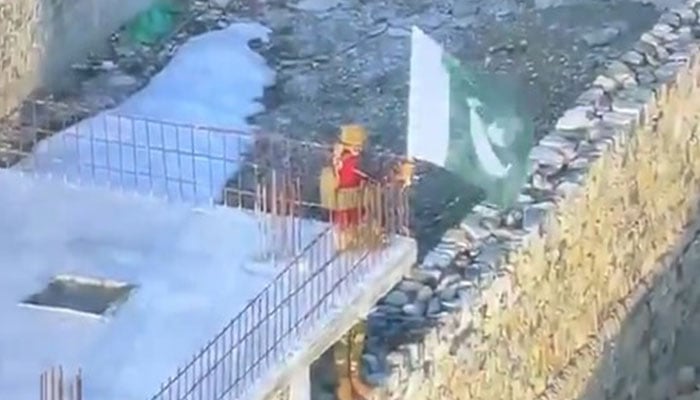
Security sources said Pakistan’s armed forces destroyed several key Afghan Taliban posts. Following Pakistan's decisive action, Afghan Taliban reportedly raised white flags at multiple positions.
The sources added that security forces effectively targeted Afghan Taliban positions using artillery and quadcopters, significantly weakening their defensive capabilities.
Tarar said that the military carried out a coordinated and effective operation following cross-border hostilities. He said that the operation resulted in significant losses for the Afghan Taliban, as at least 133 Taliban were killed, and more than 200 were injured.
He said that 27 Afghan posts were destroyed, and nine were captured. In addition, he said more than 80 tanks, artillery guns, and armored personnel carriers (APCs) were destroyed during the engagement.
Tarar said that the Pakistan Air Force also conducted strikes in Kandahar, Kabul, and Paktia, and destroyed military installations belonging to the Taliban regime.
He said that two corps headquarters, three brigade headquarters, two ammunition depots, one logistics base, three battalion headquarters, two sector headquarters, and more than 80 tanks, artillery pieces, and armored personnel carriers had been destroyed.
“These very, very effective air strikes have been conducted by the Pakistan Air Force,” he said, citing the security sources.
The minister confirmed that two Pakistani soldiers embraced martyrdom and three sustained injuries while safeguarding the motherland.
“Our armed forces ensured the defense of the homeland with exemplary professional skills,” he said, adding that any future aggression would be met “with an iron hand.”
The information minister said that hostile elements are spreading fake news on social media in the aftermath of the operation.
Meanwhile, Iranian FM Abbas Araghchi has said that Tehran was ready to facilitate talks between Islamabad and Kabul.
"It is appropriate that Afghanistan and Pakistan resolve their differences through dialogue," FM Araghchi said in a statement on X.
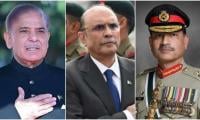
Meanwhile, President Asif Ali Zardari and Prime Minister Shehbaz Sharif reaffirmed Pakistan’s resolve to defend its sovereignty, territory, and people in the wake of intensified cross-border confrontations with Afghan Taliban forces.
President Zardari warned that anyone who mistakes Pakistan’s pursuit of peace for weakness will face a strong, comprehensive, and decisive response, stressing that no one would be beyond the reach of the nation’s armed forces.
PM Shehbaz said there would be no compromise on the country’s defence, and every act of aggression would be met with a firm and befitting response.
He emphasised that the people and the Armed Forces of Pakistan remain fully prepared to protect the nation’s security and territorial integrity.
Federal Defence Minister Khawaja Asif said that Pakistan’s patience has “reached its limit” and that a strong and decisive response is delivered to the aggression.
The defence minister made it clear that no compromise would be made on national security. “There will be no compromise on Pakistan’s sovereignty and national safety,” he asserted.
Interior Minister Mohsin Naqvi warned that the Afghan Taliban would face serious consequences for their actions. He said that the Taliban regime deliberately targeted civilian populations, terming the move a cowardly act carried out under the cover of darkness.
“The attempt to target innocent civilians is condemnable and reflects the malicious intent of the,” he said, adding that such aggression was “unbearable and unacceptable.”
The recent escalation of tensions between Pakistan and Afghanistan follows Pakistan’s retaliatory actions in response to suicide bombings in Islamabad, Bajaur, and Bannu, all of which were traced back to militants based in Afghanistan.
Islamabad, which has repeatedly urged Kabul to prevent its soil from being used by terrorist organisations to carry out attacks, conducted intelligence-based strikes targeting seven terrorist camps and hideouts belonging to Fitna al Khawarij (FAK) — a term used for the banned Tehreek-e-Taliban Pakistan (TTP) — its affiliates and the Daesh-Khorasan, along the Pakistan-Afghanistan border last week.
Security sources later confirmed that more than 80 militants were killed in the strikes, which had hit "New Centre No. 1 and New Centre No 2 in Nangarhar, Khwariji Maulvi Abbas Centre in Khost, Khwariji Islam Centre, Khwariji Ibrahim Centre in Nangarhar, and Khwariji Mullah Rahbar and Khwariji Mukhlis Yar in Paktika".
The recent border tensions reignited months after the two countries agreed to a ceasefire in October 2025 when the Afghan Taliban regime opened unprovoked gunfire at several border points.
The Afghan forces' firing was aimed at helping Khawarij formations cross the border into Pakistan.
Islamabad, however, back then had agreed to an initial ceasefire at Kabul's request. The countries then later reached a ceasefire deal in Qatar, which was mediated by Doha and Turkiye.
Under the agreement, terrorism from Afghanistan on Pakistani soil was to be stopped immediately.
The two sides then further held follow-up discussions in Turkiye which did not deliver the desired results due to stubbornness from the Afghan side, as Kabul used the Istanbul talks to malign Pakistan rather than address Islamabad's core concern of terrorism emanating from Afghan soil.