Education is often called the great equaliser. In Pakistan, however, it has quietly become one of the strongest markers of inequality.
A child’s future is shaped less by talent or hard work and more by the type of school their family can afford or access. Public schools, private institutions and religious seminaries operate side by side, educating millions, yet rarely intersect in purpose, standards or outcomes. What exists is not diversity, but division.
Pakistan does not have one education system. It has three parallel tracks. Each fills gaps left by the others, yet no one alone can deliver the equitable, high quality learning the country urgently needs. If education is to strengthen national cohesion rather than deepen social divides, the strengths and weaknesses of each system must be addressed honestly.
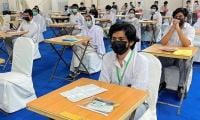
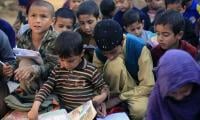
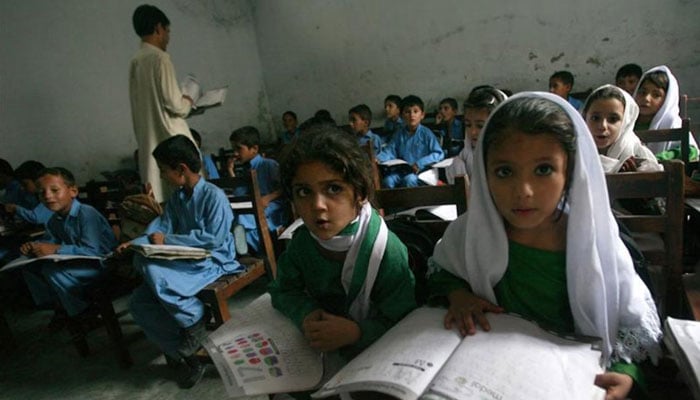
Public schools remain the backbone of the country’s educational landscape. With the widest geographic reach, they serve rural communities, urban slums, and marginalised populations where no alternatives exist. For millions of families, they are the only affordable option and, in principle, the strongest vehicle for social mobility. At their best, public schools bring together children from diverse backgrounds and nurture a shared civic identity.
Yet the system has long struggled with chronic underinvestment and weak governance. Dilapidated infrastructure, overcrowded classrooms, teacher absenteeism and limited accountability continue to undermine learning. Many children complete primary school without mastering basic literacy and numeracy. Teaching methods often emphasise memorisation over reasoning, leaving students ill-prepared for higher education or meaningful employment. Public schools carry the promise of equity, but lack the consistent support required to fulfill it.
Private schools have emerged as an alternative for families seeking better outcomes. Many offer stronger English language instruction, greater exposure to technology and more structured academic oversight. In urban areas especially, they have filled gaps left by struggling public institutions. For many parents, choosing private education is a practical decision rooted in aspiration.
However, private education has also turned learning into a market good. Access increasingly depends on ability to pay. Even within the private sector, disparities are stark. Elite institutions coexist with low-feed schools that operate with minimal oversight and limited quality assurance. Teachers often face low salaries and job insecurity and recurring fees increases strain middle- and lower-income households. While private schools may deliver improved outcomes for some, they also reinforce social stratification and weaken the idea of education as a shared public responsibility.
Religious schools, or madrassas, occupy a distinct and important space. For the poorest families, they provide free education, boarding and meals, services that the state does not consistently ensure. They are rooted in community trust and contribute to moral and character formation. In many remote areas, they are the only accessible schooling option.
At the same time, most offer limited exposure to science, mathematics and contemporary skills required in today’s economy. Graduates often face restricted career pathways beyond religious roles. Regulatory oversight remains uneven and integration into mainstream academic streams is limited. Madrassas address a critical social need but cannot on their own provide a comprehensive education suited to modern economic realities.
Despite their differences, all three systems share common structural challenges. Gender gaps widen at the secondary level. Teacher preparation is inconsistent. Debates over language of instruction continue to affect comprehension and learning outcomes. The disconnect between schooling and the labour market demands fuels frustration among young people. Climate shocks, poverty and displacement further disrupt education across the board.
An equally urgent concern is the promotion of equality, diversity and inclusion within all learning spaces. Schools must be safe environments where children are protected from abuse, discrimination, bullying, and neglect. Clear safeguarding policies, trained staff, complaint mechanisms and strong community oversight are essential across public, private and religious institutions alike. Inclusion must also extend to girls, children with disabilities, minority communities, and those affected by poverty or displacement.
The core problem is not the existence of multiple systems. It is the absence of coherence among them. Parallel structures have evolved without a shared framework, common standards or clear pathways for mobility between streams. This fragmentation entrenches inequality and limits national progress.
Pakistan does not need uniformity, but it does need alignment. Clear minimum learning standards must apply across public, private and religious schools. Teacher professional standards should be strengthened nationwide through sustained investment in training and accountability. Partnerships can support quality improvement, but equity must remain central. Religious institutions can be supported to incorporate modern subjects while preserving their cultural and moral foundations.
Above all, foundational literacy and numeracy in early grades must become a national priority. Without strong basics, no reform will succeed.
Encouragingly, practical efforts are already demonstrating what alignment can look like. Through SDPI’s ILMpact initiative, implemented in collaboration with the British Council and provincial stakeholders in selected districts across Punjab and Khyber Pakhtunkhwa, targeted interventions have focused on remedial learning, early grade literacy, community engagement, safeguarding awareness and data-driven monitoring.
By combining structured assessments, teacher support, inclusive classroom practices, and catch-up learning models, the initiative shows that measurable improvement is possible when accountability, local ownership, and evidence guide action. Such approaches reinforce that public systems can be strengthened without deepening inequality, provided reforms remain inclusive, protective, and focused on foundational learning.
Education should be the force that binds a nation together. When schooling divides children by income, geography or ideology, it weakens social cohesion and economic potential. Until every child, regardless of where they study, learns in a safe, inclusive and high-quality environment, Pakistan will remain educated in fragments and underdeveloped as a whole.
The writer is affiliated with the Systems Research Group unit at the Sustainable Development Policy Institute (SDPI). The views expressed are solely his own and do not necessarily reflect the official position of the SDPI.