WASHINGTON: In a major setback for US President Donald Trump, the US Supreme Court has struck down his sweeping global tariffs, ruling that he overstepped his authority by using a law designed for national emergencies.
The landmark 6-3 decision carries wide implications for US trade policy and the global economy, and could reshape how far a president can go in imposing tariffs without Congress.
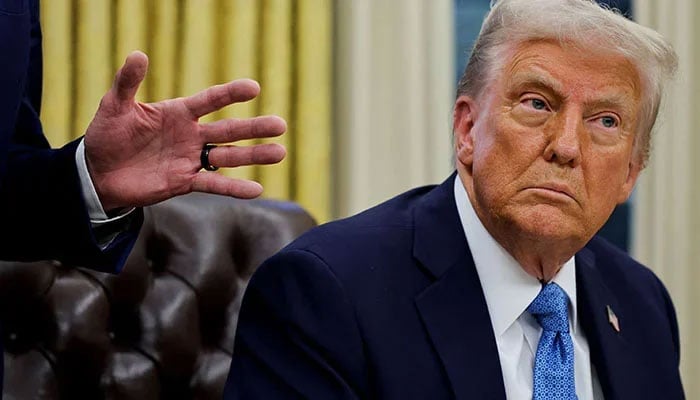
The decision, authored by conservative Chief Justice John Roberts, provoked a furious reaction from Trump, who denounced the justices who ruled against him. Trump said “other alternatives” are available to him to pursue tariffs, and announced a 10% global tariff under a legal authority different from the one at issue in the case “over and above our normal tariffs already being charged.”
The justices upheld a lower court’s decision that Trump’s use of this 1977 law exceeded his authority. The justices ruled that the law at issue – the International Emergency Economic Powers Act, or IEEPA – did not grant Trump the power he claimed to impose tariffs.
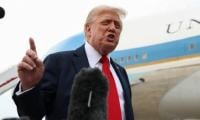
Trump, in comments at the White House after the ruling, condemned it as “terrible” and “totally defective.”
“I’m ashamed of certain members of the court – absolutely ashamed – for not having the courage to do what’s right for our country,” Trump said.
Trump has leveraged tariffs – taxes on imported goods – as a key economic and foreign policy tool.
“Our task today is to decide only whether the power to ‘regulate … importation,’ as granted to the president in IEEPA, embraces the power to impose tariffs. It does not,” Roberts wrote in the ruling, quoting the statute’s text that Trump claimed had justified his sweeping tariffs.
The US Constitution grants Congress, not the president, the authority to issue taxes and tariffs.
Tariffs have been central to a global trade war that Trump initiated after he began his second term as president, one that has alienated trading partners, affected financial markets and caused global economic uncertainty.
Trump has called his tariffs vital for US economic security, predicting that the country would be defenceless and ruined without them.
“Foreign countries that have been ripping us off for years are ecstatic,” Trump said on Friday. “They’re so happy, and they’re dancing in the streets, but they won’t be dancing for long that, I can assure you.”
The Supreme Court, which has a 6-3 conservative majority, had allowed Trump’s expansive exertion of presidential powers in other areas in a series of rulings issued on an emergency basis, and Friday’s ruling represented the biggest setback it has dealt him since he returned to office in January 2025.
“It’s my opinion that the court has been swayed by foreign interests and a political movement that is far smaller than people would ever think,” Trump said.
Joining Roberts in the ruling were conservative Justices Neil Gorsuch and Amy Coney Barrett, both of whom Trump appointed during his first term in office, and the three liberal justices, Sonia Sotomayor, Elena Kagan and Ketanji Brown Jackson.
Roberts, citing a prior Supreme Court ruling, wrote that “the president must ‘point to clear congressional authorisation’ to justify his extraordinary assertion of the power to impose tariffs,” adding: “He cannot.”
Democrats and various industry groups hailed the ruling. Many business groups expressed concern that the decision will lead to months of additional uncertainty as the administration pursues new tariffs through other legal authorities. The ruling did not address the issue of the government refunding tariffs that were struck down. Trump said the issue of refunds could take years to litigate.
Trading on Wall Street was volatile after the ruling as investors assessed hopes for easing inflation against uncertainty about Trump’s next moves on tariffs.
In another important development, President Trump said there have been no changes to the trade deal with India, describing it as one where India pays tariffs and the US does not.
“Nothing changes, they’ll be paying tariffs, and we will not be paying tariffs,” Trump said.
“So, the deal with India is they pay tariffs. This is a reversal for what it used to be,” Trump said.
“I think Prime Minister Modi is a great gentleman, a great man, actually, but he was much smarter than the people that he was against in terms of the United States. He was ripping us off, India.”
"So we made a deal with India, it's a fair deal now, and we are not paying tariffs to them, and they are paying tariffs. We did a little flip," the US president said.
The Supreme Court has taken away President Trump's leverage with its decision to strike down tariffs imposed under a law meant for use in national emergencies, US Treasury Secretary Scott Bessent said on Friday.
"The Supreme Court has taken away the President's leverage, but in a way, they have made the leverage that he has more draconian because they agreed he does have the right to a full embargo," Bessent told "The Will Cain Show" on Fox News.
"We will get back to the same tariff level for the countries. It will just be in a less direct and slightly more convoluted manner," he said.
Trump reacted to the court's ruling on Friday by saying he would invoke other laws to collect tariffs, and announced a blanket 10% tariff on imports from all other countries.
Bessent said he believed every country was going to honour the trade agreements made with the Trump administration over the last year.
"He (Trump) has a right to a complete embargo; he can just cut countries off ... or he can cut whole product lines off. We can't receive any money. So, I would call on all countries to honour their agreements and move forward," Bessent added.
Justice Brett Kavanaugh, in a dissent joined by fellow conservatives Clarence Thomas and Samuel Alito, wrote that the ruling did not necessarily foreclose Trump “from imposing most if not all of these same sorts of tariffs under other statutory authorities,” adding that “the court’s decision is not likely to greatly restrict presidential tariff authority going forward.”
“In essence, the court today concludes that the president checked the wrong statutory box by relying on IEEPA rather than another statute to impose these tariffs,” Kavanaugh wrote.
Kavanaugh was appointed by Trump during his first term as president. Trump said of Kavanaugh: “I’m so proud of him,” while also praising Thomas and Alito.
Trump has imposed some additional tariffs under other laws that were not at issue in this ruling. Based on government data from October to mid-December, those represent about a third of the revenue from Trump-imposed tariffs.
Despite Trump declaring a national emergency over the $1.2 trillion US goods trade deficit with the rest of the world to impose tariffs under IEEPA, that deficit grew again in 2025 to a record $1.24 trillion.
Trump turned to a statutory authority by invoking IEEPA to impose the tariffs on nearly every US trading partner without the approval of Congress.
Part of the Supreme Court’s majority declared that Trump’s interpretation of the law would intrude on the powers of Congress and violate a legal principle called the “major questions” doctrine.
The conservative doctrine requires actions by the government’s executive branch of “vast economic and political significance” to be clearly authorised by Congress. The court used the doctrine to stymie some of Democratic former President Joe Biden’s key executive actions.
Roberts said that endorsing the administration’s views would impermissibly expand presidential authority over tariff policy.
“It would replace the longstanding executive-legislative collaboration over trade policy with unchecked presidential policymaking,” Roberts wrote.
It was “telling” that “no President has invoked the statute to impose any tariffs – let alone tariffs of this magnitude and scope,” Roberts added.
The ruling came in a legal challenge by businesses affected by the tariffs and 12 US states, most of them Democratic-governed.
The liberal justices did not join the part of the opinion involving the major questions doctrine.
Trump’s tariffs were forecast to generate over the next decade trillions of dollars in revenue for the United States, which possesses the world’s largest economy.
Trump’s administration has not provided tariffs collection data since December 14. But Penn-Wharton Budget Model economists estimated on Friday that the amount collected in Trump’s tariffs based on IEEPA stood at more than $175 billion.
“The Court says nothing today about whether, and if so how, the Government should go about returning the billions of dollars that it has collected from importers,” Kavanaugh said in his dissent. “But that process is likely to be a ‘mess,’ as was acknowledged at oral argument.”
It was not immediately clear when IEEPA tariffs assessments and collections at ports of entry would halt, or how any refund process might work.
IEEPA lets a president regulate commerce in a national emergency. Trump became the first president to use IEEPA to impose tariffs, one of the many ways he has aggressively pushed the boundaries of executive authority since he returned to office in areas as varied as his crackdown on immigration, the firing of federal agency officials, domestic military deployments and military operations overseas.
Candace Laing, president and CEO of the Canadian Chamber of Commerce, said the decision was a legal ruling, not a reset of US trade policy.
“Canada should prepare for new, blunter mechanisms to be used to reassert trade pressure, potentially with broader and more disruptive effects,” Laing said.
After the Supreme Court heard arguments in the case in November, Trump said he would consider alternatives if it ruled against him on tariffs.
Treasury Secretary Scott Bessent and other administration officials have said the United States would invoke other legal justifications to retain as many of Trump’s tariffs as possible. Among others, these include a statutory provision that permits tariffs on imported goods that threaten US national security and another that allows retaliatory actions including tariffs against trading partners that the Office of the US Trade Representative determines have used unfair trade practices against American exporters.
None of these alternatives offered the flexibility and blunt-force dynamics that IEEPA provided Trump, and may not be able to replicate the full scope of his tariffs in a timely fashion.
Democratic California Governor Gavin Newsom called on the Trump administration to issue tariff refund cheques to US families and businesses.
“Time to pay the piper, Donald,” Newsom said. “These tariffs were nothing more than an illegal cash grab that drove up prices and hurt working families, so you could wreck longstanding alliances and extort them.”
Senate Democratic Leader Chuck Schumer called the decision a “victory for the wallets of every American consumer.”
Trump’s ability to impose tariffs instantaneously on any trading partner’s goods under the aegis of some form of declared national emergency raised his leverage over other countries. It brought world leaders scrambling to Washington to secure trade deals that often included pledges of billions of dollars in investments or other offers of enhanced market access for US companies.
IEEPA historically had been used for imposing sanctions on enemies or freezing their assets, not to impose tariffs. The law does not specifically mention the word tariffs. Trump’s Justice Department had argued that IEEPA allows tariffs by authorising the president to “regulate” imports to address emergencies.
The Congressional Budget Office has estimated that if all current tariffs stay in place, including the IEEPA-based duties, they would generate about $300 billion annually over the next decade.
On April 2 on a date Trump labelled “Liberation Day,” the president announced what he called “reciprocal” tariffs on goods imported from most US trading partners, invoking IEEPA to address what he called a national emergency related to US trade deficits, though the United States already had run trade deficits for decades.
In February and March of 2025, Trump invoked IEEPA to impose tariffs on China, Canada and Mexico, citing the trafficking of the often-abused painkiller fentanyl and illicit drugs into the United States as a national emergency.
But Trump’s use of tariffs as a cudgel in US foreign policy has succeeded in antagonising numerous countries, including those long considered among the closest US allies.
Trump has wielded his tariffs to extract concessions and renegotiate trade deals, and as a weapon to punish countries that draw his ire on non-trade political matters. These have ranged from Brazil’s prosecution of former president Jair Bolsonaro, India’s purchases of Russian oil that help fund Russia’s war in Ukraine, and an anti-tariffs advert by Canada’s Ontario province.
The Washington-based US Court of Appeals for the Federal Circuit sided with five small businesses that import goods in one challenge, and the states of Arizona, Colorado, Connecticut, Delaware, Illinois, Maine, Minnesota, Nevada, New Mexico, New York, Oregon and Vermont in another.