Pakistan is almost always discussed in the language of crisis. Every indicator is read as proof of failure. The public conversation rarely asks whether the story we keep repeating is even empirically accurate.
Our elite discourse is driven less by long-run data and more by short-term shocks, political anger, and international comparisons that ignore structure. As a result, we have developed a strange intellectual habit: Pakistan is always collapsing, yet somehow never collapses. This contradiction should not be dismissed. It should be studied.
This article does not argue that Pakistan is on the perfect path. It argues that Pakistan is on a far more complex path than our public narratives allow. A path of contradictions: decline in some areas, progress in others, and adaptation almost everywhere. What follows is cautious optimism and an ardent request for analytical honesty.
The six examples that follow are not presented as isolated success stories, nor as attempts to deny Pakistan’s real weaknesses. They are deliberately chosen to illustrate a pattern- Pakistan’s trajectory cannot be reduced to a single narrative of collapse.
One, a society that innovates under pressure. Pakistanis have repeatedly solved some of their gravest challenges through bottom-up innovation. The electricity crisis is a clear example. Instead of waiting for the grid to improve, households turned to solar. According to HIES 2025 (a survey conducted by PBS), close to 25 per cent of households now rely on some form of solar energy. In rural Sindh and Balochistan, this rises to nearly half.
This is not just an energy story. It is a resilience story. It shows a society that continues to function even when systems fail. It also shows a state that, even with hesitation, allows such a transformation to happen. A fragile society does not adapt like this.
Two, social protection and health coverage. Around 10 million Pakistanis are covered by cash transfer programmes under the Benazir Income Support Programme (BISP). This provides a minimum income floor for millions.
At the same time, about three out of four Pakistanis are technically covered by free or subsidised healthcare under the Sehat Sahulat Program and provincial schemes. Quality issues remain, but financial access itself is a major structural shift.
Together, these systems have quietly reshaped everyday economic security. Arguments about the state not caring for its citizens, or that nothing has changed for the betterment of society’s less well-endowed, are extremely lazy if not intellectually dishonest. But this is what we hear all the time.
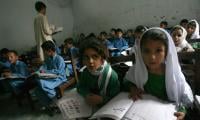
Three, education: a social transition, not just a policy failure. Pakistan has made steady progress in education. The share of children who never enter school has fallen significantly. The main challenge today is keeping children in school until age 16. Tertiary education has expanded by 800 per cent since the year 2000. In a world where technical skills increasingly replace formal degrees, the solution may not lie only in forcing children into conventional schooling. In any case, we have moved many needles on the education front. Why cast a deep sense of pessimism if our progress is in the right direction?
Four, population: another misunderstood transition. Another favourite topic of Pakistan’s elite is population, often presented as a massive failure. Yet Pakistan’s total fertility rate has fallen from around 6.0 to about 3.6 in three decades. In urban areas, it is close to 3.0 and among top income quintiles, it appears to be near or even below 2.0, as reflected in HIES quintile analysis and household child counts.
In a world where many countries now face demographic crises because too few children are being born, Pakistan’s elite obsession with ‘too many kids’ sounds increasingly outdated.
Five, poverty in the long run and quality of our economic growth. World Bank estimates based on national poverty lines, nowcasting and 2025 projections show that poverty in Pakistan has declined sharply since 2000. Poverty did rise again between 2018 and 2025 due to inflation, Covid, floods and policy instability. But even today, poverty remains far below early-2000s levels. In another country, we would have celebrated millions out of chronic poverty lifted.
Despite India’s much higher per-capita income, Pakistani households’ asset levels are close to those of Indian households. This comes from Gallup Pakistan analysis using HIES 2025, compared with official Indian household surveys from 2024. Income flows differ, but household living standards are more comparable than our narratives allow.
Could it be true that our economic growth, though slow, has been healthier than India’s? Ours has provided more dividends in terms of better living standards?
Six, taxation and political economy. Only about nine per cent of Pakistani households pay meaningful direct taxes. Around 90 per cent pay less than they receive through education, health and cash transfers. This is based on the World Bank Fiscal Incidence Report, Gallup Pakistan & Prime Institute analysis.
Pakistan is therefore a net-transfer society. Most households are beneficiaries, not contributors. Despite one of the lowest tax-to-GDP ratios, students attending government schools and Universities is one of the largest in the world (at par with our population). Ones reliant on social welfare one of the largest, ones reliant on free health care one of the largest. How can a failed state or one that is at its pinnacle deliver such extraordinary benefits to its citizens? Yes, quality is a concern, but it is always a chase even in developed countries.
What does all this explain? When formal systems underperform, households do not simply collapse; they reorganise. They diversify income, accumulate assets instead of relying solely on wages, migrate temporarily or permanently, rely on kinship networks, shift to private provision of services, and adopt new technologies such as solar power.
Pakistan is best understood not as a collapsing economy, nor as an emerging high-growth miracle, but as a low-equilibrium political economy. It has not achieved the scale of sustained high growth that transforms state capacity, dramatically raises tax-to-GDP ratios and delivers expansive public services. But it has also not fallen into the kind of state breakdown or elite capture that produces oligarchic dominance or systemic implosion. Businesses thrive, often dynamically, yet the economy has not produced industrial titans on the scale of the Tatas, Ambanis or Korean chaebols. Pakistan thus occupies an intermediate equilibrium: too functional to collapse, too fragmented to scale decisively.
If this is indeed Pakistan’s structural equilibrium, the more difficult question is whether we should constantly try to shame or rupture it in pursuit of an imagined ideal. Much of our intellectual unease comes from comparing ourselves to high-growth, high-tax, high-discipline societies and then declaring our own balance illegitimate. But what if a society consciously – or unconsciously – prefers macroeconomic stability over growth volatility?
A country repeatedly scarred by current account crises, currency crashes and inflationary spirals may rationally choose to keep its external deficit tight, even at the cost of slower growth. Likewise, if citizens are unwilling to accept significantly higher taxation, they have implicitly settled for a thinner state combined with thicker family and community systems.
Everyday life in Pakistan still accommodates rhythms that economists may label inefficient: workers returning to villages for harvest season, extended family obligations and time carved out for social and religious gatherings. In narrow productivity terms, these may appear to be losses. In social terms, they generate cohesion, identity, and happiness.
For decades, reform discourse has treated such practices as backwardness standing in the way of modernity. Yet repeated attempts to overwrite these patterns have yielded limited transformation and considerable instability. Perhaps the deeper lesson is that smallness, informality and balance are not always pathologies. Low growth is not inherently undesirable if it is more equitable, less inflationary, and socially grounded.
A stable, modest equilibrium – though less glamorous than rapid takeoff – may in some contexts be more humane and more sustainable than restless, disruptive ambition.
The writer is executive director of Gallup Pakistan and holds a Masters degree from the School of Oriental and African Studies (SOAS), London.