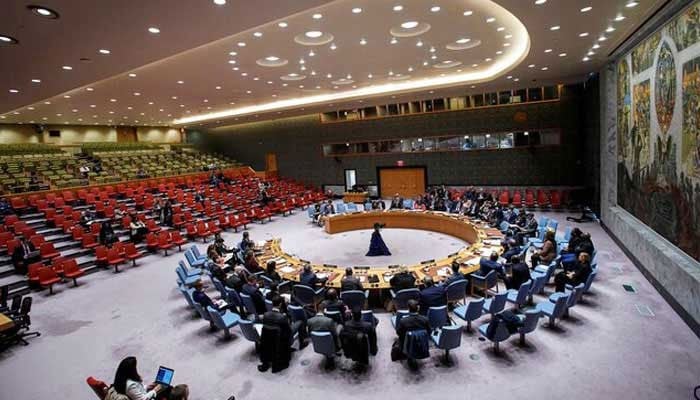
ISLAMABAD: Pakistan on Friday thanked the United States for its constructive efforts to forge consensus and welcomed a unanimously adopted resolution at the United Nations Security Council (UNSC), which it said was both timely and necessary and extends by one year sanctions against the Taliban.
The mandate of the monitoring team that supports the 1988 Afghanistan Sanctions Committee, oversees sanctions imposed on the Taliban.
The resolution was voted for by Pakistan and 14 other members of the Council.
Pakistan’s Permanent Representative at the United Nations, Ambassador Asim Iftikhar Ahmad while explaining the vote stated, “Through adoption of this resolution, the Council has sent a clear message to the Taliban authorities that Afghan territory should not be used to threaten or attack any country, and that no Afghan group or individual should support terrorists operating on the territory of any country.”
He pointed out that the Council also outlines its expectations from all member states to prevent kidnappers, hostage takers and terrorist groups from benefitting directly or indirectly from ransom payments or from political concessions, and to secure the safe release of hostages.
Pakistan’s demands come in the wake of an earlier statement by Defence Minister Khawaja Asif who after the continuous attacks on Pakistan from inside Afghanistan, warned that Pakistan can strike inside Afghanistan before the month of Ramazan.
“Pakistan remains seriously concerned by the active presence of terrorist groups on Afghan soil that includes TTP, BLA and Majeed Brigade, ISIL-K and al-Qaeda. These groups have been responsible for some of the most heinous terrorist attacks against Pakistan and incidents of hostage taking,” said the ambassador.
He reminded the Council that this month, Pakistan was struck by dastardly and cowardly terrorist attacks by BLA and Daesh that resulted in the cumulative loss of 80 innocent Pakistanis.
“Once again Afghan soil was used by these groups to plan and orchestrate these attacks. We reiterate our call that Afghan territory must not be used for terrorism against neighbouring countries and efforts must be made to prevent external spoilers from exploiting the situation,” said the ambassador.
He clearly told the Taliban that it is for them to decide what path they wish to choose for Afghanistan; whether it is the path to isolation or the path to peace and prosperity as a responsible member of the international community, calling upon them to prevent terrorist groups from carrying out such actions with impunity and to effectively combat terrorism by honoring their counter-terrorism commitments through sustained and verifiable actions in the interests of lasting peace and security.
Praising the vote, Pakistan said that the Council has spoken with a unanimous voice by highlighting these problems and remains committed to reviewing these sanctions as and when appropriate while taking into account the ground realities in Afghanistan.
“The Monitoring Team provides useful insights on Afghanistan’s landscape to the Council, particularly on terrorism and security related issues. We hope that the Monitoring Team will make every effort to continue to report actively as mandated by this resolution and support the 1988 Taliban Sanctions Committee’s work”, the ambassador added.
Meanwhile, the resolution has also emphasised upon the various challenges faced by Afghanistan that include the dire humanitarian situation, the deteriorating human rights situation, particularly for women and girls who are denied fundamental freedoms, and are living in harsh conditions under Taliban rule, besides economic collapse, natural disasters, issues related to political inclusivity and drug trafficking.