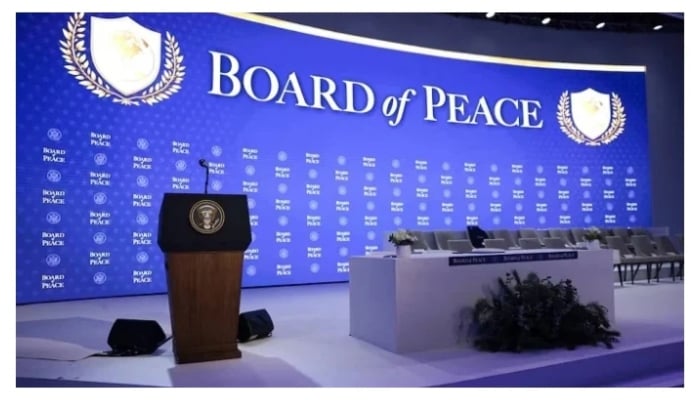
Pakistan’s decision to participate in the first meeting of the Gaza Board of Peace has once again placed the country at the centre of global diplomatic attention. According to international media reports, the proposed session of the Board of Peace, established under the leadership of US President Donald Trump, is expected to yield a significant breakthrough on the Gaza crisis. Reportedly, a potentially transformative solution to the Palestine conflict may emerge in the coming future, one that could trigger new geopolitical alignments among major global players.
Following the adoption of United Nations Security Council Resolution 2803, the Trump-led Board of Peace has received international endorsement to oversee the transitional phases of the Gaza peace plan. Under the board’s charter, Trump serves as chairman for an indefinite period and holds exclusive authority to invite member states. Nearly 60 countries have reportedly been invited, and according to official statements, Pakistan has been granted the status of a founding member.
The resolution authorises the board to deploy a temporary peacekeeping force in the Palestinian territory, as well as the establishment of a Palestinian National Committee for the Administration of Gaza, and the creation of a World Bank-backed trust fund for reconstruction in war-affected areas. Once international forces are deployed, Israeli troops are expected to withdraw from most parts of Gaza. The board will also be empowered to train and support local Palestinian police forces to ensure law and order during the transitional phase.
So far, several countries including Pakistan, Argentina, Bahrain, Egypt, Hungary, Indonesia, Jordan, Qatar, Saudi Arabia, Turkiye, the UAE, Uzbekistan and Vietnam have joined hands with Trump. However, major global powers such as France, Germany, Russia, China and the UK are still not on board. It is also significant that Trump reportedly withdrew Canada’s invitation after critical remarks made by its prime minister at the World Economic Forum.
For Pakistan, the Palestine issue is a matter of historical commitment and public sentiment. Even before independence, the Muslim League passed a resolution in support of the Palestinian people at its landmark Lahore session on March 23, 1940. Since 1947, Pakistan has consistently upheld a clear and principled stance to support a two-state solution in accordance with UN resolutions and the establishment of an independent Palestinian state based on the 1967 borders.
Pakistan has repeatedly voiced for Palestinian self-determination at different global forums, including the UN and the OIC. For the people of Pakistan, Palestine represents not just geopolitics but ideological ties, humanitarian solidarity, and deep-rooted public sentiments.
In my view, leadership in global politics ultimately belongs to those willing to take bold steps in complex conflicts. The current developments suggest that President Trump aims to move beyond temporary ceasefires towards sustainable stability. While global opinions about him vary, it cannot be denied that Trump has attempted to break long-standing diplomatic deadlocks in the Middle East. Through the Board of Peace, he seems to be determined in resolving the Palestinian conflict not solely through a security lens but also via governance reform and economic reconstruction.
We must recognise that meaningful influence is exercised from within the process, not from the outside looking in. Pakistan has a distinguished bright record in UN peacekeeping missions, with its troops earning respect and goodwill wherever deployed. If offered participation in the International Stabilisation Force in Gaza, Pakistan could once again demonstrate its professional military capability and humanitarian commitment.
At this crucial moment, Pakistan’s principled and proactive engagement may therefore prove vital in advancing a just, credible and lasting peace for Gaza, ultimately contributing to regional stability and global peace. It is also a golden opportunity for us to position our beloved country Pakistan as a responsible, forward-looking and influential state on the global stage.
The writer is a member of the National Assembly and patron-in-chief of the Pakistan Hindu Council. He tweets/posts @RVankwani