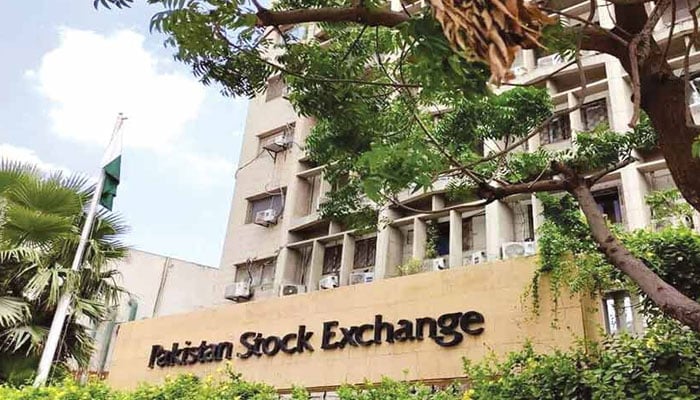
Over the past three years, the Pakistan Stock Exchange’s (PSX) benchmark, the Karachi Stock Exchange 100 index (KSE-100), has delivered more than 300 per cent returns, positioning the PSX as one of the best-performing markets among those in frontier and emerging economies.
The index surged more than 87 per cent in 2024 and 52 per cent in 2025 as per trading economics, and the rally continues as we step into 2026. The historic rally in PSX is not driven by innovation in a particular sector like the AI-driven rally in the S&P500 of the US, or by rising economic growth or an increase in the overall wealth of the people. This remarkable performance by the equity market in a country which is struggling with low growth and grapples with persistent structural challenges is probably a result of various key factors working together: macroeconomic stabilisation, undervaluation compared to developing economies’ standards, unprecedented profitability in the banking sector, liquidity shift from real estate to equities and the retail revolution.
By mid-2023, the country was on the brink of sovereign default. Foreign exchange reserves were drained down to $3.09 billion, quoted by Reuters on February 1, 2023, which could hardly cover a week’s imports. Inflation had risen to 38 per cent per annum, according to the Pakistan Bureau of Statistics (PBS) and a balance of payments (BOP) crisis was looming. In September 2024, the IMF Executive Board approved a 37-month Extended Fund Facility (EFF) amounting to about $7 billion, on the condition that the Pakistani economy would undertake significant structural reforms.
The IMF intervention and the political stability achieved in the period following the 2024 election brought about macroeconomic stabilisation. Foreign exchange reserves stood at $15.50 billion, according to the monetary policy statement released in December 2025. The current account also showed a small surplus of $2.10 billion in FY2025. This economic performance represented a sharp turnaround from years of deficits. Inflation eased to below 5.0 per cent on average in 2025, reaching a low of 0.30 per cent in April 2025. The easing inflation allowed the State Bank of Pakistan (SBP) to cut rates from 22 per cent in May 2024 to 10.5 per cent recently.
The KSE-100 traded at significant discounts in comparison to its peers for years. It created a substantial upside potential once confidence returned. In late 2023, the KSE-100’s price-to-earnings ratio stood at about 4-5x, which is radically lower than the range of frontier-market indices. The prime reason for this extreme undervaluation was the fear of sovereign default.
Once macroeconomic stability was achieved, the discount began to compress, and the market’s current price-to-earnings ratio rose to 10.48 as per Sarmaya.pk. The falling interest rates increased the present value of the future cash flows and a decrease in inflation maintained the real returns. In addition, reduced rates undermined the attractiveness of fixed-income options, thereby directing capital towards equities.
One of the factors that has driven the KSE-100 rally has been the unprecedented profitability of Pakistan’s banking sector, which carries significant weight in the index. In the first half of 2025 alone, Pakistani banks reported record profits of Rs326 billion, according to Pakistan Today on August 30, 2025, representing 20 per cent year-on-year (YOY) growth. Combined profits earned by listed banks amounted to around Rs636 billion in the year 2024, as per the report by KPMG.
In 2023 and much of 2024, net interest margins on large portfolios of government securities were inflated by extremely high interest rates, which drove particularly high net interest margins for banks. Although rates fell in 2024-2025, banks continued to experience robust profits due to higher-quality credit, managed operating costs and growing online banking solutions, which minimised branch overheads.
The performance of the banking sector was a self-reinforcing loop when the banking sector reported strong earnings, investors became interested and this increased their share prices, consequently assisting the index to rise. UBL and Meezan Bank were among the best performers. UBL has become the largest listed bank on the PSX, with a market capitalisation of Rs1,275 billion, surpassing OGDC, which had held the top position for many years.
Another factor that may strongly affect the current performance of the KSE-100 is the withdrawal of liquidity from the real estate market. Empirical work by Yousaf and Ali (2020) shows that investors cannot benefit from diversification by constructing a portfolio of real estate and stock markets in Pakistan. The real estate industry in Pakistan has experienced a sharp decline over the past few years due to high taxation and increased regulation, which have diminished its relative appeal as an investment option (Fraz, 2021). This fall has been accompanied by a spike in the KSE-100, implying a redirection of capital from property into equities and thus contributing to the recent stock market boom.
Another major contribution and possibly the most significant aspect of this equity boom in Pakistan is the large number of retail investors participating. The market has changed significantly with the influx of small-scale and individual investors, which has provided the necessary liquidity to sustain the rally. As per Bloomberg, nearly 36000 new stock market trading accounts were opened in Q1-2026, compared to 23600 new registrations just three months back, according to Topline Securities. Trading activity has also increased, with daily turnover on the Pakistan Stock Exchange exceeding $200 million in October 2025, the highest since 2017, according to Bloomberg data.
The swift growth of the retail trading industry can be explained by the combination of factors. First, entry barriers are significantly reduced by the widespread adoption of mobile trading platforms and digital brokerage services. The use of fintech has enabled young Pakistanis (a large proportion of whom are in the country’s sizeable middle class) to open brokerage accounts with minimal capital requirements and to execute trades via smartphone applications.
Equity investing has now been demystified among younger generations due to the use of social media and specific financial literacy education. YouTube channels, WhatsApp groups that share stock tips and investment influencers have fostered a cultural change that is reshaping the concept of equity investing from a pastime of the elite to a desire among the middle classes.
The notable surge in Pakistan’s equity markets reflects a complex interplay of macroeconomic stabilisation, sector profitability, valuation normalisation, demographic engagement and structural positioning. It is not speculative but is sensitive to factors typical of frontier-market investments. The sustainability of this rally will depend on long-term adherence to the IMF programme, political stability, continued monitoring of inflation and the gradual implementation of structural reforms.
If these conditions persist, further upside may materialise as foreign capital inflows increase and domestic corporate income rises. However, investors should be cautious about their expectations; Pakistan’s equity market is part of a larger economy that is vulnerable to the effects of monetary policy under the trilemma, political and environmental shocks and structural deficits.
Dr Ateeb Syed is a visiting professor of economics at Grand Valley State University, Allendale, Michigan and a research fellow at the Centre for Economic and Business Research (CBER), IBA, Karachi.
Khanzaib Ahmad is a research assistant at the Economic Growth and Forecasting Lab, IBA.