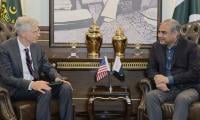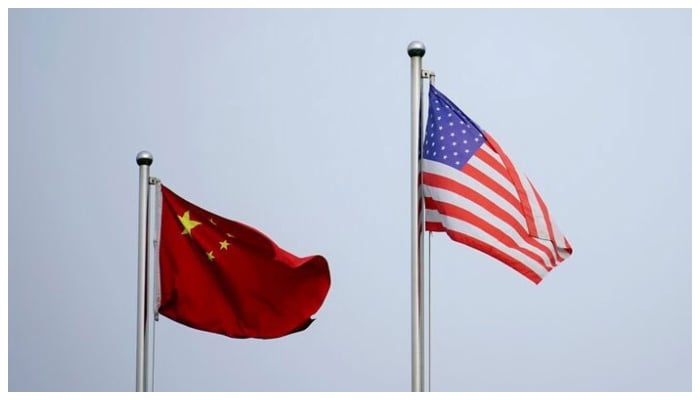
Pakistan finds itself at a critical juncture in its foreign policy, caught between two powerful nations with competing global visions. On one side stands China, officially celebrated as a friend “higher than the mountains, deeper than the oceans, sweeter than honey”.
On the other is the US, whose relationship with Pakistan is characterised by mutual caution, transactional interactions, and what some diplomats privately describe as ‘strategic fatigue’. This delicate balancing act has grown increasingly unsustainable.
The dilemma is not merely about taking sides in an emerging global rivalry. Pakistan’s foreign policy framework has become alarmingly binary at a time when the world is shifting towards multipolarity, regional coalitions and what leading analysts describe as a fundamental reshaping of global economic and political architecture.
The China-Pakistan partnership is undeniably deep. Over $60 billion have been committed through the China-Pakistan Economic Corridor (CPEC), joint defence projects such as the JF-17 Thunder advance military cooperation and Beijing provides consistent diplomatic support on contentious issues like Occupied Kashmir. The relationship offers predictability and reassurance. Yet, what began as strategic comfort increasingly resembles a cage.
Security challenges have grown. Attacks on Chinese personnel by terrorist groups have become routine. Concerns over debt sustainability are intensifying. Bureaucratic delays and local opposition have slowed certain projects and trade imbalances continue to widen. Beyond economics, Pakistan’s alignment with China ties it to Beijing’s broader geopolitical confrontations.
Relations with Washington, by contrast, remain transactional and cautious. US military assistance has declined sharply over the last decade and trust is limited. American officials continue to view Pakistan primarily through counterterrorism and regional stability lenses, while many in Pakistan perceive a partner that emphasises human rights while offering little substantial support. The US withdrawal from Afghanistan exposed these limitations starkly. Despite years of collaboration, both countries failed to coordinate a coherent post-withdrawal strategy. Today, Washington observes Pakistan’s deepening ties with Beijing warily, while occasional threats of sanctions are tempered by recognition of Pakistan’s strategic significance.
Public opinion in Pakistan towards the US is mixed at best, sceptical or hostile at worst, creating an environment ill-suited for a sustainable long-term partnership. The relationship, although strategically important, is fundamentally transactional.
Global analysts note that the post-World War II liberal international order is giving way to a model increasingly shaped by strategic and ideological alignments rather than purely economic considerations. Countries narrowly aligned with one power risk exclusion from critical trade, technology and financial networks. In this context, strategic resilience – diversifying partnerships, building domestic capacity and maintaining optionality – is no longer theoretical; it is a practical imperative.
Other middle powers offer instructive examples. Vietnam sustains strong relations with both the US and China while cultivating ties with India, Japan and Russia. The UAE positions itself as a regional connector, mediating disputes while attracting investment from multiple sides. Indonesia leverages its leadership within ASEAN to assert autonomy and balance competing influences. Turkiye, despite tensions, simultaneously maintains Nato commitments and develops independent regional capabilities. Even India, often perceived as an American partner against China, preserves robust trade with Beijing and strengthens its defence ties elsewhere, safeguarding strategic flexibility. These nations share a common thread: they refuse to cede critical strategic decisions to external powers.
For Pakistan, genuine independence would require calculated yet bold steps. Expanding trade beyond traditional partners to include the Gulf, Southeast Asia, Central Asia and Europe would reduce vulnerability. Investments in domestic technology, renewable energy, and human capital would enhance leverage without seeking isolation. Regional organisations could be used more strategically to build partnerships and mediate disputes.
Pragmatic cooperation with Washington is possible without subservience, focusing on shared priorities such as climate initiatives, counterterrorism and regional stability. Pakistan’s climate crisis cannot be ignored: recurrent floods, exacerbated by rising temperatures and deforestation, are devastating the economy, destroying crops, displacing millions and costing billions in infrastructure damage. Addressing climate adaptation is therefore not just environmental policy but national economic security.
Pakistan could also cultivate a Middle Eastern strategy that emphasises mediation and diplomacy, positioning the country as a regional connector amid rapidly shifting alliances. Soft power, too, remains largely untapped; Pakistan’s diaspora, rich culture and scholarly traditions offer a platform for influence that does not depend on military might or external debt.
The consequences of inaction are severe. Intensifying competition between Washington and Beijing will force Pakistan into increasingly untenable choices. Chinese debt may grow without proportional economic benefit, US pressure could intensify, and Pakistan’s room to maneuver may steadily diminish. Regional isolation, economic stagnation and brain drain could become enduring challenges.
Pakistan faces genuine constraints, from geography and security threats to political fragmentation and economic limitations. Both China and the US are likely to resist Islamabad’s pursuit of full strategic autonomy. Nevertheless, the alternative – remaining caught between two increasingly demanding superpowers – is far more perilous. Flexibility is not weakness; it is wisdom. Countries that diversify partnerships, strengthen domestic capacities and preserve autonomy will thrive, while those locked into rigid alignments risk a narrowing of opportunity.
Pakistan possesses strategic advantages: a sizable domestic market, a pivotal geographic location, abundant human resources and far-reaching relationships. What it lacks is a vision that treats these strengths as tools for leverage rather than vulnerabilities to be mitigated through dependence. Its ‘all-weather friendship’ with China and transactional ties to the US remain valuable, but they cannot define the country’s entire foreign engagement.
The global climate is shifting and Pakistan needs more than one umbrella. The pressing question is not whether the country can afford strategic independence, but whether it can afford to continue without it.
The writer tweets/posts @FarrukhJAbbasi