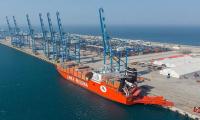
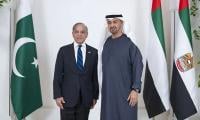
ISLAMABAD: Prime Minister Shehbaz Sharif on Wednesday offered Pakistan’s deep-sea ports at Gwadar and Karachi as a vital trade outlet for Central Asian states, saying that this could change the fate of entire region.
Emphasising plans to rapidly expand rail and road links via Turkmenistan and Afghanistan, the prime minister reaffirmed a strong commitment to a landmark connectivity project, terming it a potential game-changer that could transform economic integration between Pakistan, Kazakhstan and the entire Central Asian region.
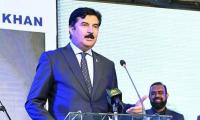
“Pakistan is fully committed to participate and contribute meaningfully in undertaking this project, as it will be a game-changer not only between our two countries, but this will change the landscape economically in the entire region,” Shehbaz said while addressing the Pakistan-Kazakhstan Business Forum here.
He said Pakistan’s state-owned logistics entities are fully prepared to facilitate the movement of goods from Central Asia to Pakistani ports and onward to international destinations.He said Pakistan and Kazakhstan had agreed to significantly enhance bilateral trade, investment and connectivity, setting an ambitious target of increasing trade volume to $1 billion within the next two years.
The prime minister said both the sides held extensive discussions on expanding cooperation in key sectors, including agriculture, information technology, minerals, pharmaceuticals, engineering, manufacturing and connectivity.
He described regional rail and road connectivity, particularly the Kazakhstan-Turkmenistan-Afghanistan-Pakistan corridor, as a potential game-changer for the entire region.
Despite strong political ties and fraternal relations, the prime minister noted that current bilateral trade stands at around $250 million, which does not reflect the true potential of the two countries. He said both sides have resolved to convert friendly relations into strong commercial partnerships.
He also announced the formation of a joint working group aimed at preparing a five-year roadmap to enhance trade, commerce and bilateral investment. He appointed Planning Minister Ahsan Iqbal as head of the Pakistani side, while Kazakhstan nominated its deputy prime minister to lead its delegation. Shehbaz said that the roadmap was expected to be finalised and signed during his visit to Kazakhstan later this year.
Highlighting the signing of 37 memoranda of understanding, Shehbaz said the agreement on the development of the Kazakhstan-Turkmenistan-Afghanistan-Pakistan rail and road network and enhanced port cooperation would help optimise regional transit potential.
He also welcomed Kazakh President Kassym-Jomart Tokayev’s visit to Pakistan, the first by a Kazakh president in 23 years, calling it a reflection of Kazakhstan’s commitment to strengthening bilateral ties.
Addressing the forum, President Tokayev said his state visit marked a turning point in Pakistan-Kazakhstan relations, adding that a joint declaration had elevated ties to the strategic partnership level. He said the business forum resulted in more than 30 commercial agreements worth around $200 million.
President Tokayev said trade turnover between the two countries nearly doubled last year and over 200 Pakistani companies are currently operating in Kazakhstan in sectors including construction, agriculture and food processing. He expressed confidence that bilateral trade could reach $1 billion in the coming years.
He outlined four priority areas for cooperation: transport and logistics, agriculture and food security, digitalisation and education. He welcomed Pakistan’s participation in regional transit corridors and highlighted Kazakhstan’s role as a major hub for Eurasian trade.
The president also officially invited PM Shehbaz for a state visit to Kazakhstan later this year.Speaking on the occasion, Minister for Commerce Jam Kamal Khan said Pakistan attached great importance to trade relations with Kazakhstan, which is Pakistan’s largest export destination in Central Asia.
He said Pakistan’s exports to Kazakhstan, including rice, fruits, vegetables, oilseeds, meat and textile products, increased by 47 percent last year, while bilateral trade had doubled over the past three years. He said the signing of the transit trade agreement marked a landmark milestone in strengthening economic and regional connectivity between the two countries.
Meanwhile, Joint Declaration on Establishing Strategic Partnership between Pakistan and Kazakhstan was issued at the conclusion of the two-day state visit of President Kassym-Jomart Tokayev.
It said Prime Minister Shehbaz and President Tokayev discussed matters of peace and security in South Asia. They emphasised the importance of restraint and responsible conduct by all sides. They agreed that a peaceful settlement of the Jammu and Kashmir dispute in accordance with the relevant UN Security Council resolutions is imperative for lasting peace in South Asia. They also emphasised strict adherence to universally recognised principles and norms of international law.
They also discussed the situation in Afghanistan and stressed the significance of stability and security in Afghanistan as an important condition for further unfolding of regional cooperation. In this regard, both leaders reiterated that Afghan territory should not be used for activities that pose a threat to the security of other countries. In this context, it was emphasised that involvement of Afghanistan in regional economic cooperation and connectivity infrastructure projects would be beneficial for the people of Afghanistan and the region.
Both the leaders welcomed the growing understanding and partnership between the two countries in various fields, inter alia, political, security, defence, trade, economy, agriculture, transportation, logistics, education, culture, sports and tourism, as well as deepening of interaction between the two sides in regional and international arenas.
The leaders reaffirmed that further strengthening cooperation between the two countries, in accordance with the United Nations Charter and based on respect for independence, sovereignty, equality, territorial integrity and universally accepted principles and norms of international law, will not only consolidate and expand their bilateral partnership, but would also positively contribute to the peace, security, connectivity and stability of the entire region of Central and South Asia and beyond.
Expressing satisfaction over the stable and consistent development of bilateral relations, the two leaders reaffirmed their strong commitment to further diversify and enhance multidimensional bilateral cooperation and decided to establish a strategic partnership for the mutual benefit of the two countries and nations, with enhanced focus on the following key areas: political dialogue; security and defence; trade, economy and investment; transport and logistics; education, science and information technology; culture, media, sports and tourism; climate change and environmental coordination; and cooperation at the regional and international level.
The two leaders agreed to deepen bilateral ties and organise regular reciprocal visits at the level of the heads of state and government at a convenient time for the parties for reviewing agreed areas of cooperation and providing guidance for further strengthening of the strategic partnership, including through new avenues for collaboration.
The two leaders also agreed to establish a biennial Strategic Dialogue at the level of deputy prime minister or foreign minister to promote further the work of cooperation mechanisms for comprehensive review and implementation of agreed areas of cooperation under the bilateral Strategic Partnership.
Appreciating Pakistan’s conducive visa regime for the people of Kazakhstan, the two sides also agreed to work towards inclusion of Pakistan in the Kazakh e-visa regime to promote tourism, people-to-people and business-to-business engagements.
The two leaders agreed to hold regular and structured engagements between law enforcement, border protection authorities and other relevant national agencies to develop close cooperation in countering terrorism, extremism, radicalism, illegal drug trafficking, human trafficking, illegal migration, organised crime, cybercrime, as well as new and emerging threats and challenges. Both the leaders also agreed to consider the possibility of establishing a High Level Security Dialogue co-chaired by the Secretary of the Security Council of Kazakhstan and the National Security Advisor to the Prime Minister of Pakistan.
The leaders welcomed the signing of the Treaty between Kazakhstan and Pakistan on Extradition; the Agreement between the Kazakhstan government and Pakistan government on Combating Crimes; and the Memorandum of Understanding between Kazakhstan and Pakistan on Joint Deployment in the UN Peacekeeping Missions.
Reaffirming the fundamental significance of economic cooperation, trade relations and investment partnership, the two sides agreed to explore and expand bilateral cooperation in agriculture, textiles, machinery, financial sector, chemical industry, energy, modern technology, pharmaceuticals, surgical instruments, furniture, sports goods, leather products and other areas.
The two leaders welcomed the signing of the Agreement between the two governments on Transit Trade, the Agreement on Cooperation and Mutual Administrative Assistance in Customs Matters, and the Memorandum of Understanding between the Agency of Kazakhstan for Regulation and Development of Financial Market and the State Bank of Pakistan.
President Tokayev invited citizens of Pakistan to study at Kazakh universities, while Prime Minister Shehbaz welcomed students from Kazakhstan to pursue higher education in Pakistan.
The two leaders welcomed the implementation of several cultural and academic initiatives, including the inauguration of the Al-Farabi Cultural Center at Quaid-i-Azam University in collaboration with Al-Farabi Kazakh National University; the Satbayev Centre at the National University of Science and Technology of Pakistan in collaboration with the Kazakh National Technical Research University named after K I Satbayev; and the Khoja Akhmet Yassawi Centre at the International Islamic University Islamabad in collaboration with Akhmet Yassawi International Kazakh-Turkish University.
They also encouraged universities in both the countries, particularly in medical and other specialised fields, to open branches in each other’s countries according to their respective requirements.
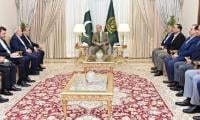
Meanwhile, in meetings at the Aiwan-e-Sadr, President Asif Ali Zardari and President Tokayev committed to deepening both the countries partnership, setting an ambitious goal of achieving $1 billion in bilateral trade.
Both the leaders emphasised the need to translate political goodwill into concrete economic outcomes. They acknowledged that current trade volumes remain well below potential and agreed to work on removing bottlenecks in transit, Customs and banking.
President Zardari identified energy, agriculture, mining, information technology and defence production as key areas for expanded cooperation. He also highlighted the strategic importance of enhancing regional connectivity through rail, road and air links, including progress on the CASA railway project and more effective use of transit trade routes.
President Tokayev, who was accompanied by a delegation of senior officials and prominent business figures, reaffirmed Kazakhstan’s view of Pakistan as a vital partner in regional stability and economic integration. He expressed confidence in reaching the bilateral trade target and welcomed increased exchanges in education and tourism.
Following the talks, President Tokayev was awarded the Nishan-i-Pakistan in recognition of his contributions to strengthening ties between the two countries. The ceremony was attended by Prime Minister Shehbaz Sharif, members of the federal cabinet, senior military officials and diplomats.