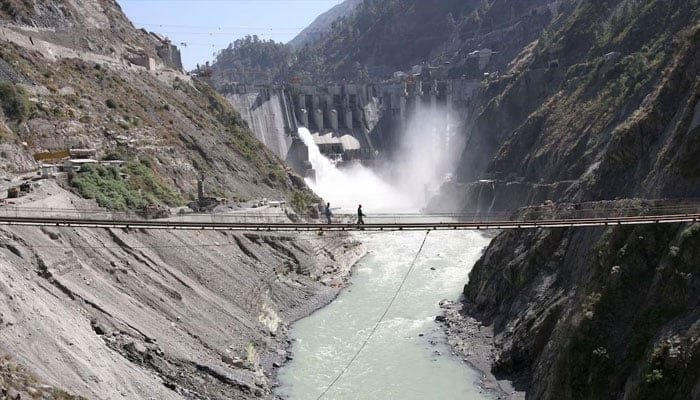
Pakistan’s latest procedural success in the Indus Waters Treaty dispute with India is modest in form but significant in substance. By directing New Delhi to produce operational logbooks for the Baglihar and Kishanganga hydropower projects, the Court of Arbitration has affirmed a principle Islamabad has long argued for: that treaty compliance must be judged by how projects operate, not by what is claimed on paper. Transparency is not a technical nicety but a necessity. The court’s order does not decide the merits of the case, nor does it compel India to alter its conduct immediately. But it does pierce the veil of opacity that has surrounded Indian hydropower operations on the western rivers. The relevance of the ‘pondage logbooks’ lies precisely in what Pakistan has consistently maintained: that installed capacity and anticipated electricity load have been exaggerated to justify greater water storage than the treaty allows. For a lower-riparian state already facing climate stress, population pressure and shrinking per capita water availability, such practices are not abstract legal disagreements but matters of survival.
This development must also be read in the broader context of India’s recent posture towards the treaty itself. As argued on these pages before, New Delhi’s unilateral decision to place the Indus Waters Treaty in abeyance marked a dangerous departure from six decades of restraint. The treaty endured wars and diplomatic breakdowns because it insulated water from politics and embedded predictability through data sharing and dispute resolution. Undermining that framework, whether through suspension rhetoric or by withholding operational information, erodes the very confidence that keeps transboundary rivers from becoming instruments of coercion. The Court of Arbitration’s clarification that only it – and not a Neutral Expert – can grant interim relief is also consequential, showing that the dispute has moved beyond narrow technical interpretation into questions of potential prejudice to treaty rights. Pakistan’s indication that it may seek interim measures reflects a legitimate concern: once operational practices alter river behaviour, the damage downstream cannot simply be undone by a later ruling.
At the same time, restraint is essential. This procedural win should not be oversold as a final verdict. Its real value lies in reinforcing the treaty’s rule-based architecture at a time when it is under strain. In an era the UN has described as one of looming ‘water bankruptcy’, weakening international water law would be reckless not just for South Asia but for all regions dependent on shared basins. Pakistan has repeatedly stressed that it seeks compliance, not confrontation. Domestic initiatives to restore ecosystems and manage floods show an understanding that resilience begins at home. But no amount of internal reform can compensate for instability upstream. The court’s insistence on disclosure is therefore a reminder that cooperation starts with honesty. If India is confident of its treaty compliance, producing operational records should not be contentious. Ultimately, the Indus Waters Treaty is being tested not only in courtrooms but also in political will. New Delhi can either double down on opacity and unilateralism or reaffirm a cooperative framework that has served both countries and the region for more than sixty years.