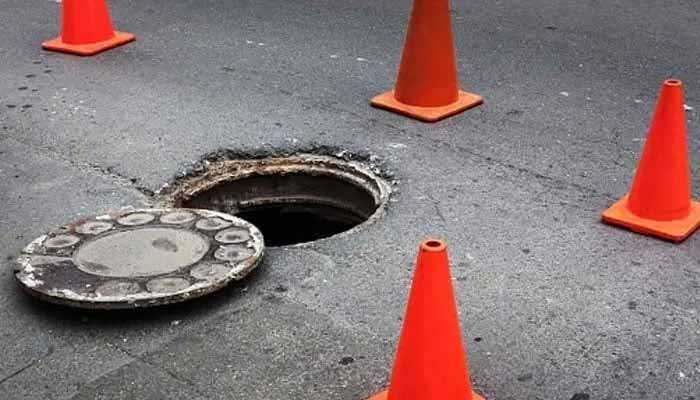
The deaths of 10-month-old Rida Fatima and her mother, Sadia, after they fell into an open manhole near Bhati Gate in Lahore, are yet another devastating reminder of how lethal official negligence can be. Rescuers recovered the infant’s body nearly 17 hours later from a sewer line, while the mother’s body was found three kilometres away from the site where they initially fell. What should have been an immediate rescue operation instead became a prolonged and chaotic episode marked by delays, confusion and, most disturbingly, attempts to deflect responsibility. Adding to the tragedy, the bereaved husband has alleged that senior police officers tortured him and tried to force a false confession, even as he has thanked Chief Minister Punjab Maryam Nawaz for what he described as timely intervention. The sequence of events lays bare not only infrastructural failure but also an institutional reflex to protect itself at the expense of truth and justice.
The chief minister’s response was unusually forceful. Chairing a special meeting, she ordered the dismissal and arrest of four officials linked to the ongoing construction project, including the project director, project manager and safety in-charge, and directed the Punjab inspector general of police to arrest the project manager, ‘safety in-charge’, site in-charge and a Wasa official for what she termed “severe negligence”. She described this negligence as akin to “murder” and held the Lahore Development Authority’s director general, the Wasa managing director, the Lahore commissioner, deputy commissioner and assistant commissioner responsible for the incident. Maryam Nawaz acknowledged that despite her relentless focus and repeated instructions, innocent lives were lost due to dereliction of duty. Even more painful, she said, was the attempt to suppress the truth. Her remarks referred to the misinformation initially relayed by authorities to the Punjab government, which led the Punjab information minister to deny the incident and label it fake news, before the minister later apologised and offered to resign. The chief minister defended her minister, noting that she had been given incorrect information by the relevant authorities.
The public apologies by both the chief minister and the information minister for grave negligence and misleading the public are rare and welcome in a system that seldom admits fault. The livestreaming of the meeting in which the bureaucracy was taken to task also sets a positive precedent in a country where dozens can die and those in authority still squabble over shifting blame rather than owning their mistakes. Yet the very fact that the chief minister had to apologise highlights a deeper problem: a bureaucracy that routinely plays politicians by submitting incorrect reports and misinformation to save its own skin. If accountability is to mean anything, action cannot stop at those whose negligence was visible on the ground. Those who generated and passed on fake news to the highest offices must also be identified and punished. While the suspension of the concerned station house officer and a show-cause notice to a deputy superintendent of police are steps in the right direction, many believe they are insufficient. Questions remain about the conduct of rescue operations and the eagerness with which blame was shifted onto an innocent husband. Now that the truth is out, the state has a responsibility to ensure that such incidents do not recur. Open manholes and sewer lines must be properly covered even when construction work is underway, and any attempt to conceal negligence must be thwarted immediately. Leaders cannot rely solely on a bureaucracy that prioritises self-preservation over public safety. While those directly responsible have been punished, justice will remain incomplete unless those who misled the government and the public are also held to account. Finally, it must be said that it was refreshing to see the chief minister take responsibility without any ifs or buts. In a political culture where excuses, deflections and blame-shifting are the norm, this should become more common. Owning mistakes is not a sign of weakness but the first step towards restoring public trust.