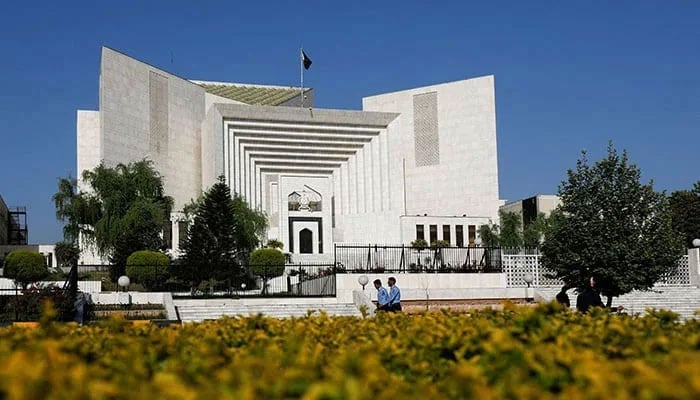
At a time when public confidence in institutions remains fragile, recent signals from the Supreme Court indicate a reformist turn that warrants careful attention and support. From the renewed emphasis on the district judiciary as the backbone of the justice system to Chief Justice Afridi’s commitment to pursue meaningful, citizen-focused reform, the message is clear: the judiciary recognises both the depth of its challenges and the urgency of addressing them. Speaking at the Federal Judicial Academy recently, Supreme Court judge Justice Naeem Akhtar Afghan rightly highlighted the centrality of the district judiciary. For most Pakistanis, justice is not experienced in constitutional benches or televised hearings but in crowded courtrooms where delays, poor drafting and inconsistency can make or break lives. His emphasis on continuous learning, professional judgment writing and freedom from prejudice goes to the heart of what a functioning justice system requires. At the same event, Justice Miangul Hassan Aurangzeb’s call to amend antiquated laws reinforced this view, noting that judges are often tasked with interpreting statutes that no longer reflect social realities. Reform, in this sense, is not an abstract ambition but a practical necessity that begins at the lowest tiers of the judicial hierarchy.
This institutional introspection aligns with the New Year’s message from Chief Justice Yahya Afridi, who has pledged that the judiciary will pursue reforms to improve access, reduce delays and strengthen transparency. Importantly, his remarks frame reform not as an internal housekeeping exercise but as a response to the lived experience of ordinary citizens who approach courts with hope and vulnerability. The emphasis on understandable processes, humane courts and outcomes that matter to the public reflects a long-overdue shift away from procedure for its own sake. If justice is to be ‘seen to be done’, as the chief justice also noted, it must also be felt in timely decisions and dignified treatment.
The Supreme Court’s recent rights-based ruling on policing practices offers a concrete example of how such reformist intent can translate into meaningful change. By banning demeaning expressions such as ‘Faryadi’ and clarifying that citizens approach the police as a matter of legal right rather than supplication, the court has addressed a deeply ingrained culture of power imbalance. Language is not a simple cosmetic concern; it shapes attitudes, reinforces hierarchies and signals whose dignity matters. The ruling’s insistence on mandatory and timely registration of FIRs, coupled with accountability for deliberate delays, strikes at a systemic abuse that has long undermined criminal justice, particularly for the poor and marginalised. Taken together, these developments suggest a judiciary that is increasingly aware that reform must be structural, cultural and citizen-centric. Yet intent and judgments alone will not suffice. Implementation, monitoring and institutional buy-in at all levels will determine whether these reformist signals lead to lasting change. For too long, calls for judicial reform in Pakistan have faltered between lofty pronouncements and ground-level inertia. The current moment offers an opportunity to bridge that gap. If the focus on the district judiciary is sustained and if accountability accompanies authority, the promise of accessible and dignified justice may finally move from principle to practice.