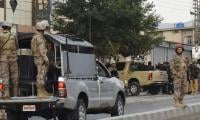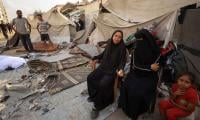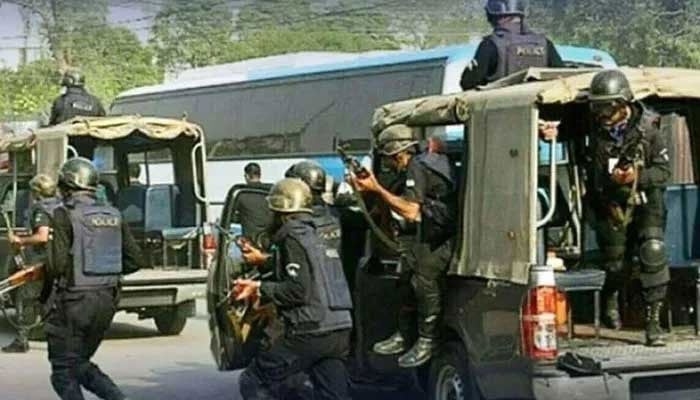
Saturday saw the latest wave of terror in Balochistan, once again reminding us of the scale and coordination of the threat Pakistan faces on its western flank. At least ten police and security personnel embraced martyrdom as India-sponsored terrorists launched coordinated attacks at twelve locations across the province. Security forces responded swiftly, eliminating at least 67 militants, while clearance and pursuit operations were still underway at the time of writing. According to official accounts, the assaults were carried out by Fitna al-Hindustan (FAH) – the Balochistan Liberation Army (BLA) – and were foiled through a joint effort by the police, the Frontier Corps and other law-enforcement agencies, as confirmed by Balochistan Chief Minister Sarfraz Bugti. The human cost of these attacks remains staggering. Among the victims were five members of a Baloch labour family from Khuzdar who were martyred in Gwadar, including a woman and three children. These atrocities came just a day after major counterterrorism successes elsewhere in the province. ISPR reported that on January 29, security forces eliminated 41 Indian-sponsored terrorists in two intelligence-based operations, killing 30 militants on the outskirts of Harnai and 11 more in Panjgur. Prime Minister Shehbaz Sharif has rightly reiterated that Pakistan will continue the fight against terrorism until this menace is completely eradicated.
There is little doubt that the BLA’s ability to regroup, recruit young men and women and carry out increasingly lethal attacks, including suicide bombings, points to sustained external financial, logistical and training support. Pakistan’s enemies are once again relying on proxies to destabilise the country. The pattern is telling and their broader strategy is aimed at dissuading foreign investment in the country, particularly from China, and undermining long-term regional connectivity projects. Unable to prevail through conventional means, New Delhi has increasingly leaned on proxies such as the BLA in Balochistan and the TTP in Khyber Pakhtunkhwa to bleed Pakistan internally. This approach, however, underestimates both the capacity and resolve of Pakistani security forces. Fighting terrorism is never easy, and Pakistan’s experience over the past two decades is a grim reminder of this reality. Thousands of civilians and security personnel have laid down their lives in this war. According to official data, law-enforcement agencies conducted over 75,000 intelligence-based operations across the country in 2025 alone. More than 2,500 terrorists were eliminated nationwide last year, yet civilians and soft targets continued to be deliberately targeted. The resurgence of terrorism is also linked to the support and facilitation provided by the Afghan Taliban, who have worked hand in glove with Pakistan’s adversaries by sheltering and enabling both the BLA and the TTP.
Worryingly, the regional picture is becoming even more volatile. With the looming possibility of wider conflict involving Iran and the spectre of regional destabilisation, some observers believe that BLA violence is also meant to align with broader designs aimed at fragmentation and chaos. Any attempt to redraw borders or weaken states through proxy warfare ignores a fundamental reality: Pakistan is a nuclear power and cannot be dismembered. What is clear, however, is that BLA terrorists are exploiting the genuine grievances and sentiments of innocent Baloch people to advance a violent separatist ideology. This dangerous trajectory must be halted. Security measures alone will not suffice. The state, political leadership and security institutions must sit together to chart a comprehensive strategy that prevents Baloch youth from being manipulated by militant groups. At the same time, Baloch nationalist politicians must engage with all stakeholders to move towards a peaceful and inclusive resolution of the long-running insurgency. The moment calls for unity and clarity of purpose. Terrorism thrives on division, despair and neglect. Defeating it requires not only force, but also dialogue, development and a collective commitment to deny extremists the space to operate.