January 24, marked globally by the United Nations General Assembly as the International Day of Education, once again prompted speeches, conferences and commitments in Pakistan. This year’s theme, ‘The power of youth in co-creating education’, could not be more timely. Yet, as official statements celebrated innovation and reform, a sobering statistic cut through the optimism: Pakistan still has 25.3 million out-of-school children between the ages of five and sixteen. In Islamabad alone, over 89,000 children remain outside the formal education system. A briefing to the National Assembly’s Standing Committee on Federal Education and Professional Training also highlighted some encouraging efforts though. The non-formal education initiative launched in 2023 has enrolled more than 71,000 children in ICT through community schools and accelerated learning centres, targeting marginalised groups and aiming to mainstream them into formal education. Aligned with Article 25-A and SDG-4, the programme demonstrates that data-driven planning, community engagement and modest resources can yield tangible results. However, such initiatives remain limited in scale relative to the crisis’s magnitude. Pilot successes cannot substitute for a nationwide, adequately funded and consistently monitored education strategy.
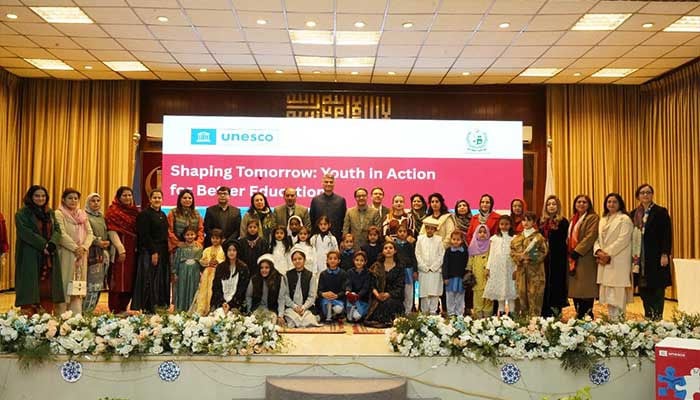
Against this backdrop, Prime Minister Shehbaz Sharif used the day to reaffirm his government’s commitment to embracing artificial intelligence in education. High-Impact IT Labs, SMART classrooms, digital hubs and STEAM initiatives signal an awareness that Pakistan’s youth must be prepared for a rapidly changing technological world. The promise of AI lies in personalised learning, efficiency and access, particularly for remote areas. Yet technology alone cannot compensate for the absence of schools, untrained teachers and deep inequalities. A more grounded perspective emerged at a conference hosted by the Ministry of Planning in collaboration with Unesco, where the minister of planning acknowledged chronic challenges: out-of-school children, infrastructure gaps and teacher shortages. The proposed roadmap under the Uraan Pakistan initiative, including teacher training institutes, digital platforms and public-private partnerships, reflects a recognition that education must be linked to national and economic development. Equally important was Unesco’s emphasis on addressing gender and digital divides and strengthening monitoring and accountability. Tools such as the District Education Performance Index can support evidence-based policymaking when used to inform difficult budgetary and governance decisions.
Beyond policy halls and conference rooms, the International Day of Education also resonated culturally. Singer and social activist Shehzad Roy released ‘Late Ho Gaye’. Through satire and storytelling, the song questioned whether Pakistan’s education system nurtures children or overwhelms them with pressure even before they begin school. Taken together, these moments from January 24 reveal a paradox. Pakistan speaks the language of reform, innovation and AI, yet continues to struggle with access, equity and quality at the most basic level. The challenge is not to choose between technology and fundamentals, but to sequence and integrate them wisely. Education policy must prioritise bringing every child into a safe, supportive learning environment, invest seriously in teachers and governance – and then use technology as a tool to enhance, not replace, human agency. The International Day of Education should serve less as a ceremonial milestone and more as an annual audit of the national conscience. Until the promise of education reaches the millions still excluded, Pakistan’s celebrations will remain ahead of its realities.