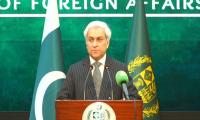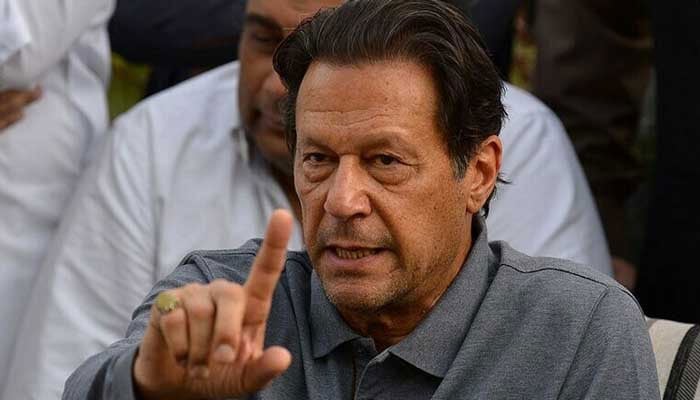
Minister for Information and Broadcasting Attaullah Tarar confirmed on Thursday that PTI founder chairman Imran Khan was briefly taken from Adiala Jail to the Pakistan Institute of Medical Sciences amid concerns raised by his party about his health. According to the minister, eye specialists had first examined the former prime minister in jail and advised that he be shifted to PIMS for further assessment and treatment. Imran was taken to the hospital on Saturday night, examined again, and, after obtaining his written consent, doctors carried out a minor medical procedure lasting around 20 minutes. Tarar said Imran remained stable throughout and was returned to jail soon after. This official version followed media reports a day earlier that Imran Khan had been admitted to PIMS under tight security for a medical procedure. Despite the government’s assurances, the episode has only deepened political mistrust. The PTI’s core committee expressed serious concern over reports about Imran’s health and termed it condemnable and alarming that his family was not informed. The committee has demanded clear and complete information about his condition and called for the immediate facilitation of meetings between the PTI founder, his family, party leaders and his legal team. The committee has also insisted that his medical examination be conducted by doctors from Shaukat Khanum Memorial Hospital.
It has now been almost two months since Imran Khan was allowed to meet anyone during his incarceration. His sister was permitted a meeting on December 2 last year, after nearly a month, but all such interactions were halted indefinitely after she repeated personal attacks on the military leadership. The government maintains that she breached jail regulations. Even so, political observers argue that denying a former prime minister access to his family, party colleagues and lawyers, and carrying out a medical procedure without informing his family, goes against all norms of decency and due process. This tit-for-tat approach has gone too far and has trapped the political system in a dead end. With opposition leaders in the National Assembly and Senate finally assuming their roles after the government’s prolonged dilly-dallying, many believe that meetings with Imran Khan should also be restored. At the same time, the PTI founder himself will have to be less confrontational if there is to be any way out of this quagmire. As a party, the PTI is clearly in a predicament, lacking a coherent political strategy to counter what it calls the government’s authoritarianism. Some observers suggest that a starting point should be a cohesive social media policy developed within Pakistan, rather than one shaped largely by overseas supporters with no direct stake in the country’s day-to-day realities.
There is now a particular responsibility on Tehreek Tahafuz Ayin-e-Pakistan leaders Mehmood Khan Achakzai and Allama Raja Nasir Abbas, the newly appointed opposition leaders in parliament, to find a political way out of the present impasse. One immediate and constructive step would be to lower the political temperature. The government should allow these leaders to meet Imran Khan in jail so that dialogue can begin on finding an amicable solution. Without such engagement, the country will remain trapped in a vicious circle of political victimisation, while the real issues facing the people – a faltering economy, the timing and credibility of the next elections, human rights violations and the restoration of democratic norms – continue to be sidelined. Politics cannot remain hostage to vendettas indefinitely.