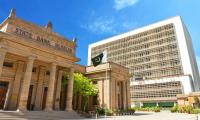
The Federal Constitutional Court on Tuesday upheld Sections 4(b) and 4(c) of the Income Tax Ordinance 2001, setting aside high court judgments and confirming parliament’s legislative competence in taxation matters. Through this verdict, the court has given legality to the super tax the government imposed in 2015 to increase revenue. At the time, the tax was levied to help people who were displaced during Operation Zarb-e-Azb. Initially, it was supposed to be for a year, but it was not withdrawn. In 2022, when the country was on the brink of default, the government increased the tax rate to 10 per cent, convincing industries to extend their support in stabilising the country. Now, post the ruling, the FBR is looking to collect Rs150-200 billion through the tax to minimise its revenue shortfall. It must also be acknowledged that, in moments of acute fiscal stress, extraordinary revenue measures can provide the state with much-needed breathing space. Given Pakistan’s narrow tax base and chronic revenue gaps, the super tax has offered a relatively quick and administratively efficient way to mobilise resources from sectors with higher capacity to pay, helping the government meet urgent financing needs without resorting to even costlier external borrowing.
Industries and businesses are not happy with the tax though. For one, a high tax rate is a repellent and could risk keeping investors away. Second, the formal sector also says that, instead of expanding the tax net and bringing tax evaders into the tax net, the government keeps putting the burden on the already taxed. Such taxes usually end up ballooning the cost of doing business in Pakistan. At present, doing business here is more costly than in other countries in the region. For us, when the profit margins are already thin, competing in a saturated market becomes a Herculean task and so our products miss out on attracting buyers. On the day the court upheld the tax, India signed a trade deal with the EU after almost two decades. This has provided an almost tariff-free market for most Indian products. For India, it is easier to capture the market as Indian companies have the ability to offer competitive prices. Our companies are neck-deep in corporate, super and capital value taxes.
At the same time, it is reasonable to expect that beneficiaries of state stability, infrastructure and market access contribute more during periods of national strain, particularly when the alternative is deeper austerity or further cuts to social spending. Short-term measures are great to stabilise the economy, but the authorities have to think beyond that. The agenda should be to find ways to bring more people to the tax net. As analysts have also point out, Pakistan must shift away from emergency taxation towards a broader, more neutral tax base with improved compliance and lower marginal rates. Businesses have also advised the government to gradually phase out the tax. Countries like Singapore and the UAE have achieved success and prosperity mainly because of their business-friendly policies. Pakistan needs a similar approach to keep itself permanently out of the economic crunch.