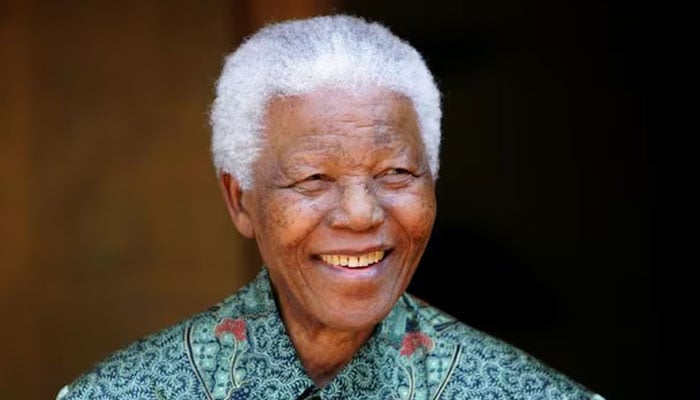
Addressing the launching ceremony of the Nelson Mandela Children’s Fund in 1995, Nelson Rolihlahla Mandela said: “There can be no keener revelation of a society’s soul than the way in which it treats its children.”
In Pakistan, crimes against children are increasing by the day. Both their frequency and severity are worrisome. According to the NGO Sahil’s Cruel Numbers 2025, 3,364 child abuse cases were reported. This implies that, on average, nine children experience some form of abuse every day. The real picture is even more bleak because the majority of cases go unreported. The ill-treatment of children is not only a crime under the law but also reflects poorly on the moral health of a society.
Child safety has become a buzzword in recent times. There is no two ways about it: the role of the police is crucial when it comes to child safety. Much has been written on child safety, but there is little debate on police interaction with children in Pakistan. While tackling crimes against children is an essential part of policing, it is equally important to ensure that every police interaction with a child is positive and productive. Merely responding to crimes against children is not enough. Police departments across the country need to adopt a child-centred policing approach.
This refers to policing that puts children first. In other words, children are prioritised in routine policing. It ensures that every child is properly heard with care not fear. It guides routine police interactions with child victims, witnesses and even offenders. Police need to see every child first as a child not as a victim or a suspect.
This raises an important question: do police officers in Pakistan know how to professionally deal with a child? The answer is clearly not in the affirmative. If not all, the majority of police officers lack the knowledge required to deal with children professionally. This points to a serious gap in basic police training. Police training programmes symbolically address the issue of child safety but do not effectively produce child-friendly police officers. This is evident from routine police responses.
I recently came across a video of a child recorded from behind the bars of a police station lock-up. The police had taken him into custody because he had allegedly used vulgar language against the police of that area in a video shared on social media. This raises a separate debate about whether such comments constitute a crime. The immediate concern, however, is how the police responded to what they framed as a crime by a child. Did the police respond responsibly? Once again, the answer is no. His identity was disclosed on social media in a video apology, which violated Section 13 of the Juvenile System Act, 2018.
This is not an isolated case. Children’s rights are frequently violated, intentionally and unintentionally, by those supposed to uphold them. Due to a lack of awareness, police officers often fail to maintain the confidentiality of child victims and offenders. Policing policies and interactions with children can have a significant impact not only on children but also on long-term police–community relations.
It is high time police departments in Pakistan adopted a child-centred policing approach. The concept is relatively new to Pakistan but, if implemented properly, will prove beneficial. The National Commission on the Rights of the Child needs to take a leading role in this regard. At present, there appears to be no comprehensive document that guides routine policing interactions with children.
Police departments should establish child-centred policing units at the police station level. Provincial Child Protection Commissions may arrange workshops and training programmes for police officers to better sensitise them. Every police interaction with a child is a teachable moment.
The writer is a police officer.He tweets/posts @Numanbacha20