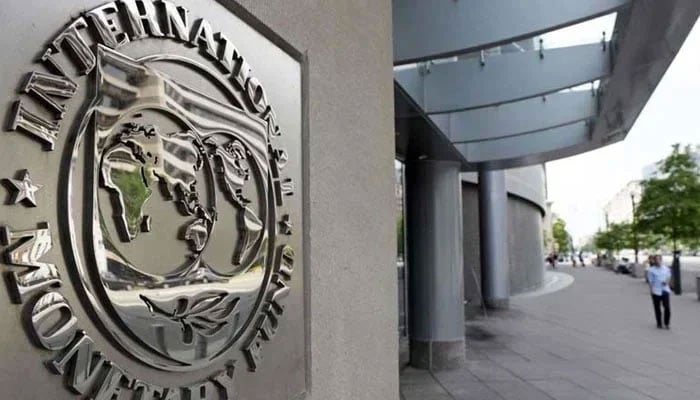
The planning minister’s recent articulation of why Pakistan must exit the cycle of recurring engagement with the International Monetary Fund (IMF) is conceptually sound.
The emphasis on moving beyond stabilisation towards structural transformation – raising productivity, expanding exports, and investing in human capital – rightly shifts the national conversation away from perpetual crisis management and towards long-term economic renewal. This has also been a consistent theme in several of my articles over the past four years.
There is broad agreement that stabilisation alone cannot deliver sustainable growth. A country cannot tax and borrow its way to prosperity. Productivity, competitiveness and private investment must ultimately do the heavy lifting.
Yet the analysis remains incomplete because it avoids a more uncomfortable truth: the very reform framework pursued over the past decades, particularly under successive IMF programmes, has itself contributed to Pakistan’s loss of competitiveness. Unless this is acknowledged and corrected, aspirations of exiting the IMF cycle will remain rhetorical rather than achievable.
In the pursuit of short-term fiscal balance, Pakistan has relied on a narrow and ultimately self-defeating strategy: excessive taxation of a shrinking formal sector, expanding regulation and relentless growth of government and bureaucracy.
Instead of reforming the state, we have squeezed the economy.
Rather than broadening the tax base, punitive rates were imposed on those already documented. Instead of simplifying compliance, layers of direct and indirect taxes, surcharges and withholding regimes were piled on top of existing ones. Instead of reducing the government's footprint, it was expanded – creating more ministries, departments, regulators, agencies and rules.
The outcome was predictable. Capital fled. Informality deepened. Investment stalled. Competitiveness eroded.
High tax rates, combined with overlapping federal and provincial levies, discretionary enforcement, and constant policy changes, have destroyed investor confidence. Regulation has increasingly become a tool for rent extraction rather than market discipline. Multiple layers of government impose duplicative and often contradictory compliance burdens that no serious investor, domestic or foreign, can rationally navigate.
This is a central reason why Pakistan’s investment-to-GDP ratio has collapsed to below 13 per cent and why export diversification has stalled. Businesses do not expand in environments where rules change mid-game and compliance costs exceed margins.
IMF-style fiscal adjustment, when not accompanied by a fundamental rethink of the size, efficiency and role of the state, becomes economically corrosive. Stabilisation achieved by taxing the same shrinking base cannot produce growth; it accelerates de-industrialisation.
More fundamentally, the current reform narrative underestimates the scale of creative destruction required.
Productivity does not rise by protecting inefficient incumbents. Export competitiveness does not emerge in economies dominated by cartels, oligopolies, and concession-dependent business models. Transformation requires dismantling the rent-seeking economy – not accommodating it through exemptions, subsidies or regulatory forbearance.
Pakistan’s economic structure remains tilted towards protecting legacy sectors and entrenched interests. Loss-making state-owned enterprises are endlessly ‘restructured’ but rarely shut down, merged or privatised decisively. Inefficient industries are shielded through tariffs and non-tariff barriers. Cartels operate with impunity, raising prices and lowering quality.
Creative destruction, discussed in more detail in my earlier writings, is politically uncomfortable because it creates visible losers before winners. But without it, economies stagnate. Countries that successfully transformed – whether in East Asia or Eastern Europe – did not preserve inefficient structures out of nostalgia or political convenience. They replaced them.
Pakistan must confront a hard truth: many of its institutions, regulations, and business models were designed for a different century. Protecting them delays adaptation and raises the eventual cost of change.
Equally absent from the reform discourse is a serious appreciation of how modern economies are built.
Growth today is driven not by large, protected incumbents alone, but by entrepreneurship, startups, and technology-enabled firms that replace outdated structures with more efficient and scalable models. Digital platforms, AI-driven services, advanced manufacturing and globally tradable services now account for a growing share of value creation and exports worldwide.
Pakistan’s future does not lie in perpetually defending old sectors. It lies in enabling new enterprises to replace the old. That requires a fundamentally different policy mindset: low, predictable taxes rather than punitive rates to ensure viability of new firms; light-touch, rules-based regulation rather than discretionary control; contract enforcement and dispute resolution that work in real time; access to risk capital and bank credit, currently crowded out by government borrowing and large corporates; and open competition, not administered markets.
Startups do not thrive in opaque policy environments or under fragile political coalitions that prioritise rent distribution over value creation. Innovation requires clarity, stability, and trust in the rules of the game.
Technology and digitisation must be treated not as side projects, but as core instruments of reform. Digitisation can reduce discretion and corruption. Data and artificial intelligence can improve tax compliance without harassment, target subsidies accurately, and enhance regulatory oversight. Leaders who do not understand technology cannot govern a modern economy – no matter how well-intentioned they may be.
Ultimately, this is not a planning or diagnostic failure. It is a leadership and governance failure.
Pakistan has produced no shortage of plans, visions and roadmaps. What it has lacked is leadership willing to confront vested interests, simplify regulation, shrink the state where necessary and tolerate short-term political pain for long-term national gain.
Most of Pakistan’s leadership – across politics and institutions – was shaped by the politics of the 20th century: a politics centred on acquiring power, retaining power and managing coalitions for the sake of power itself. That leadership model is ill-suited to the demands of 21st-century economic transformation.
Exiting the IMF trap requires leaders who prioritise outcomes over optics; build institutions rather than personalise authority; select competent teams rather than loyal entourages; encourage truth-telling rather than silence and conformity; use technology to govern, not merely to announce reforms; and accept experimentation and learn from failure.
It also requires the deliberate promotion of young leadership, in both public and private sectors, that is comfortable with technology, global competition and new business models. No country modernises with leadership structures designed for an earlier era.
The most damaging feature of Pakistan’s current governance model is that it manages decline rather than enabling competition. The state mediates rents instead of facilitating markets. Policies protect incumbents rather than challengers. Regulation controls rather than disciplines.
Until this philosophy changes, Pakistan will continue to recycle plans, IMF programmes and disappointment.
Exiting the IMF cycle will not be achieved through aspirations alone, however well articulated. It will require a decisive break from a failed economic model – one that taxes productivity, regulates entrepreneurship out of existence and preserves inefficiency in the name of stability.
The choice before Pakistan is stark. It can continue stabilising a shrinking economy through higher taxes and heavier controls. Or it can embrace creative destruction, enable new enterprise and rebuild its economy for the realities of the 21st century.
This is not merely a policy or roadmap problem; it is a leadership problem. And until governance shifts from rent distribution to value creation, from protection to competition, and from managing decline to enabling growth, Pakistan will remain trapped – regardless of how many plans it writes or programmes it signs.
Exiting the IMF trap will require not just aspirations, but better leadership, better decisions and the courage to dismantle what no longer works.
The writer is a former managingpartner of a leading professional services firm and has done extensive work on governance inthe public and private sectors.
X/Twitter: @Asad_Ashah