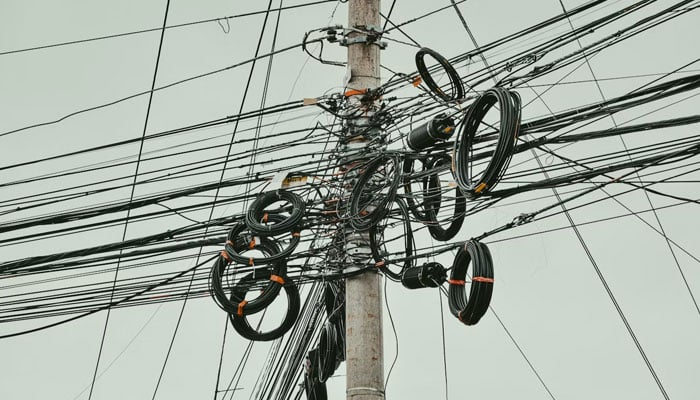
The power sector in Pakistan has faced a crisis for decades. Despite an ongoing energy transition, significant structural and governance challenges, such as costly long-term generation contracts, system inefficiencies and obsolete tariff design, continue to hinder progress.
It is not that the government does not want transition; they do. But they got stuck on immediate issues, leading to reactive and short-sighted actions that prioritise quick gains over sustainable solutions. A pertinent example of this is the draft Nepra Prosumer Regulations 2025. Undoubtedly, the existing net metering (NM) regulations exhibit several deficiencies that require revision to align with the evolving trends and declining costs. But what has been done to transform the grid to make it ready for the future?
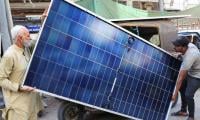
It’s a fact that NM consumers have been using the grid to store electricity generated by their rooftop solar PV systems during daylight hours without incurring additional charges. Some may have exceeded the specified limits, resulting in unauthorised energy feedback and voltage challenges. According to Nepra guidelines, the distribution company (DISCO) has the authority to monitor and act in such cases, but it failed to do so. No monitoring system is in place to judge whether the installed capacity has crossed the prescribed limit. DISCOs have not upgraded their systems; the lack of hosting capacity analysis is a significant concern.
These leakages will persist (may increase under the new regulation) until the distribution grid and staff skills are modernised. DISCOs have not installed a grid-level battery energy storage system (BESS) to store cheaper excess energy from the day for evening peak use. Over the years, these utilities have made no effort to minimise distribution losses, whose impact (more than Rs600 billion in FY2024) is far greater than that of NM consumers (prosumers).
The main goal of the proposed amendments is to increase revenues for the struggling distribution sector. A key change is the shift from net metering (NM) to net billing (NB); exports will no longer be netted off for both new and existing prosumers. Existing prosumers will have their exported units priced at the national power purchase price until their original contracts expire, while new NM consumers will receive only the average energy purchase price for exported units.
Countries have modified regulations for prosumers once a threshold is reached, leading to lower payments. However, existing prosumers usually receive protection for a set period. For instance, the California Public Utilities Commission’s transition from NEM 2.0 to NEM 3.0 significantly reduced export rates, while prosumers under NEM 2.0 remain protected for 20 years.
The goal of increasing revenues may be partially achieved in the short run by preventing the netting of exported units of the existing prosumers under the new framework, if implemented. In the medium- to long-term, consumers will invest in BESS and go off-grid, further decreasing DISCO revenues. Additionally, the growth in the number of new NM consumers will stall, as there is no incentive left for them to export additional units. Solar will not stop, but DISCO revenues will keep declining.
Net billing encourages consumers to shift their electricity use to daytime hours and adopt BESS. Countries like the UK, Germany, Australia, Japan and the US demonstrate that prosumers can benefit if they are paid for their capacity and flexibility, not just for exporting surplus energy. This helps reduce peak costs and improve grid reliability. Prosumers with BESSs export energy during peak hours because they are offered higher rates then.
By involving prosumers as providers of flexibility and capacity, Pakistan can also improve grid reliability, lower peak costs and create stable income streams. What is missing in the proposed Nepra regulations is prosumer participation rules to enable easy entry through a digital process, aggregation that allows small participants to act collectively and fair capacity pricing that ensures everyone is paid transparently based on the value they provide to the system.
DISCOs have been facing revenue losses due to the migration of compliant three-phase consumers to solar. The marginal cost (MC) of grid-based electricity supply is indeed low during the daytime, when NM prosumers also export units. But the argument (often made) that these consumers are responsible for the increase in tariffs for non-NM consumers is not entirely accurate.
According to a recent study by TransitionZero and PRIED, of the estimated 33.7GW of installed solar, only 6.06GW is on-grid (NM), 19 GW is behind-the-meter (BTM), and the remaining 8.31GW is off-grid. The capacity of BTM prosumers is more than three times that of NM prosumers.
The total sanctioned load for the 10 ex-Wapda DISCOs and K-Electric as of FY2024 was 110931 MW. Assuming it is the same for FY2025, with the total installed NM capacity of 6060MW and the plant factor of 18 per cent, the maximum PV generation could be 1091MW, which is 0.98 per cent of the total sanctioned load. It is still too low to have any impact on the cost of non-solar consumers.
However, paying power purchase costs allows prosumers to avoid grid fees, shifting fixed costs to non-solar consumers and creating inequity. Thus, transitioning from NM to NB is fair. Likewise, NM consumers import during peak hours, DISCOs have to procure expensive electricity to maintain the balance. Indeed, NM consumers are not explicitly paying any extra fixed costs for this capacity. But, regarding procuring expensive electricity during peak load, it is necessary to determine whether this is solely due to NM consumers.
Many BTM domestic installations may have small backup batteries. Are these distributed generation (DG) systems independent of the grid? Who pays for the extra capacity needed to balance their grid demand or access fees? These consumers are charged under an increasing block tariff structure. The 32 per cent increase in protected consumers (primarily solar users, as government sources also confirmed) over the past three years raises the question: Are they appropriately classified according to social welfare standards?
They pay significantly less than the MC for units consumed during evening peak hours. In comparison, NM three-phase consumers are subject to a time-of-use tariff, paying about Rs46/kWh during peak hours and Rs40/ kWh during off-peak hours. These consumers are cross-subsidising other categories as well.
Pakistan’s electricity tariff system has several distortions that make introducing demand charges for NM consumers problematic without reforms. It already includes fixed grid costs through high volumetric tariffs and fixed charges. Implementing demand charges on top of these components could lead to double recovery of the same costs. Without changing the overall tariff design, it is not possible to address these distortions and anomalies.
The grid should focus on charging all customers fairly for capacity, access and reliability while eliminating social subsidies from energy tariffs. Social subsidies should be funded transparently through government budgets. Energy tariffs must reflect actual costs for all.
The global energy system is transforming from traditional centralised models to greater reliance on decentralised generation. Although the centralised grid is not disappearing, its role and structure are evolving. Its new role will be to ensure coordination, flexibility, and reliability in a decentralised system, and not just an energy provider; charging fairly (from all) for network access, enabling wheeling and competition, procuring demand response and storage instead of excess generation.
Is Pakistan ready for this change? Will the draft regulation lead to it? The key question is whether to modernise the grid or allow it to become an expensive backup. Without reforms, the grid will remain costly and underutilised.
The writer is an energy expert and senior research economist at the Pakistan Institute of Development Economics (PIDE), Islamabad.