Charting Karachi’s coastline reveals that some of the country's most important real estate is centred here. Yet, a UNDP report from 2025 predicts that much of Karachi’s coast is at high risk of submersion by 2050 – a prediction that should be cause not just for alarm but for serious reassessment, especially for those whose assets lie along this vulnerable waterfront.
Ironically, this picture of existential doom for coastal development in Karachi may signal a move towards more progressive climate policy in the country.
Historically, climate politics has been characterised as a contest between two parties: those for more progressive climate policies and those against them.
In an influential paper titled ‘Asset Revaluation and the Existential Politics of Climate Change’, academics Jeff Colgan, Jessica Green and Thomas Hale interpret this contest as one between two groups of actors with differing incentives based on the types of assets that they hold. They characterise these groups as those with climate-forcing assets, such as oil companies or coal fields, and those with climate-vulnerable assets like the owners of coastal properties or fisheries.
Traditionally, the balance of power lay firmly with the former party, which held the financial and political capital to sway policy in a more conservative direction. Those rallying for progressive policies had traditionally been environmentalists, not the owners of climate-vulnerable forces.
These were often ragtag climate activists, ideologically driven and with strong social capital but little political force. Most often, they were advocating with or on behalf of the owners of climate-vulnerable assets, such as coastal communities whose livelihoods and social structures were directly threatened by changing weather patterns and rising sea levels. However, this threat had historically been relatively distant. These groups were markedly weaker than their opponents, actors with an active stake in the industries that caused climate change. And the owners of carbon-forcing assets were motivated by a much more urgent fear of being left behind by progressive climate policy. This created a power dynamic that, despite the emerging warnings of experts, dangerously slowed policymaking.
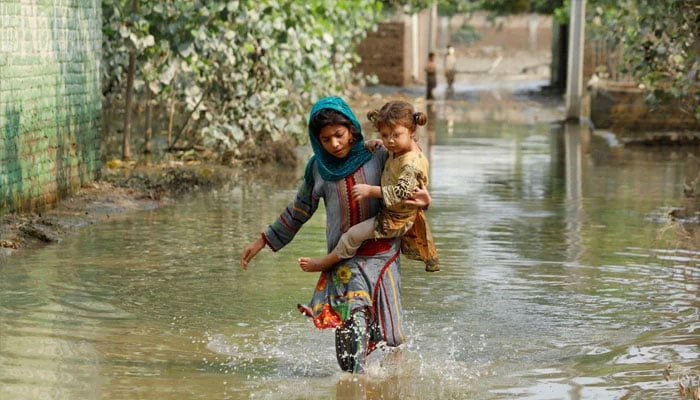
However, as Colgan et al detail, the urgency of rising sea levels, more extreme weather patterns and climate migrations has fundamentally changed this power structure. Suddenly, climate change is not just a faraway threat for distant island nations or communities of fisherfolk but a catastrophic force that wreaks havoc on the profit incentives of powerful actors. These include states that have to rebuild infrastructure damaged by flooding, insurance companies that have to bear the shock of unprecedented storms damaging property and, crucially, the owners of coastal property.
It is not that the owners of climate-vulnerable assets have become powerful, but that the powerful have themselves become vulnerable to climate change, fundamentally reorienting climate politics worldwide towards more progressive policies. Importantly, when climate change threatens assets tied to military-administered coastal land, it does not confront a marginal stakeholder but the most powerful actor within the state.
The military is likely to recognise that its assets face material threat from climate change, crucially identifying climate change as a challenge to deal with at a national level. This can reasonably be expected to manifest through infrastructure development aimed at improving technology to better mitigate climate catastrophes, changes to urban planning practices towards greater sustainability and a move towards more progressive climate policies at the political level.
While these changes may be triggered by an immediate event, their effects on development policy and sustainable practices will benefit the country as a whole, including the most vulnerable communities, which have much to lose.
The core assumption is that climate action is understood as a rational choice taken to protect national interests, rather than one filtered through sceptical narratives associated with NGOs and transnational liberal advocacy. The crucial step, therefore, is to recognise that if the right actions are not taken at the right time, an existential crisis looms at our shores.
The writer is a freelance contributor.