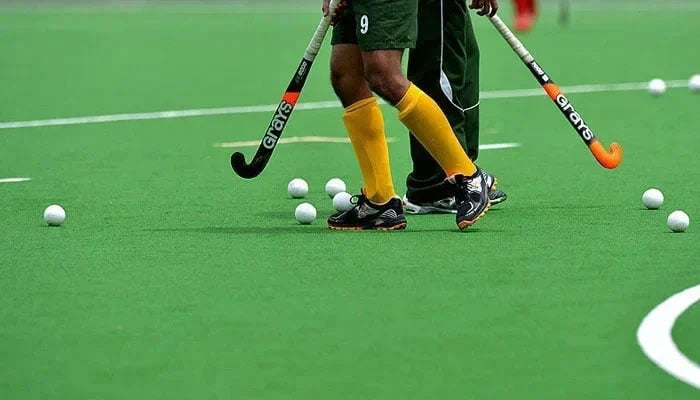
Pakistan’s sports trajectory has been on a continual downward spiral for the last two decades and sports has become a microcosm of the overall national decline.
Pakistan’s traditional sporting successes are now relics of a distant past, their lost glories mocking our desultory planning and plummeting global rankings. Hockey, once a symbol of pride, saw Pakistan win four World Cups in 1971, 1978, 1982 and 1994. Today, it is a pale imitation of the virtuoso performances of artists like Hameedi, Naseer Bunda, Samiullah, Shahnaz and Manzur Junior. The situation in squash is no different; Pakistan once boasted titans like Hashim Khan, Roshan Khan, Jahangir Khan and Jansher Khan.
In the 70s, prodigies like Qamar Zaman, Mohibullah Khan, Gogi Allaudin and Hidayat Jahan ruled the squash world, barring Geoff Hunt’s valiant challenge. Pakistan was the number one squash team in the world, winning 23 World Team Squash events. Individually, Pakistani squash aces won 30 British Open and 14 World Open titles. At present, our last silver medal came in the 2023 Asian Games team event – a stark fall from our erstwhile squash glory, when Pakistan was a true powerhouse.
Pakistan also had a proud athletics legacy, where the likes of Khaliq, Raaziq and Yunus were the toast of Asian track and field events. Pakistan won five gold medals in sailing between 1978 and 2002 but has not won a gold medal in the last three Asian Games. A long drought in athletics was broken by Arshad Nadeem, who won a gold medal in the javelin throw at the 2024 Paris Olympics. His was a solo performance, essentially a product of his prodigious talent, not the result of any sustained national athlete-grooming strategy.
There are sports like boxing, wrestling, swimming and shooting where Pakistan has ample talent, but in the absence of a scientific player support and development regimen, many a super talent withers on the vine of apathy. The only game receiving attention – perhaps a little too muchm – is cricket, which has captured the national fancy, raising the sport to the level of a cult. Cricket is kept financially afloat by munificent grants from the International Cricket Council (ICC) and lucrative professional leagues such as the Pakistan Super League (PSL).
Despite generous cash inflows, the Pakistan Cricket Board (PCB) has lately not been able to actualise cricket’s potential in the form of international titles. Poor selection, nepotism, inadequate grooming and ineffective coaching have resulted in national embarrassments, such as a recent no contest performance against archrivals India in the ICC Men’s T20 World Cup.
The situation in tennis, where Pakistan once produced players like Haroon Rahim and enjoyed a legacy of competing in the World Group, is no better. The team is now fighting to avoid relegation to the lowest tier in the Davis Cup format. The development of young players who could take over from ageing players like Aqeel Khan and Aisam-ul-Haq has been neglected. As a result, the country would be hard-pressed to field a winning combination against higher-ranked Davis Cup teams in Group II.
It is worth pondering what has led to this sorry state of affairs. The quality of Pakistan’s sports has suffered at the hands of incompetent federations and sports politics, resulting in corruption, financial mismanagement, and nepotism. Sports federations are treated as sinecures by individuals who lack the management and administrative skills of legends like Air Marshal Nur Khan, who led Pakistan to hockey and squash glory. The Pakistan Olympic Association, which is supposed to safeguard the interests of sports, has also failed to promote sports in the true Olympic spirit.
The decline is evident in both performance and the conduct of players and officials. Consider our national passion, cricket, where the dress, deportment and on-field and off-field conduct of players often leave much to be desired. Compare the sartorial taste, personal grooming and educational levels of past Pakistan cricket players who stood out in the inaugural photo line-ups of the One Day World Cups, with the present lot. Suave and articulate captains like A H Kardar, Mushtaq and Asif Iqbal stand in stark contrast to some current players, who appear unkempt and struggle to string together a few coherent words at pre- and post-match ceremonies.
The reasons for this decline include lack of education, poor grooming, and a focus on pecuniary gain rather than performance. A major factor is the neglect of sports at the school and college levels. Educational institutions once served as nurseries for sports, while inter-university and inter-college competitions were the gold standard of performance, regularly producing well-groomed players for national teams.
Another key reason is the byzantine politics of sports federations, where elections are often won through questionable means, resulting in leadership more interested in personal aggrandisement and perks than in performance and achievement. The revival of lost glory in sports depends on dedication, competence, honesty of purpose, equitable allocation of resources, the revival of college sports and the purging of federations of incompetence.
Pakistan’s sports federations need to be completely depoliticised, along the lines of the Chinese model, where the General Administration of Sport of China (GAS) functions as the top government agency promoting all aspects of sports, including federations and provincial or city sports organisations accountable to it. Our present non-performing system is simply unworkable. The government must also encourage the private sector to contribute to national sports so that federations remain well-resourced.
Pakistan’s sports revival requires educated, competent, depoliticised and well-resourced federations under the effective control of a central agency modelled on China’s GAS. There are no shortcuts to sporting glory – only hard work, sincerity and the nurturing of national talent purely on merit.
The writer is a security and defence analyst. He can be reached at: [email protected]