Six years of organising the Islamabad Science Festival has taught me something crucial: the narrative that it’s ‘over’ for Pakistan’s youth ignores the extraordinary collaboration underway between generations that are supposed to be at odds.
To those who say the boomer generation has failed Gen-Z, I say this: you’re missing half the story. Yes, systemic failures exist. But declaring defeat ignores the boomer ministers, secretaries and industry titans who didn’t just open doors but helped us build entirely new buildings.
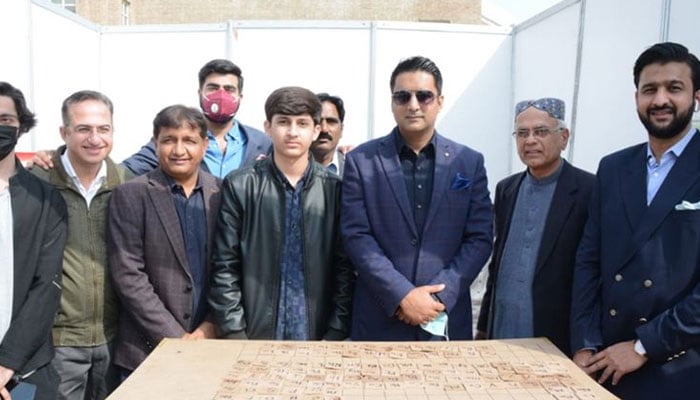
February 13, 2021: Pakistan National Council of Arts, Islamabad – a 14-year-old boy from Mithi named Rohan Khatwani stepped up to a table covered with 118 chemical elements. In one minute and 58 seconds, he arranged the entire periodic table from memory, shattering the previous world record.
Watching Deputy Commissioner Hamza Shafqaat and ECO Science Foundation President Manzoor Soomro witness this Hindu minority student from one of Pakistan’s most marginalised districts proved that talent has no postcode, no religion, no predetermined destiny. Soon after, Rohan received the Pride of Pakistan award from the president.
That day, it became clear: this isn’t over. It’s barely begun. The Islamabad Science Festival wouldn’t exist without boomers who believed in it. When I approached government officials and industry leaders with a vision to bring students, parents, teachers and everyday citizens to the PNCA, they didn’t dismiss it. They allocated resources. They mobilised schools. They showed up.
Federal Minister for Culture and Heritage Aurangzeb Khichi understood what young STEM talent needed most: space to showcase their work. He granted us PNCA – its auditorium and lawn – for two days, a venue that costs a fortune for non-government organisers. That wasn’t just a budget allocation; it was a statement that Pakistan’s cultural institutions belong to those who are building its future.
State Minister Wajiha Qamar ensured student projects would be linked with incubators and industry. The president of the Chamber of Commerce envisioned Pakistan’s future workforce and opened doors to industry. Corporate leaders evaluated these projects as potential business ventures.
These aren’t exceptions. These are boomers who understand that power is meaningful only when it multiplies opportunities for those who come after. The narrative that it’s ‘boomers versus everyone else’ is lazy. Some boomers cling to power, yes. But others are handing us the keys, the contacts, the credibility and the capital to build what they couldn’t.
If there’s one constant across every Islamabad Science Festival since 2019, it’s this: the girls steal the show. At our inaugural festival, I watched 13-year-old Ayesha Syed present a climate change model that explained renewable energy with more clarity than most policy papers I’ve read. Every year since, girls from government schools arrive with projects on artificial intelligence, renewable energy and health innovation that belong in university research labs.
At the 2025 festival last month, the top three projects were all from girls – from ICT and Peshawar. This wasn’t tokenism. This was reality asserting itself.
Since 2019, Campaignistan has brought together over 20,000 students, teachers, and policymakers. We’ve partnered with the Federal Directorate of Education, Pakistan Science Foundation, organisations like LearnOBots, Tabadlab, Tech Valley Pakistan, IMARAT Group, Thar Education Alliance and the World Bank Pakistan.
The gap isn’t in talent. It’s in infrastructure and connections. We’ve deliberately constructed partnerships that translate classroom innovation into market-ready solutions. When a student presents a water purification system, industry experts evaluate its commercial viability. When a young woman codes an AI solution for agriculture, tech companies pilot it.
We’re building the connective tissue Pakistan’s education system has always lacked - the mechanism that turns a ninth-grader’s science fair project into a startup or an industry implementation.
Boomers have institutional knowledge, established networks and decision-making authority. Gen-Z lives in a world of instant research, global knowledge repositories and digital collaboration tools that previous generations never had. This information asymmetry isn’t a bug but a feature when we work together. Gen-Z needs platforms, not patronage. They need connections, not lectures. They need resources, not restrictions. And they need amplification, not appropriation.
Pakistan’s median age is 23. More than 60 per cent of our population is under 30. While we debate narratives, China and India are building research universities and innovation hubs at scale. Pakistan can’t afford pessimism. Every year at the festival, there are teachers who drive hours from government schools with no budget. Parents who saved for months so their daughter could present her project. Students who built robots from scrap, who designed water filtration systems for their villages.
They’re not waiting for permission. They’re building Pakistan’s future with whatever materials we’ve left them.
When Rohan Khatwani broke that world record, he rearranged what’s possible for a minority student from a marginalised region. When thousands of students flooded PNCA in December 2025, they announced that Pakistan’s next chapter won’t be written by those debating whether it’s over but by those building it anyway.
My job isn’t to pick sides. It’s to build bridges. To ensure that when government officials allocate budgets and industry leaders open doors, those resources flow directly to students who will transform them into Pakistan’s competitive future. Because here’s what six years has demonstrated: the talent was always there. We just needed to create the space where boomers with resources meet Gen-Z with vision.
So, it isn’t over. It’s just beginning. And the boomers and Gen-Z are finally building it together.
The writer is the CEO of Campaignistan and founder of the Islamabad Science Festival. He tweets/posts @farhadjarralpk and can be reached at: [email protected]