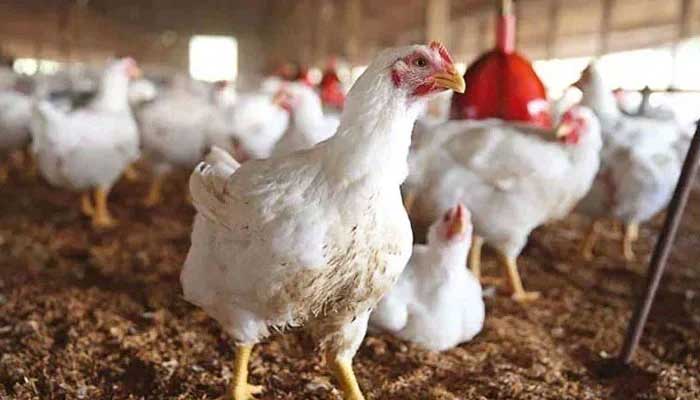
Over the years, poultry meat has emerged as one of the most popular protein sources for consumers in Pakistan, largely due to its year-round availability and relative affordability.
Poultry provides high-quality protein through table eggs and chicken meat. In Pakistan, the sector accounts for approximately 43.3 per cent of total meat production, with an estimated per capita consumption of 69–70 grams per day. While consumption trends have steadily increased, protein security remains a persistent challenge, underscoring the vulnerability of supply-side dynamics that sustain the sector.
In recent years, feed millers, poultry farmers and consumers have faced mounting pressures due to escalating feed costs, despite the continued availability of poultry products in the market. The core challenge lies in feed security, driven by raw material price volatility, limited affordable ingredient options, and inefficiencies across the supply chain. These pressures have driven feed prices to historic highs, reducing farmers’ and processors’ profit margins and making poultry meat unaffordable for consumers.
Although soybean is not a staple crop in Pakistani agriculture, its inclusion in poultry feed formulations has increased significantly. Historically, poultry feed relied on cottonseed meal, corn gluten (60), rapeseed meal, sunflower meal, fish meal, and other locally cultivated ingredients. During the 1990s, soybean imports, primarily from India, accounted for only 8–10 per cent of feed inclusion.
Over time, high-protein diets gained prominence due to their positive impact on Feed Conversion Ratios (FCRs) and net poultry yields. Consequently, soybean emerged as a preferred ingredient due to its high protein content and cost efficiency. This structural shift left a critical gap: the absence of sufficient local production of high-quality protein crops to meet feed demand.
The vulnerability of this dependence became evident when the ban on genetically modified (GM) soybean imports was imposed from October 2022 to November 2024. With no viable alternative protein crop available to fill the gap, the poultry industry faced acute supply disruptions, leading to sharp increases in feed costs and, ultimately, soaring poultry meat prices.
Policy interventions during climate-induced shocks have further exposed fragilities within the feed supply chain. During the recent floods, the Punjab Home Department imposed Section 144, temporarily banning the use of wheat in poultry feed manufacturing for 30 days, from September 4 to October 4, 2025.
While the measure aimed to secure wheat for human consumption through government repurchasing at subsidised rates, it had unintended consequences for the poultry sector. Feed millers were forced to rely on limited alternative ingredients available at significantly higher market prices, resulting in increased feed production costs and compromised feed quality. These cost escalations directly translated into higher poultry-farming expenses and higher market prices for poultry meat.
The persistent scarcity of locally produced feed ingredients, combined with heavy reliance on imports, directly inflates feed costs, undermining sector profitability. This dynamism often compels producers to reduce flock sizes or production intensity, constraining sectoral growth. Research consistently identifies feed costs as the dominant driver of poultry production expenses, reinforcing the economic imperative to diversify and substitute protein sources as soybean availability tightens.
Beyond feed-specific constraints, the sector is also exposed to broader macroeconomic and policy-induced pressures, including import regulations, exchange rate volatility and tariff regimes that shape the competitiveness of domestically produced poultry relative to imported inputs. Addressing these factors is essential to safeguarding protein security in Pakistan.
Recognising these challenges, the government of Pakistan has increasingly emphasised the strategic importance of strengthening domestic soybean production through targeted research initiatives and improved farming practices, as reflected in food security priorities under initiatives such as URAAN Pakistan. Research conducted by universities and agricultural institutions has focused on optimising soybean yields and enhancing adaptability across Pakistan’s diverse agro-climatic zones, facilitating its integration into local farming systems.
Building on this foundation, the Ministry of National Food Security and Research (MnFSR), the Pakistan Agricultural Research Council (PARC) and allied institutions must further explore the potential of native and alternative protein crops to bridge the feed supply gap. Such efforts could reduce dependence on costly imports, conserve foreign exchange and help stabilise prices within the feed milling industry.
Complementing public-sector initiatives, sustained private-sector investment is equally important. Investments in seed research, extension services, and structured corporate farming and offtake mechanisms, including contract farming models that guarantee procurement from farmers, can significantly enhance crop supply reliability and farm- level productivity. These approaches are vital for achieving long-term sustainability, cost efficiency and price stability for poultry producers.
Equally important are strong supply chain linkages encompassing pre-evaluation of requirements for chick production, feed availability, and similar integration with layer and broiler operations to utilise resources efficiently. Evidence from regional analyses shows that disruptions at any node of the poultry value chain, whether in feed supply, hatcheries, or production systems, rapidly propagate downstream, affecting the availability and pricing of eggs and poultry meat.
Yahya Gulraiz is a research assistant and Dr Kashif Salik is a research fellow at the Sustainable Development Policy Institute (SDPI), Islamabad.