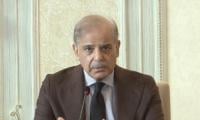
PM Shehbaz (left) chairing a meeting to review the impact of fuel price fluctuations and the implementation of government austerity measures in Islamabad on March 14, 2026. — PM Office
ISLAMABAD: Prime Minister Shahbaz Sharif has approved salary cuts ranging from 5% to 30% for employees of state-owned enterprises and autonomous institutions as part of an austerity drive to cushion the impact of the ongoing Middle East war.
According to an official statement issued by the PM Office, the prime minister chaired a high-level meeting on Saturday to review fuel price fluctuations and assess the implementation of the government’s austerity measures.
The review meeting was held days after PM Shehbaz announced the wide-ranging austerity and savings plans to deal with the prevailing global fuel crisis triggered by the ongoing US-Israel-Iran conflict.
The participants were briefed that a third-party audit will oversee a 50% reduction in fuel allocations for government vehicles and the grounding of 60% of these vehicles over the next two months.
As per the official statement, the meeting also decided that government representatives on the boards of various corporations and institutions will not receive participation fees.
"This fee will be included in the savings amount," the statement read.
'Simple March 23 celebrations'
PM Shehbaz also directed all Pakistani embassies worldwide to observe March 23 celebrations with utmost simplicity. The meeting was told that over the period of the next two months, the salaries of cabinet members, ministers, advisers, and special assistants will also be used for public relief.
The prime minister said a complete ban will remain in place on foreign visits by government officials, ministers, ministers of state, and special assistants.
The statement added that all funds generated from these measures will be directed solely towards supporting the public.
The prime minister directed concerned secretaries to implement and monitor all austerity measures, submitting daily reports to the review committee.
The four-day workweek will not apply to law enforcement agencies and the Federal Board of Revenue, which will continue regular operations.
Key measures announced earlier
Fuel provision for official vehicles reduced by 50% for two months.
60% of official vehicles in federal and provincial government departments remain off the roads during this period.
Cabinet ministers, ministers of state, advisers and special assistants to the prime minister forego their salaries and allowances for two months.
Members of the federal and provincial legislatures take a 25% voluntary cut in salaries and allowances for two months.
Government officers in Grade-20 and above earning over Rs300,000 per month voluntarily give up two days’ salary, except those in the health and education sectors.
Federal and provincial government departments reduce non-essential expenditure by 20% during the final quarter of the current fiscal year.
The existing ban on the purchase of new government vehicles continues until June 2026, with no exemptions allowed.
A complete ban on purchasing new durable goods for government offices remains in place, with limited exceptions for IT procurement after scrutiny.
Official foreign visits by ministers, parliamentarians, and government officials banned, except for obligatory trips.
All officials travelling abroad on official duty travel in economy class only.
Physical meetings in government departments replaced with virtual meetings to reduce travel and accommodation costs.
Official dinners not hosted, except in the case of visiting foreign delegations.
Government seminars, training sessions and conferences require prior scrutiny and approval before being organised.
Up to 50% of government employees work from home on alternate days, except those in essential services.
Government offices operate on a four-day workweek, though the banking sector and essential services are exempt.
The private sector advised, but not mandated, to adopt similar measures such as work-from-home arrangements and a four-day workweek where possible.
All schools observe spring holidays from March 16 to March 31, 2026, though scheduled examinations continue.
Colleges and universities shift to 100% online classes during this period.
Reduced speed limits apply on roads, with motorways set at 90–100 km/h and highways at 65–80 km/h.
A limit of 200 guests imposed at wedding functions, where only one dish served.




_updates.jpg)