States and societies reveal much about themselves in times of adversity and collective challenge. We are seeing this unfold as the world economy experiences its largest shock since the Covid pandemic.
Countries are responding to the challenge of rising prices and constrained supplies for essentials, especially oil and gas, through a range of policies. The underlying objective is generally not just to limit short-term pain and disruption but also to mitigate any medium-term consequences of these emergency measures.
Take education, specifically schooling. Most countries have adhered to the dictum that in times of crises, schools should be the last to close and the first to reopen. Saudi Arabia, despite bombs and damage to its energy infrastructure, chooses to keep schools open. Sri Lanka, which has one of the lowest petrol stocks in the region (27 days) and is in a tough IMF programme, is keeping schools open. Several countries with even lower fuel reserves, such as Nepal (10 days), Bangladesh (14 days) and Bhutan (10 days), have not closed schools.
These countries are not reckless with the lives of their children nor complacent about addressing the economic challenges they face. They understand, however, the value of education. They also appreciate that shuttering schools has low payoffs in terms of saving petrol. Barring a few countries (most in the literal eye of war, like Iran, Israel), the vast majority have not closed schools. India, China, Bangladesh (only universities are online) and even war-torn Afghanistan have schools open.
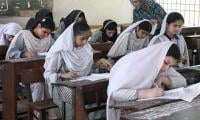
Pakistan is an exception. At another time of challenge, our governments (federal and provincial) are choosing expediency and optics over sense and substance, and have shut down education to save fuel.
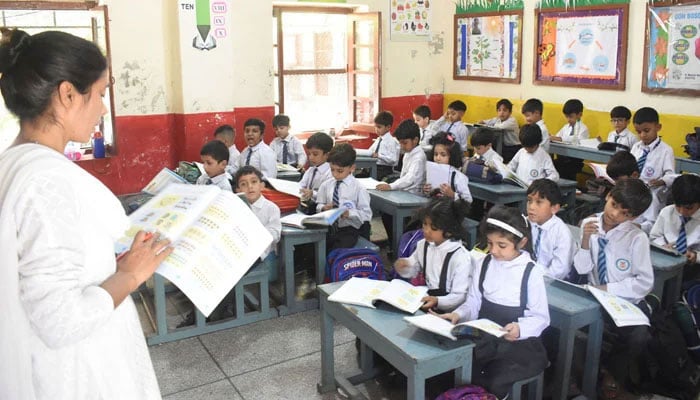
With 25 million children out of school, a high drop-out rate (43.1 per cent at the primary level) and one of the worst records of learning outcomes in the world, one would imagine keeping schools open would be a priority. Not so. And this is not the first time.
On pretexts as diverse as fog, smog, floods, temperature (hot and cold), political rallies and even cricket matches, Punjab, for example, had fewer than 135 school days in 2025. The global average of school days was 186 over the same period. India had 200 days, Bangladesh 179 days and Afghanistan (170 days). Our record of school days in 2024 was also poor.
The situation has become so alarming that the Lahore High Court has taken notice and instructed the Punjab government to ensure at least 220 school days.
Under the prime minister, when he was chief minister of Punjab in the period 2013-18, The Economist described education reform thus: ‘‘…the most frenetic education reforms anywhere in the world….with strict monitoring of enrolment and learning outcomes.’’ It is a shame that we are now regressing.
A multitude of evidence, including a recent study by Unesco, shows that even a short period out of the classroom has a severely regressive impact on learning outcomes. A few weeks of lost lessons mean a setback of several months in terms of numeracy, literacy and reasoning skills.
Online education is no substitute for in-school education. This is true even for countries with advanced digital infrastructure and wide access to the internet. In Pakistan, with a per capita income of $1824, an average of 3-4 children per household and unreliable and low high-speed internet penetration (less than 30 per cent), online schooling remains a pipe dream.
The knee-jerk policy of shuttering schools also makes little policy sense regarding conserving fuel. Most schools are in rural or peri-rural areas (87 per cent) where commuting often does not involve vehicles. Even in urban areas, the fuel footprint is small given that most children attend schools close to where they live. Many parents drop off their children on the way to work. School commutes also have a non-trivial component of vehicular pooling (buses, mini-vans, etc), further limiting the fuel footprint. Pakistan burns an average of 1.76 billion litres of petrol per month. Schooling accounts for a very small fraction.
The cost-benefit of prioritising the education sector is a no-brainer – yet our government chooses to do otherwise while doing little to ration fuel smartly and effectively.
To quote a teacher at one of Lahore’s large schools: ‘‘Classrooms stand vacant. The reason, stated by our government, for shutting schools and universities at the start of the students' crucial final term/semester, was to ensure curbing fuel. Ironically, you've emptied classrooms but roads and streets are swarming with all sorts of vehicles...from bikes to cars to trucks. So what was the point’’?
It is time the government’s political optics to demonstrate faux action is called out for what it is: destroying our children’s future.
The writer is an economist and entrepreneur.
He tweets/posts @SavailHussain and can be reached at: [email protected]