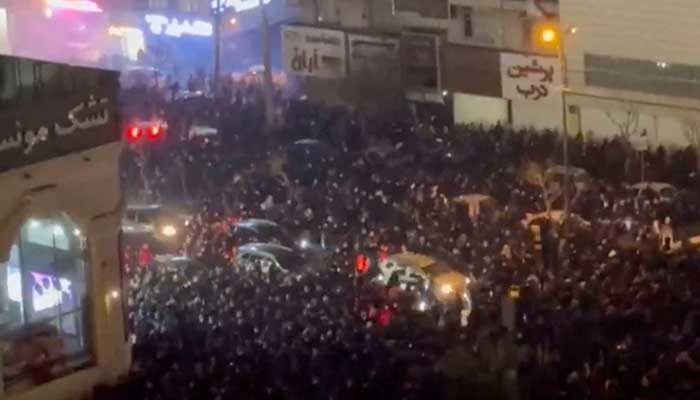
The images and headlines emerging from Iran over the past week have triggered a familiar international script. Western capitals, pro-Israel commentators and assorted exiles are already speaking the language of ‘regime change’, some with barely concealed glee. It is precisely this eagerness that should make any serious observer pause. The first principle must be stated clearly: the people of Iran – and only the people of Iran – have the right to decide their political future. No foreign capital, no exiled royal, no think tank in Washington or Tel Aviv has any moral or political legitimacy to prescribe what Iran should become. Second: there is no denying that the Islamic Republic has often been unrelentingly strict, sometimes heavy-handed and frequently tone-deaf to the aspirations of its citizens. Nor can one ignore the genuine, organic frustration that has built up over years and to pretend that all discontent is manufactured is to insult the lived reality of many Iranians. But there is another uncomfortable truth that must be confronted. The enthusiasm with which certain international players are cheering the unrest makes even legitimate protest appear suspect. When US politicians speak of “very strong options” for Iran, when pro-Israel voices applaud instability in Tehran and when tech billionaires toy with Iranian symbols as if this were a branding exercise, it creates the unmistakable impression of orchestration.
The alternatives being aggressively marketed are hardly reassuring. The resurrection of Reza Pahlavi as a supposed saviour of Iran is not only historically tone-deaf but politically absurd too. He represents a dynasty overthrown by a popular revolution, carries the baggage of authoritarianism and Western patronage, and enjoys little genuine grassroots legitimacy inside Iran. Then there is the economic dimension, which Western commentary habitually distorts. Iran’s crippling economic situation is routinely blamed on ‘mismanagement’. This is disingenuous. American and Western sanctions have been central to Iran’s economic suffocation. It is also perfectly legitimate to wish for a freer Iran. But one can desire freedom without desiring subservience. A ‘free’ Iran run by Western-approved proxies, security clients or pliant elites would merely be another outpost of external influence in a region already littered with the wreckage of foreign-designed transformations. At the same time, it would be a grave error for Tehran to dismiss everything as a foreign plot. By creating space for indigenous criticism, Iran can empower its own people to resist externally engineered narratives and regime-change fantasies.
Iran is not a fragile, invented state. It is a civilisation with millennia of history, a strong sense of identity and a deeply ingrained tradition of independence. It has also stood by Palestine when many in the region chose accommodation. For these reasons, it has remained firmly in the crosshairs of Washington and Tel Aviv. This context matters. The current unrest cannot be read in isolation. Nor can it be divorced from the region’s tragic experience with externally sponsored ‘change’ – from Iraq to Libya to Syria – where the language of liberation masked projects of destruction. One hopes for a strong, free Iran in the true sense, not the curated sense. Iran deserves dignity, prosperity and political space. It does not deserve to be the next laboratory for Western manoeuvred regime change. The path forward lies neither in denial nor in surrender. It lies in the Iranian state engaging its own society honestly, and in the international community restraining its habitual impulse to interfere.