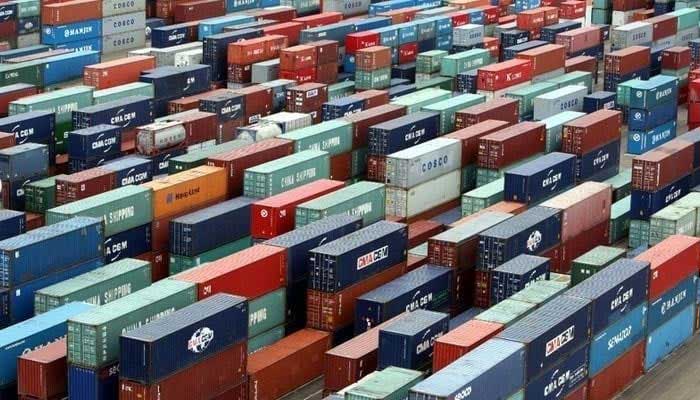
A body constituted by the prime minister and led by Minister for Planning, Development and Special Initiatives Ahsan Iqbal has called for urgent reforms to improve ease of doing business and a serious restructuring and rationalisation of energy tariffs and trade duties to more than double exports to $60 billion in three years. This particular committee was formed to devise a strategy to avoid another IMF loan after the current programme expires at the end of 2027. While this programme has helped restore macroeconomic stability, key shortcomings still remain. Growth is anaemic, the country’s exports remain weak while imports climb, revenue collection remains insufficient despite tax increases and the inability to attract investment, foreign or domestic, endures. According to the panel/committee’s synopsis, compiled after week-long consultations with and private stakeholders, the current state of affairs was not capable of driving a fast-growing population of around 250 million towards sustained prosperity, echoing comments made by the finance minister last year about Pakistan’s low growth rate relative to its rapidly rising population. The panel points at cross-cutting constraints including high and volatile energy costs, policy unpredictability, regulatory burdens and limited access to affordable finance as affecting all 20 priority export products and six export drivers. The Planning Commission has also noted that the cost of doing business in the country remains too high, disproportionately affecting exporters and small and medium enterprises (SMEs).
According to the minister for planning, Pakistan’s development, economic sovereignty, and national security now hinge on how quickly it can transition to an export-led growth model. The minister is not the first one to make this observation, nor is the committee’s analysis on what is holding back Pakistan’s export sector entirely new. Many have taken aim at the country’s poor regulatory, incentives and policy structure before, but none have so far been able to actually fix them. Even some export facilitation schemes that have been tried have floundered, with the committee questioning the implementation of export facilitation and input schemes and noting that procedural delays, higher input costs and working-capital pressures are limiting effective sourcing of raw materials and intermediate inputs. Perhaps what this kind of analysis has historically been missing is precision: what is the specific impact of specific regulations on specific sectors and how can they be addressed? It is encouraging to see that the Planning Commission is now reportedly collecting additional information through a private-sector survey to develop a data-driven, sector-specific technical roadmap to enhance exports under the Uraan Pakistan strategic plan.
One can only hope that this will help find the answers and not just make things easier for Pakistan’s exporters and SMEs, but also encourage more investment. Almost all the successful Asian export economies over the past two or three decades have been magnets for foreign investment and it is hard to see Pakistan reaching their status without it. This will require a more consistent policy and regulatory framework and one more aligned with global standards. However, no particular system lasts this long without its supporters. One can expect that many will resist a new way of doing things. The government’s capacity to take on such vested interests will thus be crucial. However, thus far, it is unclear whether this government has the capacity for such a fight. The tax net has not meaningfully expanded and the same people are simply paying more. If shifting to an export-led model is as important as has been said, one hopes that the government will be more decisive in this area.