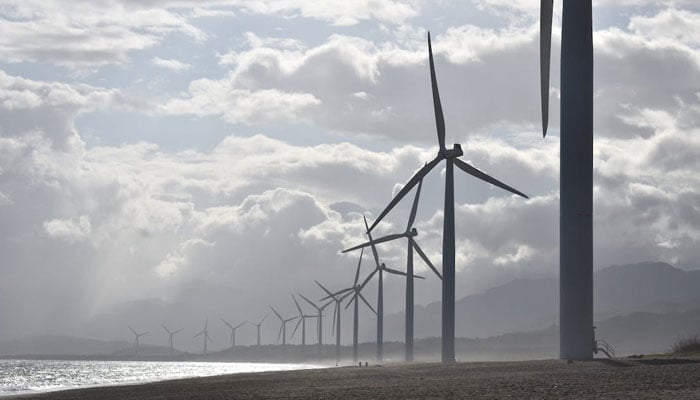
Despite the country’s ongoing solar boom, fossil fuels still hold the lion’s share of Pakistan’s energy mix. It is a mix that both the nation’s environment and economy can no longer afford and pushing the accelerator on the transition to renewable energy is now more imperative than ever. In this regard, the United Nations Economic and Social Commission for Asia and the Pacific (UN-ESCAP) has agreed to provide policy advisory and technical support to the country in the development of its Energy Transition Investment Plan (ETIP). UN-ESCAP carried out a scoping mission in Pakistan last November to understand the requirements, difficulties and opportunities that come with energy transition financing in the country. UN-ESCAP says the mission helped its team obtain a deep understanding of entry points to building a strong ETIP and understanding where challenges and opportunities may lie. The mission followed a formal request from the government for policy advisory and technical assistance on energy transition financing. According to reports, the ETIP can assist Pakistan by working to attract green FDI and leveraging blended finance models that use both public and philanthropic funds to unlock private capital. It is encouraging to see the government exploring all possible avenues to secure a sustainable energy transition. Green energy development and long-term sustainability are also key planks of the new unified National Energy Policy, which received in-principle approval from the prime minister last month.
UN-ESCAP suggests that existing work on Green Eurobonds, Panda Bonds, Green Sukuk and pay-as-you-go models should be bolstered and to investigate how funds can support grid modernisation efforts, which is crucial to dealing with factors like circular debt, which hold back the green transition, and also integrating renewables like solar into the national energy infrastructure. This latter issue is already proving to be quite a thorny one. No one disputes that a transition to cleaner and more affordable energy is a necessity but the solar boom has added additional strain to an already unsteady grid, draining it of customers while its costs rise or remain the same, and raised costs for those who cannot afford solar systems. On its current trajectory, Pakistan is heading towards a kind of energy inequality, where the affluent with roof space switch to more affordable solar while those less well-off remain stuck to an increasingly extractive and inefficient grid.
While UN-ESCAP, through its Financing Energy Transition (FET) work, has already provided targeted technical assistance to Indonesia, the Philippines and Vietnam, these countries arguably present easier tasks than Pakistan. All three are strong Asean economies experiencing sustained export-led growth and investment. This is where Pakistan wants to get to but not where it is right now. Improving the overall economic picture will thus be crucial to the success of any energy transition plans. It should also be noted that while the UN-ESCAP assistance is appreciated, such creative financing initiatives ought to have been, in a just world, paired with a steady stream of climate aid and reparations for Pakistan and other Global South countries. There is no understating just how dire the climate problem is for the country and just how unjust it is that the people who contributed most to the problem refuse to foot the bill. In fact, the aid from the rich world is actually dwindling. We are a nation that urgently needs stings-free finance but find ourselves facing a huge debt burden and wondering how exactly we are going to pay for critical national needs.