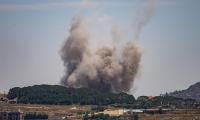
At precisely 1:05am on May 7, 2025, the Indian Air Force (IAF) initiated a coordinated missile barrage -- codenamed Operation Sindoor -- targeting nine sites across Pakistan.
In response, Pakistan activated its integrated air defence network and scrambled interceptors. Pakistan successfully neutralised at least half a dozen Indian aerial platforms during the engagement, including front-line multirole fighters such as the Rafale and Su-30MKI, as well as an Israeli-made Heron UAV.
In the 35 weeks following May 7, sixteen countries -- Azerbaijan, Bangladesh, Egypt, Iraq, Jordan, Kuwait, Libya, Myanmar, Nigeria, Peru, Saudi Arabia, South Africa, Sudan, Uruguay, Uzbekistan and Zimbabwe -- have issued serious expressions of interest, entered exploratory talks or initiated preliminary procurement engagements for defence equipment manufactured or co-produced by Pakistan.
Azerbaijan, Nigeria, and Myanmar have placed confirmed orders totalling approximately $6.6 billion. Advanced-stage negotiations with Bangladesh, Iraq, Sudan and Libya cover prospective contracts valued at roughly $8 billion. In addition, Saudi Arabia, Uzbekistan, Egypt, Jordan, Kuwait, Peru, South Africa, Uruguay and Zimbabwe remain in the pipeline as prospective customers, representing a further potential order book of about $11 billion. Taken together, this places Pakistan’s current and prospective defence export pipeline at approximately $25 billion.
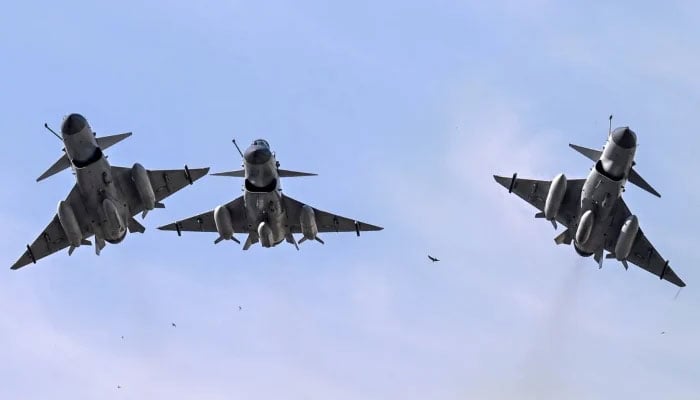
Azerbaijan placed an initial order for 16 aircraft in 2024, which was expanded to approximately 40 units in 2025 (deliveries commenced in October 2025). Libya and Iraq are currently the closest to contract confirmation, while Bangladesh remains in advanced negotiations but has not yet concluded a deal. Saudi Arabia represents the most active potential customer at present, with discussions centred on financing-backed acquisitions (‘loans-to-jets’).
For Pakistan, defence exports represent a structural diversification of Pakistan’s export base away from low-value, price-taking commodities such as textiles and rice. Today, over 60 per cent of Pakistan’s exports remain concentrated in a narrow set of goods vulnerable to tariff shocks, energy costs and global demand cycles.
Defence exports, by contrast, are contract-driven, multi-year and relatively insulated from short-term price volatility. They convert industrial capability, not cheap labour, into foreign exchange. Pakistan is not abandoning cotton and rice; it is finally diversifying its export mix. Pakistan is not abandoning cotton and rice; it is finally learning to develop export capabilities, not just commodities.
Yes, Pakistan has announced defence exports before. The question is: what is different this time? Four things: combat validation, simultaneous multi-country interest, financing-backed acquisitions rather than cash-poor buyers, and long-term after-sales pipelines in training, spares, upgrades and MRO (Maintenance, Repair, and Overhaul). That combination signals durability -- not a one-off spike.
Defence exports do not retain 100 per cent FX because of imported subsystems. But even 35-45 per cent retained value on $24 billion is $8-11 billion net FX over time. Defence exports create high-skill, urban, tax-paying employment -- engineers, avionics techs, machinists, MRO crews. Each $1 billion in defence exports typically supports 15,000–20,000 direct and indirect jobs.
Pakistan did not set out to export weapons. It set out to defend itself. The export opportunity is a by-product of capability and credibility. Pakistan defended its airspace on May 7. What followed was unexpected: the world began pricing that defence. Capability, once proven, does not remain local -- it becomes exportable.