thought denotes a forward-looking approach informed by critical thinking and analytical reasoning. Leadership endowed with strategic thinking can pull its country out of the web of poverty, backwardness, underdevelopment, extremism, and youth radicalisation.
The foremost challenge Pakistan faces in 2026 is to ensure political stability, economic vibrancy, and an improved quality of life for its people, including access to clean, safe drinking water, affordable housing, transport, health and educational facilities.
Strategic thinking is the need of the hour in Pakistan, so that, despite political schisms, mounting debt and foreign policy challenges, the country can move forward. Some essential requirements of strategic thought for Pakistan include creative, innovative, courageous, honest and bold leadership. When countries such as China, India, South Korea, Malaysia and Singapore, which were far behind Pakistan in human development, have made remarkable progress in a quarter of a century, why has Pakistan, blessed with enormous mineral and natural resources, not made comparable progress?
When a country’s per capita income, gross domestic product, economic growth rate, foreign exchange reserves and people's quality of life, reflecting a stable and peaceful mode of governance, are not up to the mark, it indicates a lack of strategic planning and thought.
In 2026, Pakistan is the world’s fifth most populous state but is ranked 168th out of 193 countries in the Human Development Index. Likewise, Pakistan ranks low on the Human Security Index and on the Corruption Perceptions Index, it stands at 135 out of 180 countries. Unlike India’s $682 billion in foreign exchange reserves, Pakistan has a meagre $16 billion in foreign exchange reserves held by the State Bank. In purchasing power parity terms, Pakistan ranks 26th globally, whereas China ranks second, India fifth and South Korea 10th. This means that in 2026 and beyond, Pakistan has a long way to go in order to bridge gaps in the economy and governance.
Pakistan’s strategic thought process needs to be analysed in both domestic and foreign policy. There are four major requirements to unleash strategic thought at the domestic level. First, the eradication of elitist culture and a focus on human and social development. Second, upholding the culture of merit and zero tolerance for corruption and nepotism. Third, a focus on proper work ethics in which professionalism, time management and planning are given priority. Fourth, effectively dealing with the menace of extremism, violence and terrorism by utilising the energies of youth in a positive direction.
In addition to these four requirements, it is necessary to strategically establish an inclusive political culture grounded in pragmatism and rationality. Without political peace and stability, the country cannot progress economically and its governance will continue to face challenges.
In studying China, India, South Korea, Malaysia and Singapore, it is apparent that without peace, stability, and strategic planning, economic progress and development are not possible. In the case of Pakistan, elites have failed to ensure an inclusive political culture and proper work ethics. The failure to eradicate corruption and nepotism and to uphold merit has led to fragility in both the economy and governance.
In terms of foreign policy, strategic thought will have three major characteristics. First, innovative and creative foreign policy initiatives to effectively deal with the two-pronged threats Pakistan faces from India and Afghanistan. Second, Pakistan must not put all its eggs in one basket and should address foreign policy issues in an even-handed manner, particularly when engaging with major powers. Pakistan has already experienced how its marriage of convenience with the US negatively impacted its sovereignty. Strategically, Islamabad must first put its own house in order because a successful foreign policy requires domestic peace and stability.
Third, the role of policy-oriented think tanks and research institutes in ensuring a vibrant foreign policy discourse is essential. Alongside the foreign office and parliament, think tanks can contribute significantly by providing direction and guidance on Pakistan’s external relations, particularly in enhancing trade and commerce.
As the fifth largest military and the only nuclear state in the Muslim world, Pakistan certainly has an edge in strategic terms. However, its fragile economy, political divisions and governance issues raise serious questions about its ability to address its fault lines in 2026. If Pakistan's power elites place national interests above their privileges, perks and grip on power, Pakistan can certainly turn around and emerge as a vibrant country.
Ultimately, it is Pakistan's youth, constituting more than 50 per cent of the population, who can effect a transformation by turning the country into an economic powerhouse with peaceful and politically inclusive governance. But if youth remain directionless, frustrated and disunited, the future will not differ from the past or the present.
Three possibilities emerge regarding the use of strategic thinking as a source of innovation and creativity in Pakistan. First, the education system needs to be restructured by providing free, compulsory, high-quality education up to the high school level for all. It is unfortunate that 25 million children are out of school and the youth are not provided a clear sense of direction. The Gen Z generation that unleashed change in Bangladesh, Nepal and Sri Lanka should be studied by Pakistan’s youth.
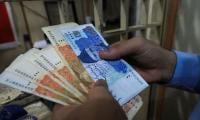
Second, leadership imbued with creativity, innovation and reasoning is the need of the hour. With mediocre leadership that is only interested in privileges and perks while living in comfort zones, Pakistan will continue to decline economically and politically. When Pakistan’s sovereignty is at stake and the country depends on billions of dollars in loans every year for survival, how can it hope to be sovereign?
Finally, sovereignty can only be protected when Pakistan is not economically dependent and vulnerable in foreign policy. If Pakistan faces a two-pronged threat from India and Afghanistan, it indicates a strategic deficit that prevents the country from effectively dealing with such challenges. In essence, strategic thought is an innovative force that can shape Pakistan’s destiny if elites and stakeholders act with prudence, competence, efficiency, planning and integrity to protect national security and national interests.
One can hope that in 2026, wisdom and reasoning will guide those who matter. The need is to advance strategic thinking with full conviction, motivation and skill, with a focus on the knowledge economy and statecraft.
The writer is a meritorious professor of International Relations and a former dean of the Faculty of Social Sciences, University of Karachi. He can be reached at: [email protected]