Pakistan was not born in silence, nor has it survived by shouting alone. From its earliest political crises, the country has repeatedly returned to a single method when tensions peak: dialogue. Cabinets fell, constitutions were suspended, governments were dismissed, yet the state rarely advanced beyond permanent street paralysis. Even in moments of rupture, Pakistan’s political direction was ultimately shaped at tables, in rooms where power was negotiated, compromises were struck and institutions recalibrated their roles. This habit of resolution through engagement, however imperfect, has been one of the country’s most overlooked continuities.
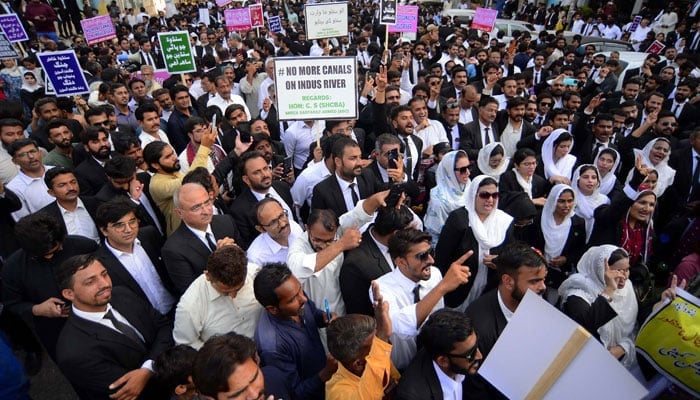
There are instructive precedents. The lawyers’ movement is one example in which sustained civic pressure, institutional claims and legal channels converged to reopen space for the judiciary and to press for political change. The movement did not deliver all it sought, and its outcomes remain contested. Still, it shows how sustained, organised civic action translated into institutional response and negotiated transition, rather than permanent breakdown.
Another turning point occurred as the military government of the late 2000s came under pressure and political leaders engaged in talks that led to an orderly, if imperfect, return to electoral politics. Political actors, courts and civic institutions all had roles in steering the country back toward contested but constitutional politics. That pattern matters because it underlines a simple point, often forgotten in moments of high drama. Even amid a crisis, Pakistan has retained the channels for negotiation. Those channels matter.
It follows that the present moment should be read in that same light, as a challenge to institutions rather than a summons to despair. The political influence of Imran Khan, measured in votes, organisational reach and popular mobilisation, has grown to a scale that cannot be dismissed as marginal. In the 2024 national vote, candidates and independents aligned with his movement won a significant share of seats. The reality is not an endorsement just a fact about the distribution of power and public allegiance.
Facing that reality requires candid thinking from every quarter. Exclusion, prolonged silence or attempts to marginalise a large political constituency invite instability, rather than forestalling it. Political life in any democracy rests on the capacity of competing forces to engage one another, not to vanquish and then erase. Negotiation is an ordinary, and often necessary, instrument of democracy. It does not imply moral compromise on basic democratic principles. It does require, however, that those who hold formal power accept the limits of unilateral action, and that those who wield mass influence accept the responsibilities of democratic contestation.
The cost of failing that test has been substantial since 2022, and ordinary citizens have borne the majority of it. Economic indicators and institutional assessments show a period of economic strain and governance stress that coincided with political stasis. External support discussions, fiscal negotiations and policy choices occurred under duress, and that strain translated into inflation, budgetary cuts and lost investment. Independent analyses and reports from international institutions document these pressures and show how political instability and policy uncertainty compound existing economic vulnerabilities. The result has been a narrowing of options for ordinary families and a dent to national capacity.
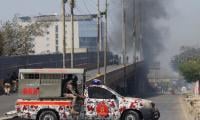
Violent episodes and crackdowns have also left marks. The confrontations that followed high-profile arrests and mass actions affected not only activists and leaders. They escalated a cycle that drained public trust, compelled heavy security responses and exposed society to unnecessary violence. Those episodes, and the legal and political reactions that followed, have deepened fissures in public life. They have made consensus harder to reach at a time when it is most needed.
The central point is institutional, not partisan. Democracies need muscles of compromise and procedures for translating conflict into policy. Institutions must demonstrate the maturity to absorb political shocks, convene talks and transform contestation into accountable choices. Political parties must be able to contest elections freely and concede defeat with dignity when they lose. The power stakeholders must recognise that long-term stability requires predictable political rules, transparent accountability and a level playing field for civilian political activity. None of these steps is easy. Each demands restraint and a commitment to the national interest above immediate tactical advantage.
To argue for dialogue is not to ask for amnesia. It is to insist on practical politics. Accountability exists alongside negotiation. Courts, oversight bodies, investigative mechanisms and electoral processes must function. But they function best when political actors are still talking, when grievances can be aired and remedied within institutions, rather than exhausted on the streets or in the courts alone.
There is a moral dimension here that should command attention. When politics hardens into a standoff, the poorest and most vulnerable pay first. Jobs vanish, schools struggle and social services falter. The dignity of daily life becomes a casualty of headline politics. That is not an arguable partisan point. It is a basic ethic of public responsibility. Leaders across the spectrum owe the country something more than spectacle. They owe it competence and an effort to rebuild trust.
History does not forgive prolonged political stubbornness. Moments of national strain have passed before, when key actors recognised the higher costs and chose negotiation over escalation. If the present leadership across Pakistan’s political spectrum fails to summon that same discipline, the damage will continue to fall on the people who can least afford it. That is a sober warning, not a threat.
The path ahead is simple to describe, even if hard to follow. Reopen channels of communication. Convene neutral forums where grievances can be aired, and practical compromises devised. Commit to transparent institutions handling questions of legal accountability. Protect the space for free campaigning and civic dissent. Above all, accept that no single actor can secure stability alone, and that national recovery requires concerted, collective effort.
In the end, Pakistan’s best hope remains the same as it has often been, in calmer times and in crisis. Conversation, when genuine, leads to choices. Choices, when inclusive, yield stability. Stability, when rooted in democratic practice, enables progress. The test for leaders now is whether they will rise to that responsibility, with courage tempered by restraint and with the national interest placed above personal victory.
The writer is a journalist specialising in socio-political analysis and historical perspectives.