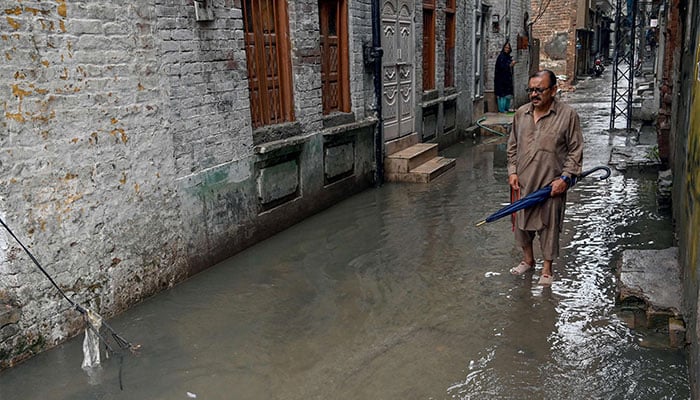
Development projects are frequently announced, budgets are approved and yet everyday conditions for most citizens show little improvement. Streets remain in poor repair, drainage systems overflow during rains and basic municipal services continue to struggle.
Over time, many people stop raising concerns – not because issues have been resolved, but because confidence in the system has steadily declined.
This is the central problem facing Pakistan’s local government framework: it has fallen short in service delivery and, more importantly, in maintaining public trust.
Local governments are meant to be the most immediate level of the state, the one citizens can directly interact with and hold responsible. They are tasked with essential services such as sanitation, waste management, water supply, street maintenance, parks and basic facilities. When these services falter, the government as a whole feels remote and unresponsive.
Pakistan’s various attempts at local government have consistently encountered difficulties, largely due to a lack of meaningful accountability. Funds are allocated to towns and union councils for municipal and development work, but information about how these resources are used is rarely available to the public. Audits, when conducted, are often delayed or not made transparent.
As a result, while funds are disbursed and documentation completed, actual outcomes on the ground remain inconsistent or unclear. Public confidence gradually erodes, and even well-intentioned local representatives face growing skepticism.
The situation is further complicated by overlapping roles. Major and secondary roads are generally the responsibility of provincial authorities, yet local bodies are often held accountable by citizens when these roads deteriorate. At the same time, local governments are expected to manage municipal services with limited authority and insufficient oversight. This misalignment hinders effective action.
Whether resources come directly from provincial departments or through local councils, the principle remains: expenditure without independent and transparent monitoring leads to inefficiency and diminished trust. Without regular third-party audits, defined performance standards and public reporting, spending can become routine while results remain secondary. This represents a structural challenge in governance beyond isolated cases of misconduct.
A frequent cause of poor service delivery is the substandard quality of infrastructure. Contracts are sometimes awarded through non-competitive or preferential processes, leading to work that deteriorates quickly and requires repeated expenditure. Adhering strictly to the Public Procurement Regulatory Authority (PPRA) rules – through open competitive bidding, clear pre-qualification based on technical capability, past performance and financial stability – would help ensure contracts go to qualified firms. Selecting the lowest qualified bidder in a transparent manner promotes better quality, value for public money and more durable outcomes.
Local governments require well-defined responsibilities, genuine administrative authority over municipal matters and consistent accountability mechanisms. Citizens should have straightforward answers to basic questions: who is responsible for specific services, how funds are allocated and spent and what results are anticipated. Without this clarity, responsibility is easily diffused.
Many local elected officials come from modest backgrounds and are motivated by a desire to serve their communities. A structured, time-limited programme of professional training and institutional support would be beneficial – provided it strengthens capacity rather than undermining local autonomy.
The repeated shortcomings of local government systems in Pakistan stem primarily from insufficient accountability, which has undermined public confidence. Without trust, institutions weaken; without strong institutions, services cannot be sustained. Properly empowered, audited and clearly defined local governments strengthen the state rather than threaten it – they represent its most direct connection to citizens.
Meaningful reform will require moving beyond temporary arrangements to establish a framework based on transparency, defined roles and real accountability.
Pakistan has roughly 5,000–6,000 union councils. On average Rs10 lakh per month per council, monthly totals reach Rs500 crore to Rs600 crore, excluding towns and larger urban bodies. Weak accountability and poor procurement often mean limited visible impact.
Effective and accountable local governments serve as the essential link between citizens and the state. When they operate with clarity and responsibility, trust is rebuilt, services improve for those who need them most, and democratic governance becomes more tangible in daily life. Without such changes, announcements and allocations risk remaining unfulfilled expectations.
The writer is a member of the Sindh Assembly.